
You want to get paid for your voice, and yes, you can do it from a closet with a blanket draped over a chair — I’ve been there, muffled takes and all — but you’ll need more than charm. Learn a few acting tricks, grab a decent mic that won’t eat your wallet, and craft a tight demo that shows range: warm narration, snappy commercial reads, a gruff villain throwaway. I’ll show you where the gigs hide, how to price yourself, and why a solid contract keeps you sane — but first, get your mic warm.
Why Voice Acting Online Is More Accessible Than Ever
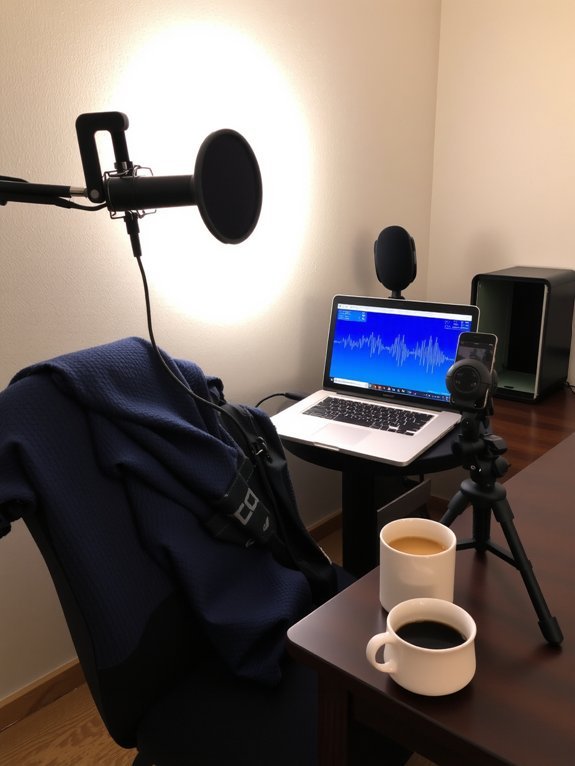
Because the internet finally grew up, you don’t need to live in Los Angeles or marry a casting director to get gigs—I’ve been booking jobs from my kitchen table. You’ll find voice acting opportunities all over now, on online platforms that connect you to ads, audiobooks, games, and explainer videos. You sign up, post a demo, audition from your phone, and sometimes land a job before your coffee’s cold. It’s noisy, sure, but it’s honest work. You learn scripts, tweak tone, deliver takes, upload files, and get paid. I’ve flubbed lines, laughed at myself, and still booked repeat clients, because consistency beats perfection. If you’ve got curiosity, a decent mic habit, and nerve, the world’s listening — and it’s mostly polite.
Essential Home Recording Gear That Won’t Break the Bank

One good mic, a quiet corner, and a little patience — that’s the setup that’ll save your wallet and your sanity. You don’t need a studio; I started in a closet, surrounded by coats, sounding like a warm blanket. Pick microphone options that fit your budget: USB for plug-and-play, XLR if you’ll upgrade an interface later. Listen: a cardioid condenser captures warmth, a dynamic handles noisy homes. Add a pop filter, boom arm, basic audio interface if you go XLR, and cheap headphones that don’t color sound. Learn simple soundproofing techniques — moving blankets, foam panels, carpet — they cut reflections fast. Record, listen, tweak. You’ll sound better than you expect, and your bank account won’t hate you.
How to Create a Professional-Sounding Demo Reel

If you want people to actually hire your voice, then your demo reel has to sound like you walked into the room, shook hands, and nailed the line on take one. I’ll walk you through clear demo reel techniques, you’ll pick the best bits, and we’ll toss the rest. Start with 60–90 seconds, open strong, close stronger. Record varied spots — commercial, narration, character — with natural breath, crisp consonants, warm vowels. Use tight edits, remove clicks, level peaks, and match ambience in your audio editing. Add brief silence between clips, don’t overproduce music, and label each cut. Listen on headphones, then cheap earbuds. If a clip makes you cringe, cut it. Confidence sells; flaws don’t.
Best Platforms and Marketplaces to Find Voice Work
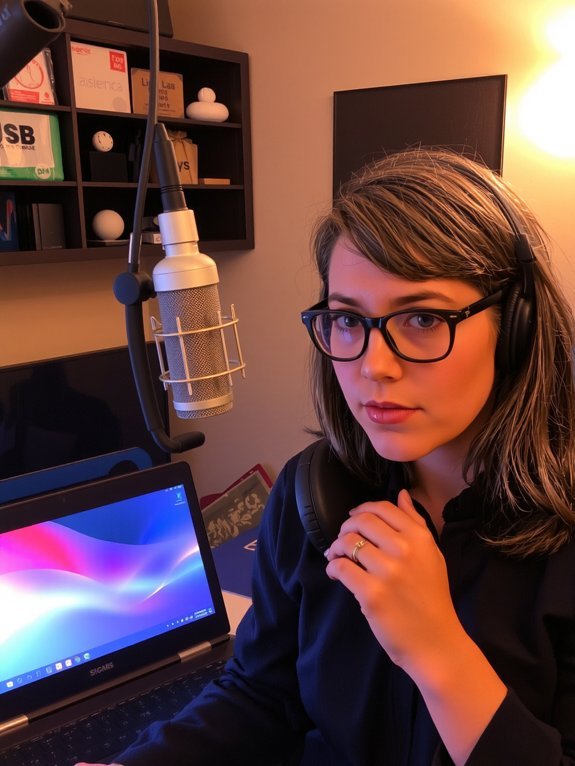
You’ll want to split your time between big freelance marketplaces like Upwork and Fiverr, where clients flood in and you can test different rates, and specialized voice casting sites like Voices.com and Casting Call Club, where auditions feel more pro-level and the sound matters. I’ll show you how to set up slick profiles, record quick cold reads, and snag gigs without sounding like a nervous robot — yes, practice helps, coffee helps more. Picture me in headphones, squinting at my mic as I whisper, “One take, one win,” and then we’ll jump into which sites pay, which ghost, and how to stand out.
Top Freelance Marketplaces
Seven spots on the web will change how you chase voice gigs, and I’ll walk you straight to them — no fluff, just the map. You’ll hit freelance platforms like Upwork and Fiverr first, where you set rates, post demos, and watch job opportunities roll in or fizzle—depends on your pitch and coffee intake. Then try PeoplePerHour, Freelancer, Guru, and remote job boards that whisper steady contracts. Scan LinkedIn for direct client leads, pitch with a snappy audio sample, and close over email like a pro. Each site has its own rhythm, fees, and quirks, so test fast, keep notes, and pivot. I’ll hold your hand—only slightly—while you snag that next paid read.
Specialized Voice Casting Sites
Think of specialized voice casting sites as cozy casting couches where clients actually know what they want—and you get to audition in your pajamas if that’s your vibe. You’ll find platforms that target niche markets—audiobooks, animation, e-learning, commercials—so you’re not shouting into a void. I poke around the listings, hear the client’s tone in my head, then record a quick, clean take. The site props you up with clear casting calls, client notes, and payment terms, so you can focus on performance, not paperwork. Upload demos, tweak your profile, whisper a charming line, and move on. It’s efficient, a little glamorous, and yes, you’ll still botch a read now and then—humanity sells.
How to Set Rates, Contracts, and Payment Terms
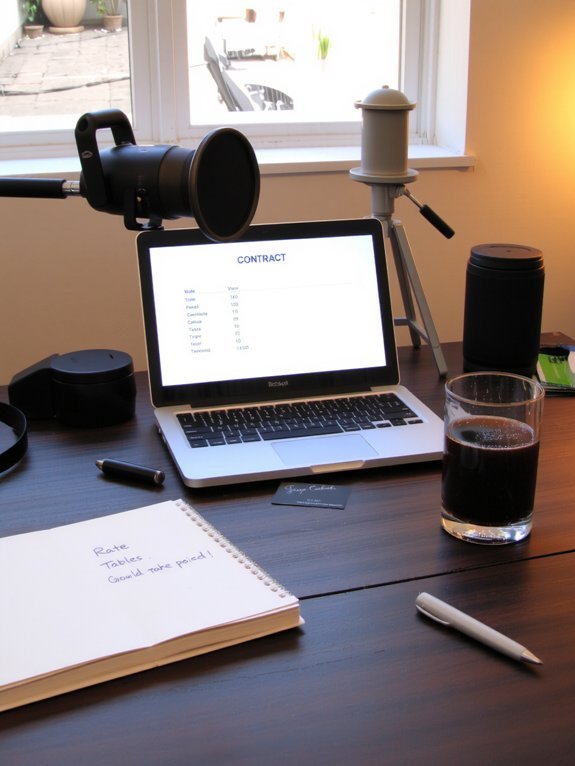
Alright, let’s talk numbers and signatures — you’ll learn common pricing models like per-hour, per-word, and buyouts, so you can pick what actually pays the bills. I’ll show you how to write tight contracts and clear payment terms that stop awkward back-and-forths, protect your time, and make clients pay on time. Picture setting a rate, sending a one-page contract, and sipping coffee while the invoice gets paid — yes, it can be that tidy.
Pricing Models Explained
Someone’s got to pay you, and if it isn’t going to be your internal cheerleader, it might as well be someone with a credit card and decent taste. I’ll walk you through pricing models you can actually use. Flat fees feel clean, like a warm mug, they suit short scripts. Hourly works when sessions run long and you want predictable pay. Per-word or per-minute is scalable, great for narration, but watch scope creep. Subscription or retainer gives steady income, like rent you don’t have to chase. Mix models, test them, and lean on pricing strategies that match your niche. Do a competitive analysis, peek at peers, then undercut or out-value them. Be bold, be fair, and charge like someone who knows their worth.
Contracts & Payment Terms
You’ve set your rates and picked a model that feels right — now you’ve got to make it stick on paper, and that’s where contracts and payment terms earn their keep. I’ll walk you through the nuts: spell out scope, revisions, delivery files, and deadlines, so no one’s surprised. During contract negotiation, be firm, friendly, and specific — offer a clear fee, then show your wiggle room. Name accepted payment methods, deadlines, late fees, and deposits; I like 50% up front, because rent doesn’t care about good intentions. Signatures matter — digital’s fine. Keep a short clause for reuse, exclusivity, and credits. Read every line, ask questions, and don’t be afraid to walk away; your voice, your rules.
Tips for Auditioning, Delivering, and Getting Repeat Clients
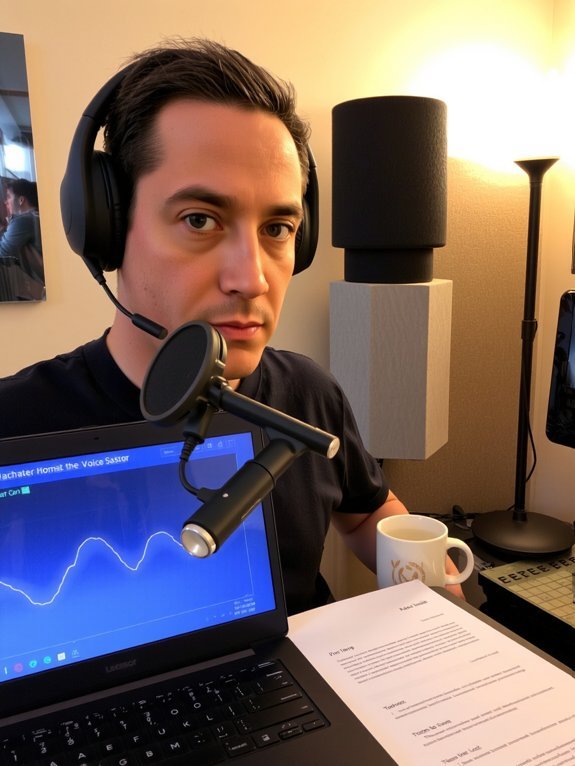
If you want casting directors to stop scrolling and actually listen, you’ve got to treat auditions like mini-performances, not awkward voicemail takes. I tell you to warm up, pick intent, and use audition techniques that sell the moment. Speak clearly, paint images with sound, and show choices — not every line, just the right ones. Nail client communication: confirm briefs, ask one smart question, and deliver before the deadline.
| Action | Quick Tip |
|---|---|
| Audition | Own the first three seconds |
| Delivery | Clean edit, natural breaths |
| Follow-up | Thank, ask for feedback |
| Repeat clients | Surprise with extras |
Be reliable, send polished files, and add a tiny surprise — a custom line — so they remember you, fondly.
Skill Development: Training, Coaching, and Expanding Your Range
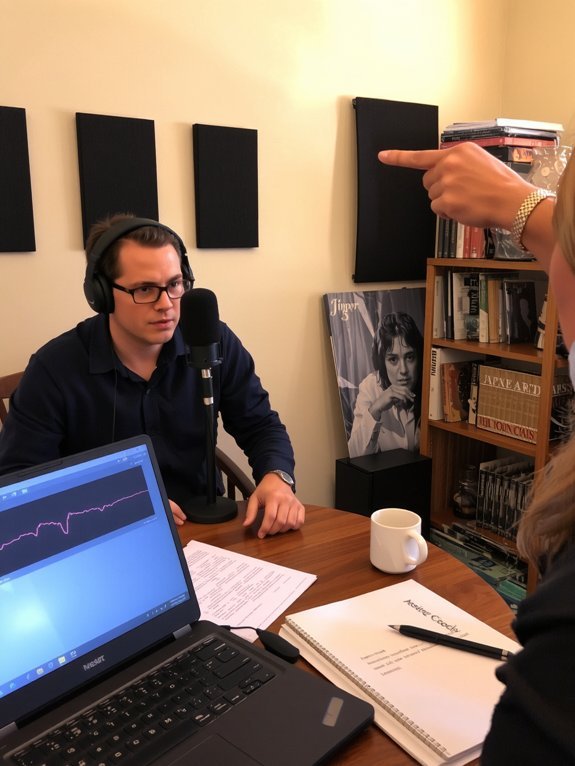
A little training goes a long way — trust me, I learned that the hard way after my first demo sounded like a drained radio. You’ll want steady vocal exercises, daily, short and focused, humming, lip trills, tongue twisters, they wake the gear. Find a coach who corrects, not flatters, someone who listens like a surgeon. We worked on breath, timing, and character development, carving voices with small, sharp tweaks. Record, listen, wince, repeat — that’s growth. Play scenes, switch accents mid-line, make choices fast, then commit. Take workshops, swap feedback, tolerate awkward homework. I’ll admit I sounded ridiculous at first, but clients notice range, not perfection. Expand slowly, confidently, and enjoy the weird, joyful process.
Conclusion
You’ve got what it takes, and I’ll prove it—start small, sound big. About 60% of freelance voice pros find work via marketplaces, so don’t sleep on those sites. Grab a decent mic, carve a tight demo, and pitch like you mean it. I’ve flubbed take after take, so I get the nerves; you will too, and then you’ll laugh about it on your next paid gig. Keep learning, deliver clean, and collect repeats.