


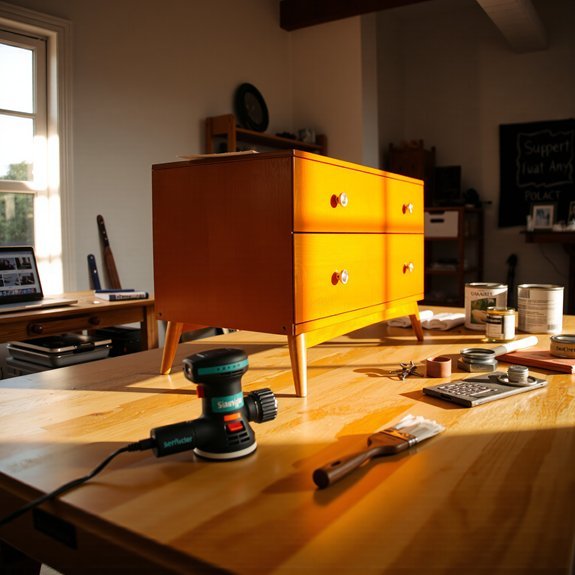
Sunlight catches the peeling varnish as you lift the lid and smell old wood and coffee—then the math clicks. You’ll learn to spot solid pieces, fix what scares other buyers, and turn cheap finds into things people actually fight over at pick-up; I’ll show you where to look, what to buy, and which repairs pay off big. Stick around—you’ll be surprised how fast a little elbow grease becomes real cash.
Why Furniture Flipping Is a Smart Side Hustle
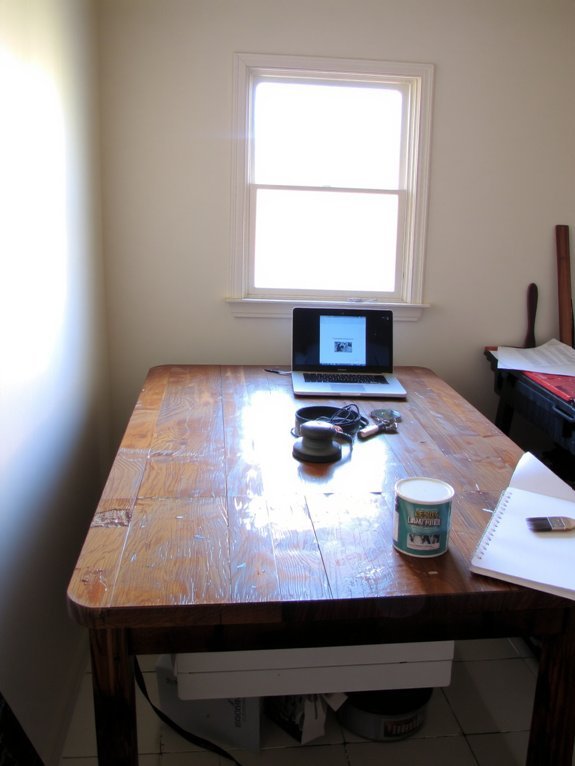
If you’ve ever hauled a beaten-up dresser out of a curb pile and felt that small, ridiculous thrill—yeah, that’s the money talking. You lean in, wipe sawdust off your shirt, and imagine the profit potential, not just the elbow grease. You see a scuffed top as a canvas, the aroma of old varnish as opportunity, and you know market demand will reward a clean, updated look. I’ll tell you straight: it’s low startup cash, high reward for smart work. You sand, paint, swap hardware, shoot photos that sing, and list it while coffee cools. People want character, but not the grime. You flip skill into cash, fast, and it’s frankly addictive.
Where to Source High-Profit Pieces
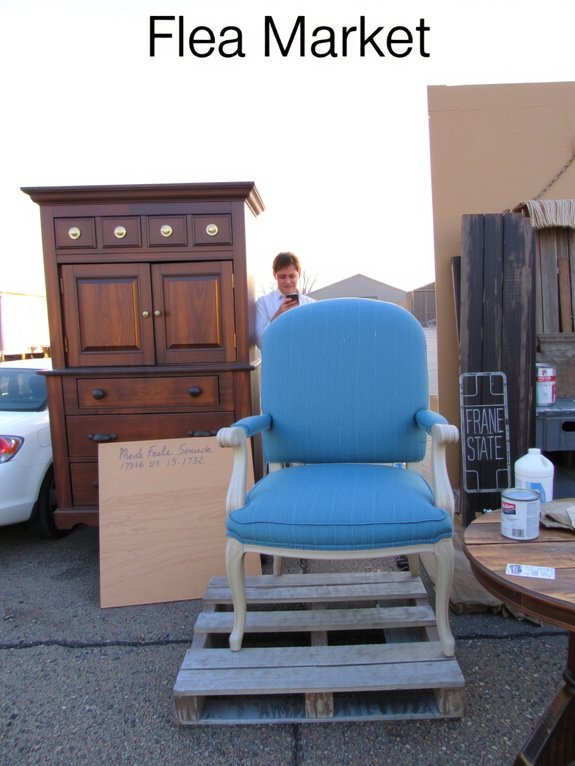
You’ll spot treasure if you know where to look: I mean the musty, sunlit aisles of thrift stores and the quiet chaos of estate sales, where the good stuff hides under old lamps and chipped drawers. I’ll also push you toward online marketplaces and auctions, where you can binge-scan photos, haggle in comments, and win a scored mid-century table at midnight. Trust me, it’s part patience, part nose for a deal, and a little bit of luck — but mostly it’s showing up with your measuring tape and a strong coffee.
Thrift Stores & Estate Sales
Three places in one afternoon can change your flipping life—trust me, I learned that the hard way while elbow-deep in mothball-scented velvet. I hunt with thrift store strategies: scan endcaps, sniff for solid wood, tap drawers for weight, and smile at the cashier like I own the place. At estate sales, I move fast, ask the right questions, and don’t fall in love too early—estate sale tips that save money and dignity. You’ll tug open a drawer, find a brass key, imagine a makeover, and buy it before you talk yourself out. Bring cash, a measuring tape, and a friend who lifts awkward armoires. You’ll get scrapes, stories, and profit—mostly profit.
Online Marketplaces & Auctions
Thrift stores and estate sales teach you to trust your gut and your knuckles, but online marketplaces and auctions teach you to be sneaky, fast, and a little bit ruthless. I lurk listings like a hawk, scanning photos, zooming on joints, sniffing for smell in captions — you’ll learn to read a bad photo as loudly as a creak. Use auction strategies: snipe late, set max bids, watch shipping costs. For online selling, craft crisp titles, honest defects, and five sharp photos — bright daylight, angled details, hardware close-ups. Message buyers fast, pack like you care, and price to move with room for profit. You’ll mess up, laugh, relist, and get better — trust me, it’s addictive.
How to Evaluate a Piece Before You Buy
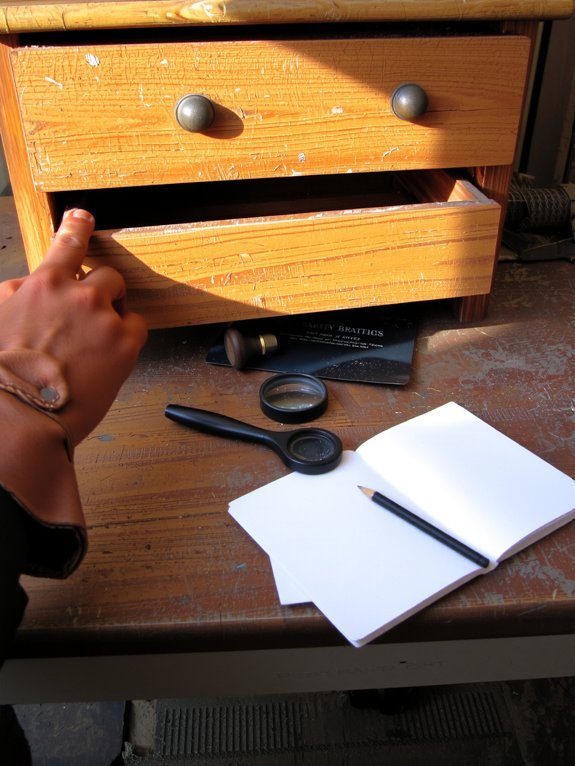
If you want to turn a dusty chair into cash, you’ve got to look sharp before you buy—no romanticizing that “vintage” sticker. You’ll start with a quick condition assessment: jiggle drawers, sniff for mold, peel back fabric, tap wood for rot. I talk to sellers, ask where it lived, listen for hesitation. Check joints, hardware, and the underside—those tell tales. Then weigh style trends; is mid-century clean or farmhouse tired right now? Picture it staged, smell the old polish, imagine sanding grit under your nails. Price it like you’ll win the auction. If repair costs eat margins, walk. Trust your instincts, not wishful thinking. Bring a tape, a flashlight, and a little stubborn optimism.
Essential Tools and Materials to Start With
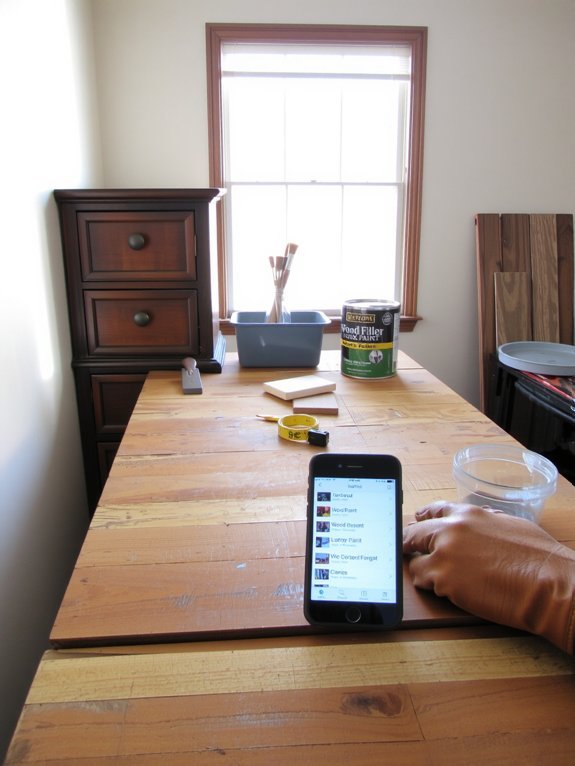
You’re going to need a few trusty basics to get started, like screwdrivers, a hammer, chisels and clamps, plus sandpaper and brushes that leave a smooth, smell-good finish. I’ll also show you the finishing supplies — stains, paints, sealers — that actually make buyers gasp, and the safety gear, gloves and goggles especially, that keep your fingers intact. Roll up your sleeves, I’ll walk you through what to buy first so you don’t end up with a garage full of useless gizmos.
Basic Hand Tools
Tools are the tiny heroes of every furniture flip, and I’ll admit—I get a little giddy when I line them up on my workbench like a miniature metal army. You need a basic toolset: claw hammer, screwdrivers (flat and Phillips), adjustable wrench, tape measure, utility knife, and a good set of pliers. Add a cordless drill with bits, a set of chisels, sanding block, and a small rubber mallet — that’s essential equipment right there. You’ll touch wood, feel grit under your nails, hear satisfying clicks and thuds. I’ll show you how to pry a drawer, tighten a loose leg, remove old hardware without crying. These hand tools keep your flips honest, simple, and profitable.
Finishing Supplies
Okay, so you’ve got your hammer and drill tucked into that trusty toolbelt and you’ve rescued a wobbly dresser from landfill doom—great start. Now, you’ll need finishing supplies: sandpaper in various grits, tack cloths that catch every speck, brushes and foam rollers, and quality stains and paints that smell like promise. I’ll show you finishing techniques that make wood sing — sanding with the grain, wiping stains, thin coats, and light sanding between layers. Don’t skip protective coatings: wax for soft sheen, polyurethane for hard-wearing shine, and clear lacquer for fast dry. You’ll feel the smoothness under your palm, see the color pop, and grin when buyers reach for it. Minimal fuss, maximum polish.
Safety Gear
A respirator, safety glasses, and a pair of tough gloves are non-negotiable—no macho “I’ll be careful” nonsense. I tell you this because dust stings, paint fumes sneak up, and rusty nails bite. You’ll wear safety goggles, a fitted respirator, and sturdy work gloves, feel the grit under your nails, and still smile when the piece looks new.
| Item | Why it matters |
|---|---|
| Respirator | Blocks fumes, saves your lungs |
| Safety goggles | Keeps dust and chips out of eyes |
| Work gloves | Protects hands, improves grip |
| Ear protection | Saves your hearing during power tools |
| Knee pads | Comfort for long sanding sessions |
Don’t skip this. You’ve got projects to finish, alive and well.
Quick Repairs That Add the Most Value
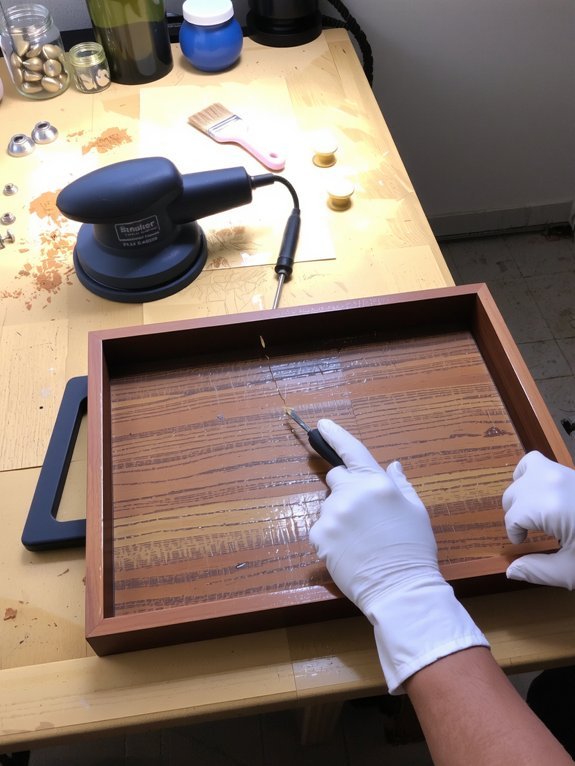
If you want quick wins that actually pay off, start with the small stuff that buyers notice first—loose knobs, squeaky drawers, dinged corners, and that weird wobble that makes people brace themselves. I’ll show you fast repair techniques that give big value enhancement. Tighten hardware, glue and clamp joints, sand rough edges until they feel silk-smooth, and replace missing bumpers so drawers sing instead of screech. Swap warped drawer bottoms, shim legs, and use wood filler to erase dings—then bevel and burnish those repairs so they look intentional. You’ll hear me joke I’m a furniture surgeon, but really it’s basic muscle and judgment. Do these fixes, photograph the details, and buyers will forgive a lot once functionality and finish are flawless.
Finishing Techniques That Sell — Paint, Stain, and Upholstery
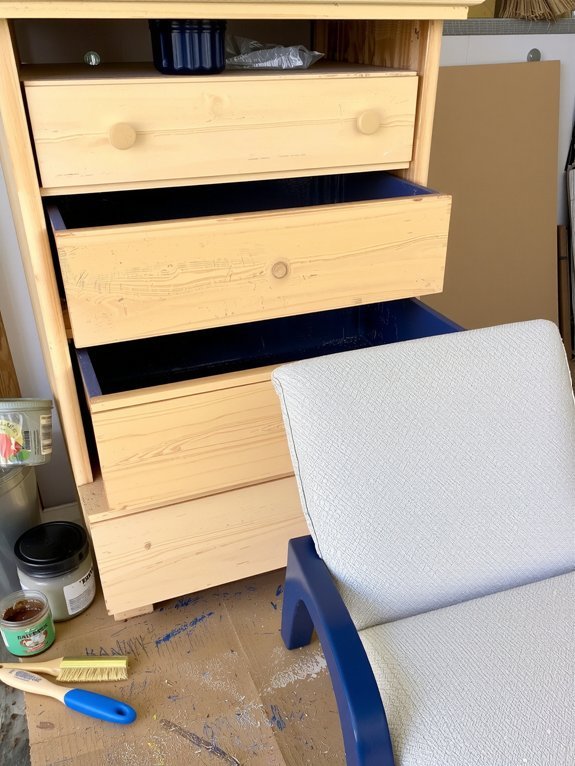
Because buyers fall in love with what they can picture in their own homes, the finish is where your flip either sings or whispers, and I’ll show you how to make it sing without wasting time or money. You’ll pick color choices that match trends but won’t date—think warm greys, muted greens, classic navy—then test swatches on hidden spots, touch, squint, decide. For wood, sand, stain, seal; let grain breathe, don’t drown it. For paint, thin coats, light sanding between, brush marks gone. Upholstery styles matter: tight modern lines, tufted vintage, or relaxed slipcovers. You’ll choose fabrics that feel good, clean easy, and photograph well. Finish details sell: crisp edges, solid hardware, subtle distressing, and a scent-free, move-in-ready vibe.
Efficient Workflow: Prep, Refinish, and Turnaround
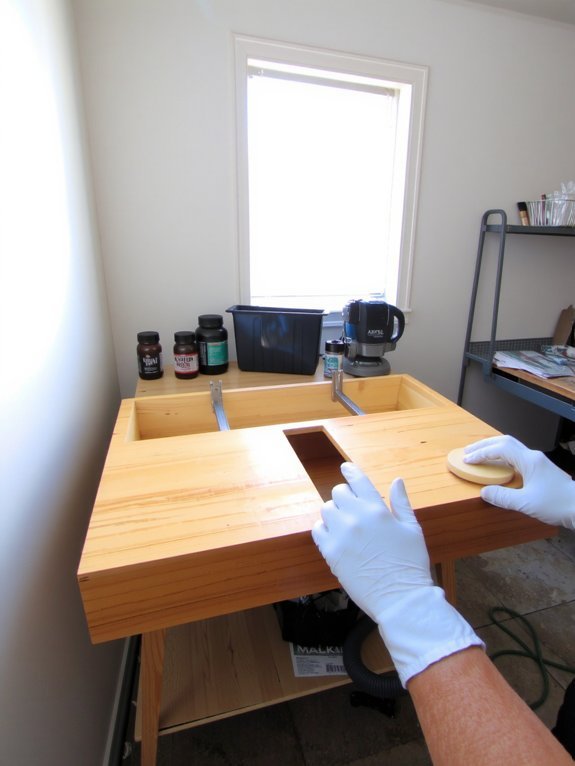
You nailed the finish, so now let’s hit the clock—this is where your profit shows up or evaporates while you fiddle with one more sanded edge. I’ll walk you through lean prep techniques that save time and keep quality high: quick de-grease, targeted sanding, tack cloth wipe, and masking in tidy strips. Set stations—cleaning, repair, paint—so you don’t chase tools like a raccoon after a tin can. Use batching, fast-dry primers, and a hairdryer for small runs. My turnaround tips? Schedule realistic cure times, list finished pieces immediately, and photograph in warm light to sell the story. Be ruthless: if a nail’s stubborn, swap it; don’t waste an afternoon on perfection that won’t pay.
Pricing Strategies to Maximize Profit
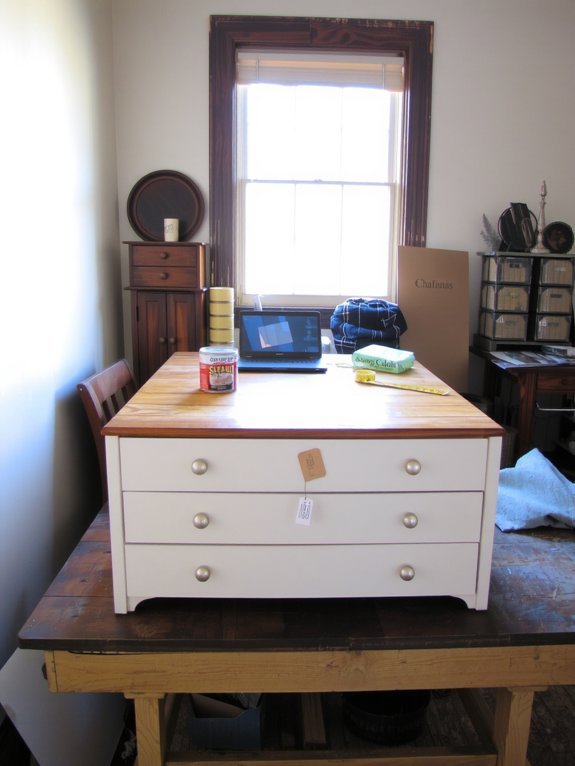
While I’ll let romance live in the sanding and paint, when it’s time to price a piece you’ve got to think like a hawk, not a hippie; you want crisp margins, not fuzzy feelings. I’ll walk you through a brisk cost analysis: add parts, paint, labor time (yes, your time counts), and overhead. Then set a target, factor desired profit margins, and round smart—buyers like clean numbers. Check similar pieces, but don’t slavishly undercut. Offer a small wiggle room for negotiation, like a wink. If it’s pristine, price bold; if it’s quirky, price curious. Photograph in daylight, list clear defects, state brief provenance, and write a punchy headline. You’ll sell smarter, keep more cash, and avoid regret.
Best Places and Tips for Selling Your Flips
If you want your flip to find a happy home fast, think like a scout: know the terrain, pick the best trail, and don’t dawdle at the scenic overlook. I’ll show you where to list, haggle, and hand over that polished piece, with plain talk and a wink. Use online selling for wide reach, clear photos, honest scuffs, and fast replies. Try local markets for quick pickups, tactile buyers, and cash smiles.
| Channel | Strength | Tip |
|---|---|---|
| Marketplace | Reach | Clean shots, keywords |
| Flea/Pop-up | Touch | Bring tape measure |
| Consign | Time | Split profit, prep well |
Price smart, pack safely, and enjoy the handoff — you did the work, now collect applause (and cash).
Conclusion
Think of each piece as a sleepy king, you wake it up. You’ll tug out dents, sand a rough cheek, slap on paint that sings, stitch a cushion that invites sitting—then watch the crown pass to someone else. You’ll learn to hunt, fix, style, price, and hustle, and you’ll make money while you do it. Keep tools handy, trust your eye, hustle with heart, and enjoy the tiny miracles you create from the ordinary.


