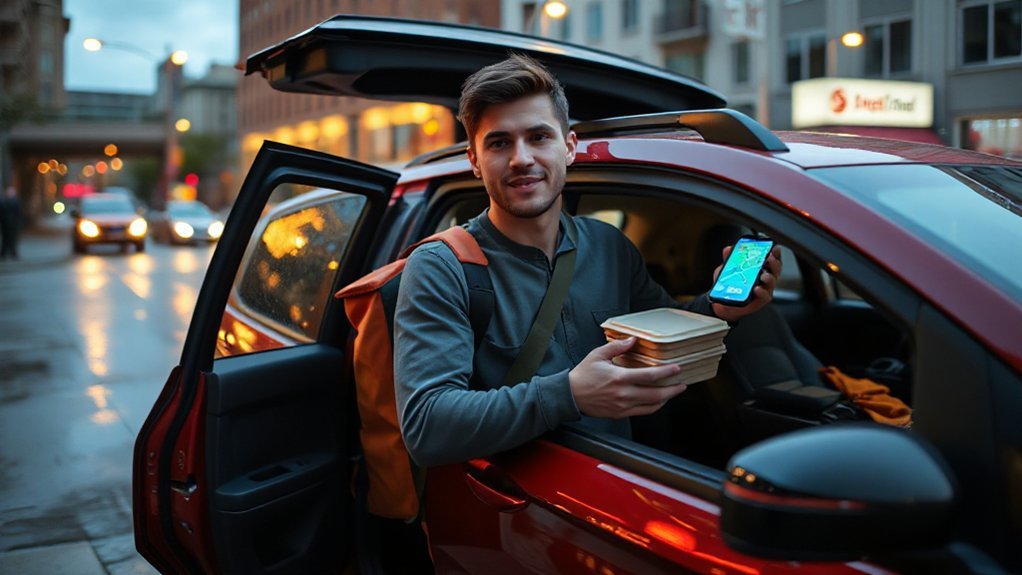
If you’re starting with DoorDash or Uber Eats, you’ll want a dependable vehicle, a smartphone, and basic local permits, then focus on high-demand times and busy neighborhoods to boost order volume. You’ll learn to pick higher-paying orders, stack deliveries, and use app incentives while tracking expenses for taxes and maintenance. Stick with straightforward communication and efficient routing to improve tips and reduce downtime — here’s how to put it all together.
Key Takeaways
- Work peak hours (lunch 11–2, dinner 5–9, late-night weekends) in dense areas to maximize order volume and pay.
- Use app heat maps, accept high-value batches, and prioritize short-distance, high-tip deliveries to increase hourly earnings.
- Combine navigation apps, group nearby pickups, and accept smart multi-orders to minimize drive time and idle mileage.
- Maintain vehicle/bike reliability, log mileage and expenses, and keep receipts to lower taxes and boost net income.
- Communicate promptly with customers, confirm special requests, and deliver professionally to earn higher tips and better ratings.
Getting Started: What You Need to Begin
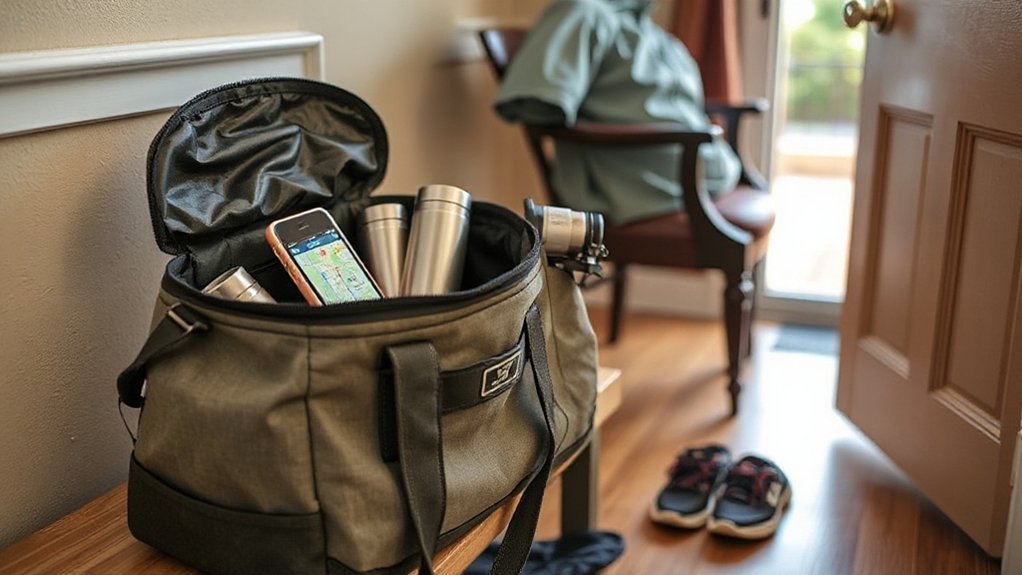
Before you start accepting orders, make sure you’ve got the basics: a reliable vehicle or bike, a smartphone with a data plan, and the necessary apps and documents (driver’s license, insurance, any local permits). You’ll check delivery requirements for each platform—age, background check, and vehicle standards—and enroll in the apps that match your schedule. Choose vehicle options that fit your market: bike for dense urban routes, scooter for short trips, car for longer distances or bad weather. Inspect your vehicle, keep a phone charger, and download maps and messaging apps. Learn payout methods and peak pay incentives so you can target profitable shifts. Start with a few familiar neighborhoods to build speed and ratings.
Choosing the Best Times and Neighborhoods

Timing and location make the biggest difference in earnings, so pick shifts and neighborhoods that match demand spikes and short trips. You’ll learn local peak hours quickly: lunch (11–2), dinner (5–9), and late-night on weekends. Watch order volume and average drive time; favor dense areas with lots of restaurants and short blocks. Track neighborhood trends over a week — some suburbs spike around mall food courts, others near universities after classes. Avoid long highways and spread-out zones during slow windows. Use your own notes or the app heat map to confirm where orders cluster. Plan breaks between peaks, position yourself near multiple restaurants, and be ready to move when trends shift so you maximize active time.
Maximizing Earnings: Tips, Bonuses, and Strategies
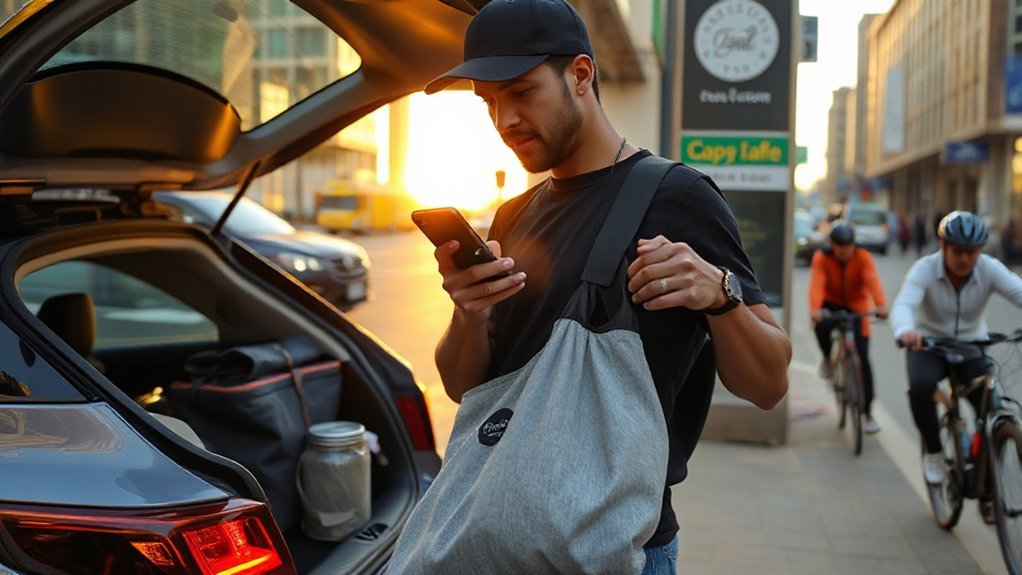
Now that you’ve picked the best times and neighborhoods, start stacking strategies that boost per-hour pay beyond just accepting more orders. Focus on bonus opportunities the apps offer: sign into peak pay, complete quests, and track streaks so you qualify without wasting time. Prioritize higher-value orders and short waits; you’ll raise effective hourly rates. Use delivery promotions wisely—target ones that fit your area and schedule rather than chasing every spike. Communicate politely with customers and restaurants to reduce cancellations and increase tips. Keep accurate records of expenses and mileage to know your true earnings. Test small changes—acceptance rate thresholds, surge windows, or specific restaurant chains—and keep what consistently improves net income.
Improving Efficiency: Route Planning and Batch Deliveries

Start by ordering pickups so you drop off along a tight path instead of zigzagging across town. Use a combo of navigation apps so you see traffic, shortcuts, and turn-by-turn guidance that matches your route. When the app offers smart multi-orders, take ones that fit your optimized path to boost per-trip pay.
Optimize Pickup-To-Dropoff Order
Because every extra minute costs you money, ordering your pickups and dropoffs smartly is one of the fastest ways to boost earnings: plan by proximity first, grouping orders that require minimal detours. Use pickup strategies like accepting orders from the same restaurant chain or clustered hotspots to reduce wait and travel. Prioritize dropoff efficiency by sequencing deliveries along a logical path — avoid backtracking and bundle short hops with longer ones only if time windows allow. When batching, check restaurant readiness and customer ETA so you don’t sit idle. Communicate proactively if delays occur; quick updates cut cancellations. Track which neighborhoods give smooth handoffs and repeat that pattern. Small adjustments to order sequence shave minutes off each run and add up to real extra pay.
Use Navigation App Combos
Balancing speed and accuracy, you’ll get the most from pairing navigation apps—use one for fast routing (like Waze for traffic and shortcuts) and another for precise dropoff guidance and address verification (like Google Maps or Apple Maps). You’ll stay quicker and reduce wrong-turn stress by splitting tasks: one app scouts traffic and reroutes, the other confirms building entrances and apartment numbers. Use app usage tips to set defaults and voice prompts so you don’t fumble while driving.
- Use Waze for live traffic and shortcuts; toggle alerts to avoid false detours.
- Use Google/Apple Maps for exact addresses, streetview checks, and walking directions.
- Learn navigation app features like lane guidance, speed limits, and ETA recalculation.
Practice combos until switching is seamless.
Accept Smart Multi-Orders
Now that you’ve got navigation apps working together, you can boost earnings by accepting smart multi-orders—multiple deliveries grouped into one efficient route. You’ll evaluate distance, dropoff direction, and customer ETA to decide if a batch’s payout justifies the extra stops. Use simple multi order management rules: prioritize orders heading the same way, flag long waits, and decline if detours exceed your profit threshold. For delivery stacking, keep hot items separated and confirm pickup order with drivers or restaurants to avoid cold complaints. Communicate estimated arrival times to customers, update statuses promptly, and map the most logical sequence before leaving the restaurant. With disciplined selection and quick planning, multi-order runs can raise hourly pay without wrecking ratings.
Increasing Tips and Customer Satisfaction

Be friendly and clear when you contact customers—confirm special requests and give short ETA updates so they feel informed. Move quickly but don’t rush: protect hot items and secure drinks to avoid spills. Those little extras—polite small talk, careful handling, and prompt arrival—translate directly into better tips and repeat business.
Friendly, Clear Communication
When you speak and text clearly, customers relax and tip more, so make every message short, polite, and informative. You’ll use effective listening during customer interactions: read notes, confirm special requests, and ask one clear question if something’s unclear. Keep tones friendly and professional; it builds trust and higher tips.
- Greet briefly and confirm order details to reduce mistakes.
- Offer arrival ETA and easy drop-off instructions to set expectations.
- Say thank you and mention you’re happy to help next time to leave a positive impression.
Don’t over-text or overshare—one or two concise messages work best. Mirror the customer’s tone, fix misunderstandings fast, and log feedback mentally so you improve each shift. Friendly clarity pays.
Fast, Careful Delivery
If you want better tips, deliver orders quickly without sacrificing care: keep food upright, secure hot and cold items separately, and plan the fastest safe route before you leave. You’ll set expectations by texting when you’re nearby and confirming any special instructions. Load bags so nothing shifts—use non-slip liners, stack securely, and isolate sauces to prevent spills. Drive defensively but efficiently: avoid sudden braking, take clear routes, and use traffic-aware navigation to maintain fast delivery times. At drop-off, hand items directly to the customer when possible and confirm the order looks correct. A brief, polite smile or note about handling goes a long way. Customers notice careful handling and punctuality, and they tip accordingly.
Safety, Vehicle Care, and Tax Considerations
Although delivering fast can mean more orders, you’ve got to prioritize safety, vehicle upkeep, and taxes from the start to protect your earnings and license. You’ll use safety measures every shift: obey speed limits, avoid risky shortcuts, and secure hot bags to prevent spills. Keep vehicle maintenance regular—tires, brakes, oil—to reduce breakdowns and costly downtime. Track expenses so tax deductions cover mileage, supplies, and phone bills; log trips daily. Verify your insurance coverage and understand gig-worker clauses or consider supplemental policies. If you treat delivery like a small business, you’ll protect income and lower taxes.
- Inspect vehicle weekly: lights, tires, fluids.
- Log mileage and receipts for deductions.
- Follow defensive-driving safety measures to avoid claims.
Conclusion
You’ve got the basics: reliable vehicle, smartphone, permits, and a plan. Stick to lunch and dinner in busy areas, accept higher-value and batch orders, and use app incentives to boost pay. Optimize routes to save time, communicate clearly, and treat deliveries as a small business—track expenses and mileage for taxes. Keep safety and vehicle maintenance top of mind, focus on great service to increase tips, and adjust strategies based on what actually pays best.