You’ll learn the gear, you’ll learn the craft, you’ll learn the hustle — and yes, you can make money doing it. I’ll walk you through building a quiet home studio, nailing a demo that makes ears perk up, and pitching like a pro without sounding slimy, so you can book gigs that actually pay. Picture clean WAV files, clients asking for “one more take,” and your calendar filling up — but first, you’ve got to start.
What Clients Are Looking For
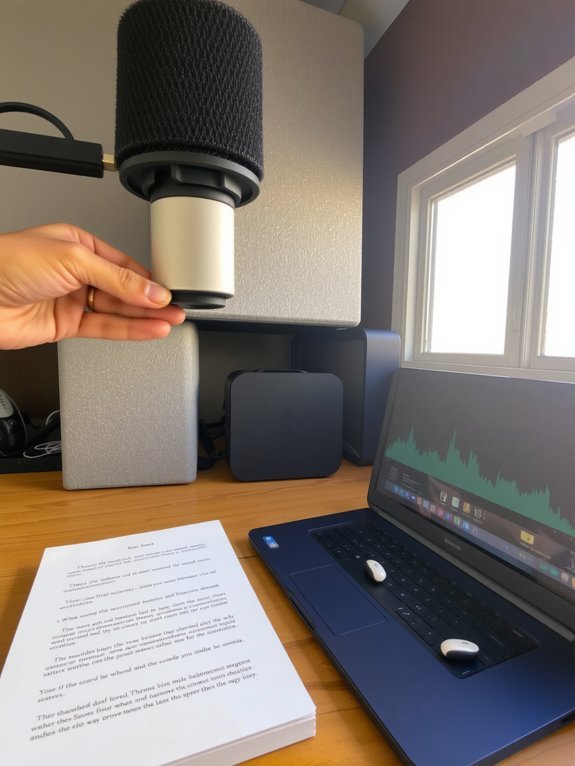
If you want to get hired, start by listening like a detective — clients don’t just want a “nice” voice, they want a solution. You tune in, hear a client’s aim, their mood, the product’s scent in your imagination, and you match it. I’ll tell you bluntly: client expectations shift fast, so you watch industry trends, adapt, and don’t cling to one “signature” forever. You read briefs, ask sharp questions, deliver dry reads, warm reads, comedic beats, whatever paints their scene. You record crisp takes, trim breaths, send clean files, and apologize with a joke when you flub a line. Confidence sells; humility keeps relationships. Be curious, be prompt, and make their story sound inevitable.
Setting Up a Basic Home Studio
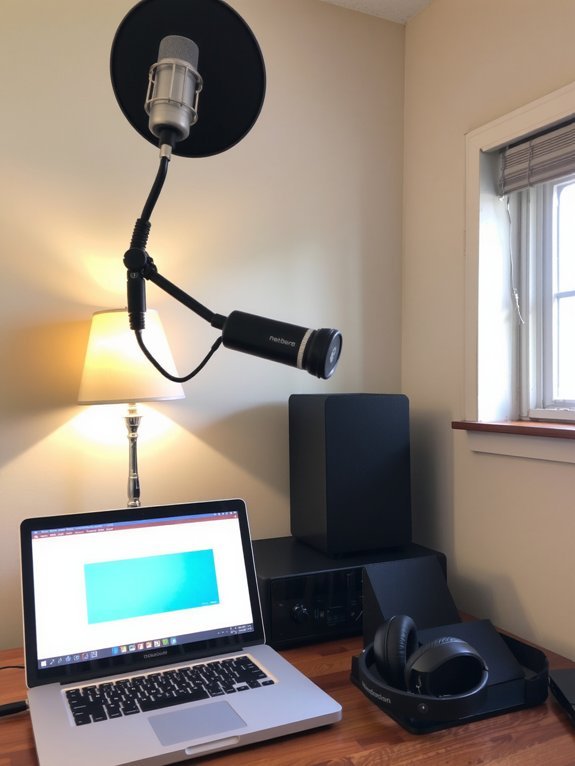
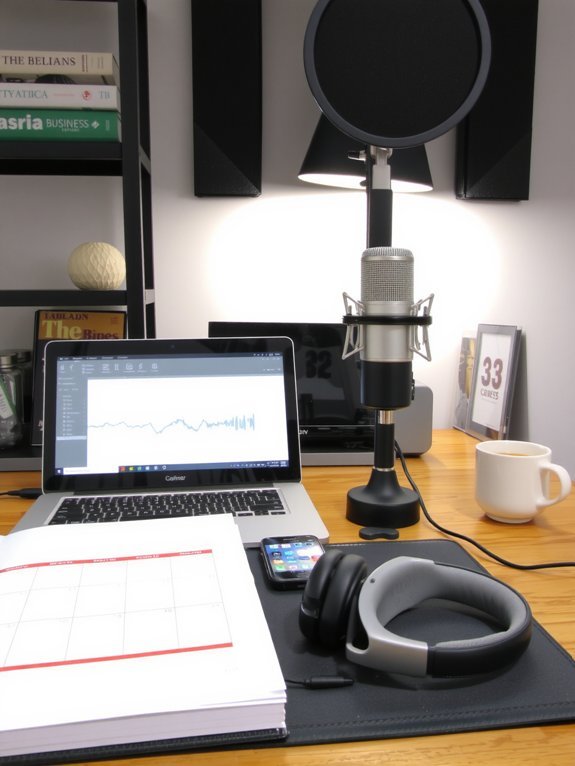
One corner, one mic, and a little elbow grease—that’s where your career starts. I’ll walk you through setting up a basic home studio that sounds legit, not like a shower performance. Pick equipment essentials: a cardioid condenser or dynamic mic, audio interface, closed-back headphones, mic stand, pop filter. Lay down simple soundproofing techniques: thick blankets, weatherstripping, foam panels where reflections bite, heavy curtains, rugs to tame the slap. Position the mic, test levels, and trust your ears — I do, mostly. Keep cables tidy, label things, and save a backup take before you celebrate. You’ll get better after awkward takes and coffee spills. Small investments, smart tweaks, and stubborn practice turn that corner into a workplace.
Building a Professional Demo Reel
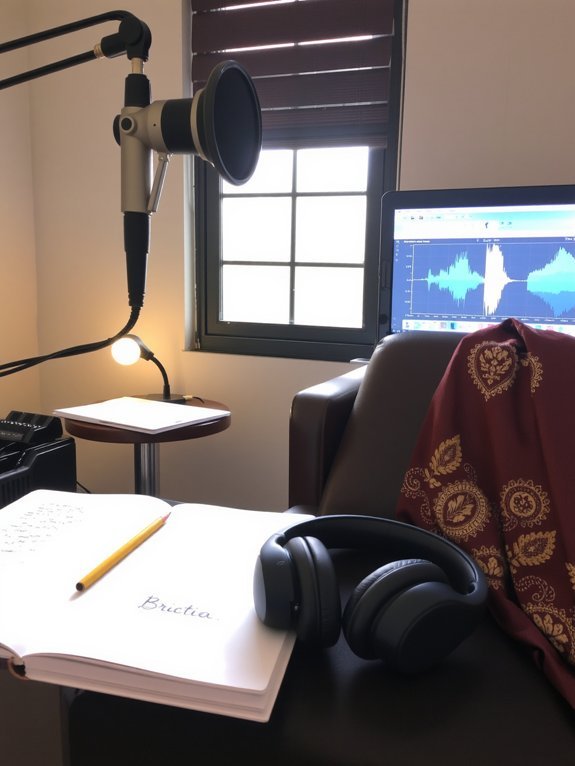
Because your demo is the voice industry’s calling card, you’ve got to make it sharp, short, and impossible to ignore. You’ll pick 60–90 seconds of punchy demo examples, each showcasing range, tone, and character — no dead air, no filler. Record in a quiet room, obsess over audio quality, trim breaths, match levels, and export clean files. I’ll pretend I’m brutal, then keep the takes that sparkle.
| Style | Length | Purpose |
|---|---|---|
| Commercial | 30s | Sell product |
| Narration | 20s | Storytelling |
| Character | 20s | Animation/VO |
| Promo | 15s | Hype |
| IVR | 10s | Menu |
Polish, sequence for flow, get honest feedback, then upload and hustle smartly.
Finding and Pitching to Voiceover Gigs

Start with a list of targets and a plan — you’ll save time and sound like a pro. I tell you this because scattershot applies to pigeons, not careers. Make a short spreadsheet, note agencies, podcasts, indie studios, and ad firms. Prioritize by fit and deadline. For finding gigs, scan job boards, network at mixers, DM producers, and listen for casting calls on social channels. When you pitch, be brief, friendly, and specific. Attach a tailored clip, say why you’re right, offer a quick turnaround. Don’t beg, tease value. Practice a two-line opener: “Hi, I’m Alex—bright, warm reads in 30s. Attached: sample for your commercial.” Follow up twice, spaced like polite taps. Track replies, tweak your approach, rinse, repeat.
Pricing Your Voiceover Work
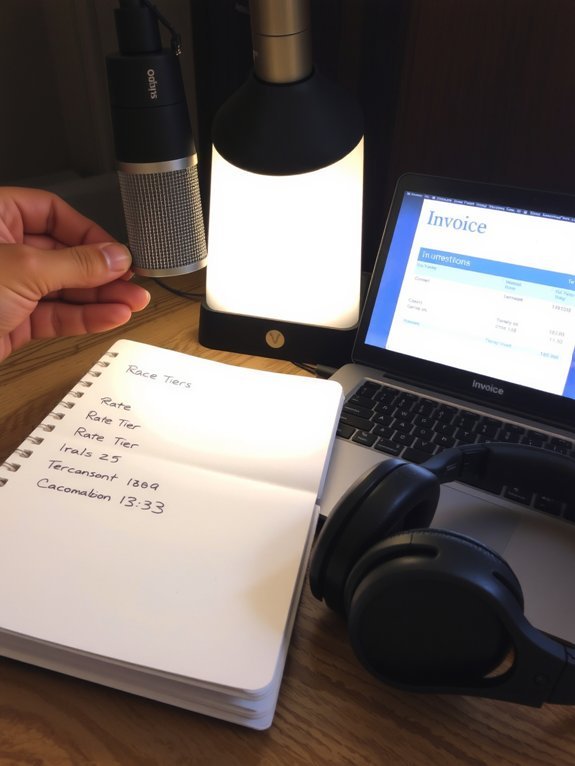
You’re going to set rates like a pro, and yes, you’ll probably tweak them after your first awkward client call. I’ll walk you through flat fees, per-hour or per-finished-minute charges, and usage-based pricing that bills differently for broadcast, web, or in-store loops, so you can smell the money and not get burned. Come with your negotiating hat and a solid contract template, because friendly banter won’t pay the bills if you haven’t locked down terms.
Rate Types Explained
If you’ve ever blinked at a blank invoice and wondered whether to charge by the minute, the project, or your dignity, welcome to Rate Types — my favorite confusing buffet. I walk you through choices fast. A flat rate, simple and bold, feels like ordering a burger — no surprises, you deliver, they pay. An hourly rate suits messy sessions, edits, coffee breaks, you clock in, you clock out. A project fee bundles everything, nice for clients who hate math. Usage fee covers where and how long your voice will be heard, and royalty payments let you earn repeats, like a tiny ongoing applause. Buyout rates buy permanence; you get a bigger one-time check, they own the track. Pick the mix that respects your time, talent, and throat.
Usage-Based Pricing
When a client asks where their voice will live, don’t shrug — that’s the money question. You’ll answer with specifics, because vague feels cheap. Say the markets, say the duration, say if it’s broadcast, streaming, in-store, or social. I like to list vivid usage examples, you’ll hear commercials on the radio, elevator music, or a five-second app prompt — each pays differently. Pick pricing models that map to value, not ego. Flat buyouts, hourly studio time, or recurring royalties, mix them like spices. Say the rates, show the caps, note territory and term, keep it tidy. Be bold, but reasonable, and always sound like you know what a 30-second spot actually does to a listener.
Negotiation and Contracts
A good contract is basically a seatbelt for your voice—strap it on before you hit the road. I tell clients, calmly but firmly, what I need: clear contract terms, usage limits, timelines, and payment milestones. You’ll list deliverables, revisions allowed, and where the audio can live. Smell the coffee, tap the mic, and mark “exclusive” or “non‑exclusive” with confidence.
Use negotiation strategies that lift value, not ego. Offer a starter rate, then trade add-ons: extra usage, rush fees, or source files. Say no when the price undermines your craft, and smile while doing it. Keep emails short, contracts tight, and signatures digital. You’ll protect your work, and get paid what it’s worth.
Growing Your Voiceover Business
You’ve priced your work, now let’s grow the business, starting with people — shake hands, swap demos, and keep a business card that smells like ambition (not coffee). I’ll show you how to turn casual chats into steady gigs through smart networking and tight partnerships, then craft a brand that sounds like you, looks sharp online, and gets heard. Stick with me, we’ll make your name familiar, your demo impossible to ignore, and maybe laugh at a few awkward meet-and-greets along the way.
Networking and Partnerships
Because voices don’t sell themselves, you’ll need people—real ones who laugh, pass along work, and open doors you didn’t even see, and I’ll show you how to find them without sounding like a sleazy salesman. I go to networking events, handshakes still warm, coffee scent in the air, and I listen more than I blab. You’ll do the same: offer a quick demo, ask about needs, follow up with a short, useful note. Spot partnership opportunities—producers, podcasters, ad agencies—and propose clear trades: a sample read for a testimonial, a referral split, or co-hosted auditions. Keep it human, bring cookies sometimes, admit you’re learning, and treat each contact like a small, promising audition for friendship.
Marketing and Branding
Branding is your voice’s wardrobe—think bold jacket, clean shoes, a hat that says “I might narrate your life story.” I’m going to make this simple: you’ve got to look and sound like someone people trust with their projects, money, and deadlines, so craft a logo that doesn’t scream “first draft,” write a short bio that tells a story not a résumé, and assemble demos that make producers stop scrolling mid-coffee sip. You’ll use social media like a friendly billboard, post short clips, behind-the-scenes audio, and captioned snippets that make ears perk up. Treat personal branding as a promise, deliver punctual demos, smiling replies, and tiny surprises in client emails. Be memorable, be useful, and don’t forget to sound human.
Conclusion
You’ve got this: set up a crisp home studio, craft a demo that makes ears perk, and pitch like you mean it. Did you know 60% of companies prefer freelance voice talent now? That’s your open door. Be clear on prices, protect your time, and deliver like a pro—warm, accurate, on deadline. I’ll poke, prod, and help you tweak scripts until they sing; you show up, record, and cash the check.