


You can make real money booking podcast guests, and yes, it’s less glamorous than you imagined — more spreadsheets, fewer champagne toasts — but hugely profitable if you’re organized. I’ll show you how to find sticky niches, pitch like a pro, vet guests who actually have stories, and charge in a way that feels fair. Imagine juggling calendars, slick one-liners, and a steady stream of yeses; stick with me, and you’ll want that first recurring client.
Why Podcast Guest Booking Is a Viable Side Hustle

One clear reason to try podcast guest booking as a side hustle: the work feels like people-wrangling, not soul-sucking numbers. You’ll hustle between inboxes, calendar pings, and the satisfying clack of a keyboard, matching storytellers to hosts, watching podcast growth spike like a caffeine buzz. I’ll admit, you’ll play diplomat, coach, and tiny-stage manager, but that’s the fun part. You’ll sniff out freelance opportunities in Facebook groups, LinkedIn threads, and late-night DMs, then prep guests so their mic presence sings. You’ll hear the relief in a host’s voice when a booking lands. It’s tactile work, hands-on, with visible wins. If you like people, deadlines, and the thrill of a perfect interview cue, this fits.
Defining Your Niche and Ideal Client Profile

If you want to stop chasing every shiny client and actually make money, you’ve got to pick a lane — and fast. I want you to smell the coffee, lean in, and do simple niche identification: pick an industry, pick a format, pick the kinds of hosts whose shows light you up. Picture avatars — the ideal client is not everyone, it’s the health coach who loves long-form interviews, the startup CEO who wants thought leadership, the author on a publicity run. Say it out loud, write it down, sketch a day in their life. When you can name pain, goals, and preferred podcasts, you’ll stop wasting time, start attracting matches, and actually sound like you know what you’re doing.
Setting Up Your Service Offerings and Workflow

Okay, here’s where you put your money where your mouth is: you’ll sketch clear service packages and pricing, outline exactly how you’ll source guests, and map the booking workflow so nothing slips through the cracks. I’ll walk you through quick menu options clients understand at a glance, show you how to sniff out ideal guests (yes, like a bloodhound but less dramatic), and give a tidy step-by-step booking routine you can run in your sleep. Be ready to tweak as you go, because real-world chaos will teach you more than any spreadsheet ever will.
Service Packages and Pricing
Because you’d rather sell clarity than confusion, start by building a handful of clean, easy-to-understand packages that do exactly what you promise—no smoke, no mystery fees. I map out service tiers on a simple page, three boxes side-by-side, each with bold package benefits: outreach volume, vetting depth, and interview prep. You point, they pick. Price them by outcome, not hours—basic gets five pitches, standard ten, premium a white-glove chase and calendar management. Add clear add-ons: rush, research, transcript. Show a sample success story, a screenshot of booked slots, a tiny testimonial that smells like real people. Be playful in copy, firm in scope. You’ll avoid scope creep, close faster, and sleep better — honestly, it feels great.
Guest Sourcing Process
Nice packages are the bait, but you still need a reliable net. I set up clear service tiers, list deliverables, and map client goals to show value fast. You’ll pick niches, use niche targeting, and build a prospect pool that smells like opportunity — industry forums, LinkedIn scans, newsletter explorations. I draft crisp templates for guest outreach, but I tweak each line so it sings to the recipient; nobody likes robotic love letters. You’ll track responses in a simple sheet, flag warm leads, and keep a running swipe file of wins and flops. Picture coffee steam, a blinking cursor, and the quiet thrill when a yes pops into your inbox. You’ll iterate, laugh at mistakes, and get sharper.
Booking Workflow Steps
Think of this as your backstage pass: you’ll build service tiers, sculpt a repeatable workflow, and turn chaos into a calm, cashable routine. Start by naming packages — basic outreach, VIP pitchwriting, full guest management — and price them like you mean it. Create a checklist: research, outreach, confirmation, prep call, recording, follow-up. Use booking software to automate scheduling, reminders, and time-zone headaches; I love the ping of a confirmed slot. Draft tight email templates, but personalize two lines, always. Record calls, take screenshots of show notes, save clips. Communicate clearly, daily when needed, otherwise be a ghost. Deliverables first, surprises never. You’ll iterate fast, learn from flops, and soon clients will call you the calm in their podcast storm.
Finding and Recruiting High-Quality Podcast Guests

Anyone can say they’ll find great guests, but I’ll show you how to actually do it — the kind of guests who make hosts gasp, listeners lean in, and downloads climb. You’ll use guest outreach strategies that aren’t spammy, you’ll slide into DMs with charm, and you’ll follow up like a pro without sounding desperate. I’ll teach networking techniques that put you in rooms, virtual and real, where interesting people hang — conferences, niche Facebook groups, Twitter threads that smell of genius. You’ll map ideal guest profiles, stalk (nicely) their recent work, and craft a single-line hook that makes them say yes. Expect a little hustle, some coffee, and a grin when you land a superstar.
Vetting Guests and Preparing Compelling Pitches
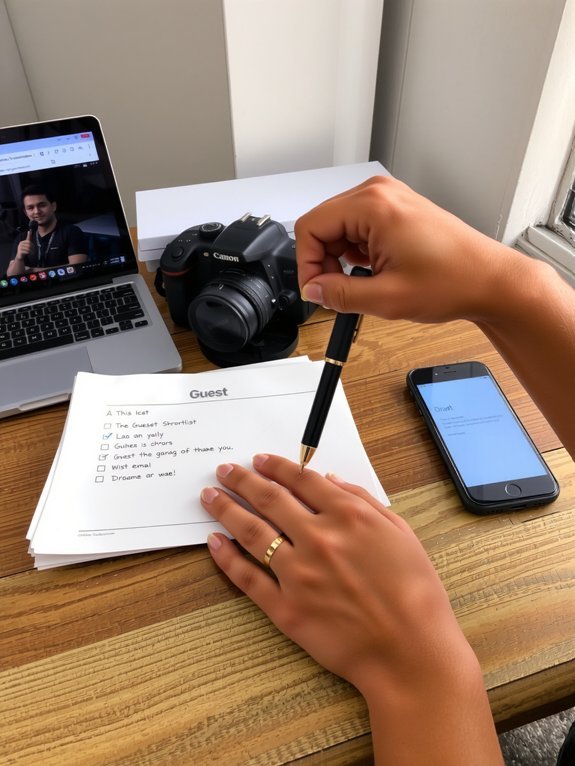
Before I hand a podcast host a guest, I put them through a tiny, ruthless audition — because charisma on paper and charisma in a mic are not the same thing. You test vocal energy, story hooks, and topical knowledge, and you check solid guest qualifications: media training, clear anecdotes, and punctuality. Then you craft pitch strategies that sing.
| What I check | How I test | Quick verdict |
|---|---|---|
| Voice energy | 2-min warmup clip | Pass/Fail |
| Story clarity | 60-sec hook | Pass/Fail |
| Relevance | Topic match list | Pass/Fail |
| Social proof | Links/screenshots | Pass/Fail |
| Logistics | Availability grid | Pass/Fail |
You prep tight soundbites, tease audience value, and send a bold, polite pitch. You know who fits; you’ll save hosts time, and keep your rep intact.
Pitching Hosts and Building Relationships With Producers

You’ll start by stalking the show—reading recent episode notes, listening for tone, and noting what makes their audience tick—so your pitch lands like it was handcrafted, not mass-mailed. I’ll tell you, getting a producer on your side is the secret sauce: send a thoughtful note, reference a recent episode line, and offer a clear, low-friction intro that makes their life easier. Keep it human, a little cheeky, and always follow up with value, not guilt—producers remember helpers, not hawkers.
Targeted Show Research
If you want to get booked on the right podcasts, you’ve got to do more than skim episode titles and pray—research is your secret sauce. You’ll do target audience analysis, podcast genre exploration, and dig into recent episodes, tone, and guest mix. Listen like you’re eavesdropping at a cafe, take notes, timestamp gold moments, and jot host pet phrases. Then, match your guest’s angle to that vibe.
| What to listen for | Why it matters | Quick action |
|---|---|---|
| Episode opener style | Sets tone | Mirror language |
| Guest background | Predict fit | Prep tailored pitch |
| Segment length | Planning | Time your points |
| Host questions | Anticipate | Prep answers |
| Ads & sponsors | Monetization fit | Note brand overlap |
Producer Relationship Nurturing
Alright—so you’ve done the headphone-snooping, taken notes until your notebook looks like a conspiracy board, and matched guests to shows like a dating app for ideas. Now you’ll master producer outreach, but with finesse, not spam. Slide into DMs or email, reference a recent episode, and offer a concise hook—no sermon, just a tasty appetizer. Be helpful, predictable, and slightly charming. Bring audio clips, one-sheet bios, and scheduling windows, so they can say yes without thinking. Follow up like a polite ghost: gentle, useful, timed. Celebrate small wins, learn from rejections, send thank-you notes with a tiny GIF. That relationship building pays off: more bookings, warmer calls, and fewer awkward elevator pitches.
Pricing Strategies and How to Get Paid

Money talk can feel like stepping onto a stage in your socks—awkward, exposed, but necessary—so let’s cut to it: you’re charging for results, not effort, and that changes everything. I tell clients upfront about pricing models, flat retainers, success fees, or hourly blocks, then we pick the rhythm that fits their budget and ambition. Be bold, offer tiers, and show what each one delivers—bookings, prep, follow-up, metrics. For payment methods, accept card, ACH, PayPal, and even Stripe links, make invoicing painless, and state net terms clearly. Ask for deposits, tie fees to milestones, and insist on late fees. Speak plainly, set boundaries, get paid before the curtain call, and stay proud of your value.
Tools and Systems to Streamline Bookings

You’ve nailed the money talk, now let’s make the messy part look slick. I want you to feel the relief when you close a deal, hit a few keys, and a clean calendar appears. Use booking software to centralize invites, records, and show briefs — no more hunting inboxes like a raccoon. Pair it with scheduling tools that offer buffers, time zones, and one-click reschedules; your guests will thank you, secretly admire you, then forget to tip. I set up templates, automated reminders, and a shared folder of episode assets, so prep feels tactile — PDFs, links, a polite checklist. Keep backups, test workflows, and prune apps that duplicate work. Less friction, more episodes, fewer headaches, proud exhale.
Growing and Scaling Your Guest-Booking Business

If you want to scale this thing without turning into a frazzled human spreadsheet, start by building engines, not chores. You automate the repetitive, you human the high-spark moments. I set up pipelines for guest outreach, templates that sound like people, not robots, and a tracking dashboard that glows green when things hum. Hire an assistant as soon as your calendar looks jealous. Outsource editing, research, scheduling—buy back your time so you can sell strategy. Monitor industry trends, sniff out niches, pivot offers before everyone else does. Set clear KPIs, celebrate small wins with bad coffee and high fives, then refine. Grow steadily, not chaotically. Scale feels great when you control the throttle, not the chaos.
Conclusion
Think of this gig as match-making with a deadline: you connect voices, light the mic, and cash the check. You’ll niche down, hustle smart, and build systems that work while you sleep. Start small, pitch clean, celebrate the wins, and learn from the flops — I’ve tripped plenty, you will too. Keep conversations human, prices transparent, and quality strict. Do that, and this side hustle turns into real, repeatable income.


