You can build a steady income with vending machines by choosing the right machine, locking down high-traffic spots, and stocking products that turn consistently. Focus on metrics—sales per week, turnover rate, and fill-costs—so you know what to replace and when. Add cashless payments and dynamic pricing to lift margins. I’ll walk you through location strategies, product selection, and operations that scale, but first we need to identify your target market.
Key Takeaways
- Choose the right machine type (snack vs drink) based on capital, margins, maintenance, and target location.
- Secure high-foot-traffic, low-competition locations and get placement agreements in writing.
- Stock proven, high-velocity SKUs with a small rotating selection of trending or healthy options.
- Price for 40–60% gross margin, enable cashless payments, and test dynamic pricing by location/time.
- Track sales telemetry, schedule regular restocks and maintenance, and optimize routes to minimize downtime.
Choosing the Right Vending Machine Type

Which vending machine will give you the best return on investment? You’ll compare snack machines and drink machines by upfront cost, margins, maintenance, and turnover. Snack machines cost less and sell higher-margin items, but items spoil and slot rotation matters; drink machines often demand higher sales volume and can use refrigerated units that raise energy and repair costs. Track per-item gross margin, average daily sales, and downtime to forecast ROI; a conservative model uses 12–18 months payback for top locations. Factor in inventory turnover: snacks need frequent restock, drinks yield repeat purchases. Choose the type matching your capital, time for servicing, and target demographic. Data-driven pilots will validate assumptions before scaling.
Finding and Securing Profitable Locations
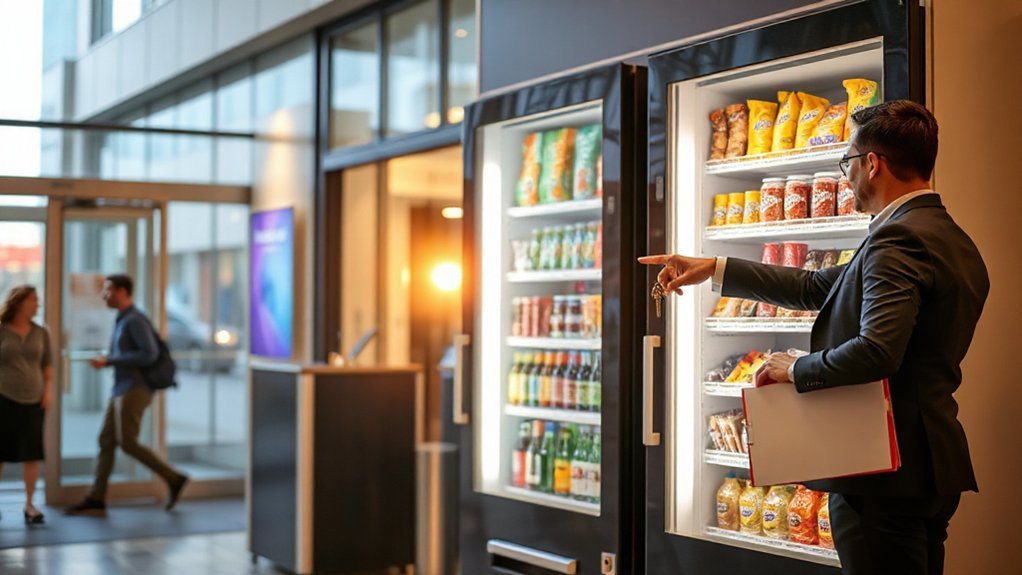
You’ll maximize revenue by placing machines where foot traffic is measurable and consistent, like office complexes, transit hubs, or hospitals with 200+ daily visitors. Use simple traffic counts, sales per square foot benchmarks, and competitor presence to prioritize spots before you negotiate. When approaching owners, offer clear lease terms or revenue-sharing proposals and get permissions in writing to protect your investment.
High‑Traffic Spot Selection
Picking the right spot makes or breaks your vending business, so focus on locations that deliver consistent foot traffic, a captive audience, and repeat visits. You’ll start with demographic analysis: match products to age, income, and nearby businesses. Quantify foot traffic with counters, observation logs, or mobile-data reports — aim for patterns, not one-off spikes. Prioritize locations with dwell time (break rooms, transit hubs, college quads) because engagement converts to purchases. Use conversion-rate targets (e.g., 1–3% of passersby) to estimate revenue and compare sites. Validate with short trials or split tests before committing inventory. Track SKU performance by location and reallocate to maximize yield. Data-driven selection reduces vacancy and increases predictable cash flow.
Lease & Permission Strategies
Good site data gets you the meeting, but securing the location takes negotiation and paperwork — and that’s where lease and permission strategies matter. You’ll analyze foot-traffic counts, revenue projections, and competitor density to justify favorable lease terms; bring spreadsheets showing expected sales per week to negotiate rent percentages, rent caps, or revenue-sharing clauses. Use concise, standardized lease agreements that limit your liability, define service access, and set clear termination conditions. For permission requests to businesses or property managers, present a short proposal with projected income, maintenance schedules, and branding controls to speed approvals. Always get approvals in writing, record dates and contacts, and include performance review clauses so you can renegotiate or exit if results don’t meet targets.
Selecting Products That Sell Consistently
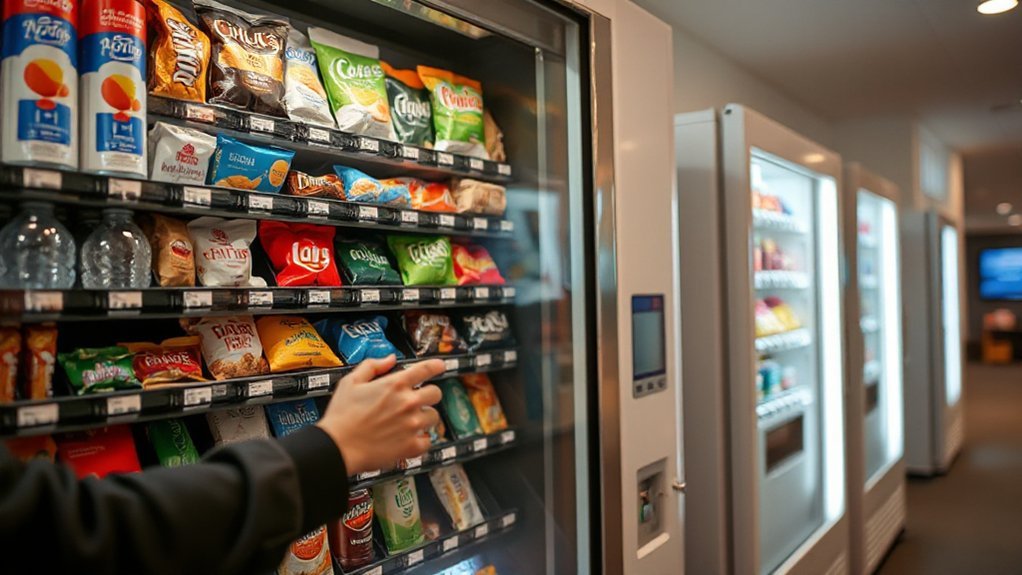
If you want steady revenue from vending, prioritize products with proven, repeat-buy demand—think staple snacks, bottled drinks, and quick-prep foods that sell in most locations. You’ll balance core SKUs (chips, water, coffee) with rotating trending snacks to capture impulse buys; track sales weekly and drop underperformers fast. Use location-specific data: gyms favor protein bars, offices move coffee and healthy options, schools need compliant items. Limit seasonal items to 10–15% of inventory so peaks help without creating dead stock. Negotiate flexible supplier terms for small test runs, and implement A/B assortments across machines to compare metrics. When you standardize best-sellers and iterate by data, turnover rises and restocking becomes efficient and predictable.
Pricing, Payments, and Maximizing Profit Margins

To protect margins and move inventory, you’ll set competitive prices based on local foot traffic, cost per item, and competitor rates—aim for a 40–60% gross margin where possible. You’ll also add cashless payment options (card, mobile wallets, contactless) to increase impulse purchases and typically boost sales by 10–30%. Next, we’ll quantify price sensitivity and payment ROI so you can optimize both revenue and customer convenience.
Competitive Price Strategies
Although pricing might seem straightforward, it’s one of the biggest levers you’ll use to boost revenue and margin in vending—small tweaks in price, product mix, or payment options can move per-machine profitability by 10–30% or more. Use market analysis to segment locations, track sales velocity, and spot underperforming SKUs. Test dynamic pricing for time-of-day, foot traffic, or event-driven demand, but keep changes modest and measured. Focus on margin-first pricing: raise prices on low-elasticity items, bundle slow movers, and cut costs via smarter sourcing.
- Run A/B price tests weekly to quantify demand elasticity.
- Monitor competitor prices locally and adjust SKU mix.
- Implement tiered packs or bundles to increase average sale.
Act on data, iterate quickly, and protect customer trust.
Cashless Payment Integration
You’ve already seen how small price tweaks and bundling move margins — now tie those levers to payment methods, because offering cashless options can lift average transaction value and conversion rates considerably. You should deploy card readers and mobile pay to reduce friction: studies show cashless machines sell 10–30% more per visit. Price intelligently — round up to clean prices, add a small convenience surcharge when data supports it, and A/B test promotions tied to tap-to-pay. Track payment method data to spot high-value locations and peak times, then adjust assortments and pricing dynamically. Prioritize customer convenience: clear signage, NFC stickers, and reliable connectivity cut failed transactions and lost sales. Cashless equals higher conversions, better analytics, and faster ROI when executed with measurement.
Inventory Management and Machine Maintenance
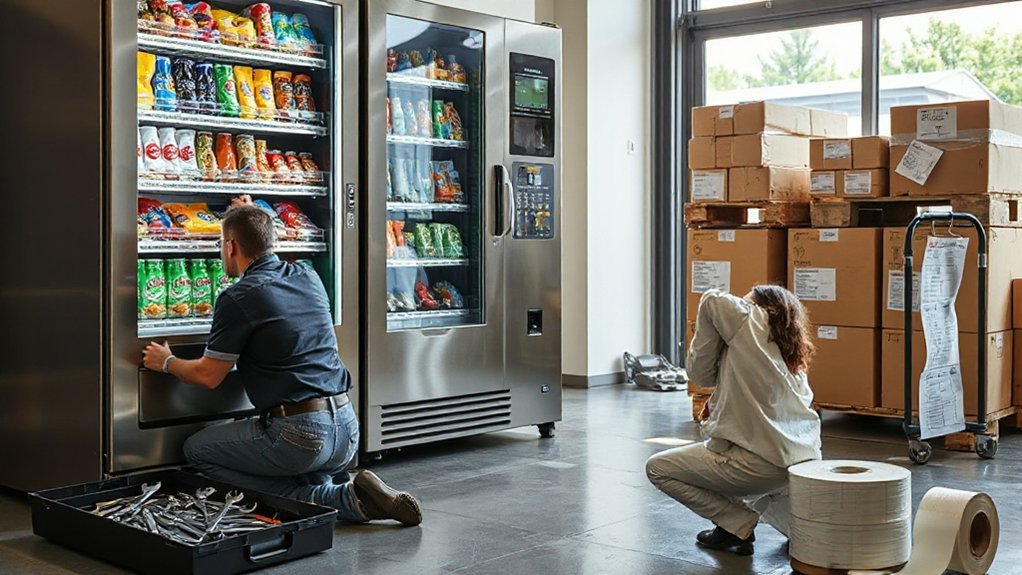
Inventory and maintenance are the two levers that decide whether your machines turn a profit or sit idle—stockouts cost sales and poor upkeep drives repair bills and lost locations. You’ll cut shrinkage and downtime by using inventory tracking tied to sales data, setting par levels per location, and rotating SKUs based on velocity. Maintenance schedules should be calendar- and usage-driven, with preventive checks reducing emergency repairs by up to 60% in many fleets.
- Track SKU velocity daily and adjust restock routes.
- Automate maintenance schedules and log repairs for trend analysis.
- Use remote telemetry to spot declines, temperature issues, and cashless failures early.
Be disciplined: data-driven inventory tracking plus strict maintenance schedules keeps machines selling and operators profitable.
Scaling Your Vending Machine Business
Once your machines run like clockwork and data shows steady sell-through, scaling becomes a numbers game: add locations that match your top-performing profiles, standardize routes, and leverage telemetry to keep per-unit operating costs falling as your fleet grows. You’ll prioritize sites by ROI, using conversion rates, average sale, and restock frequency to rank prospects. Expand methodically: pilot batches of 3–5 machines in new clusters, measure KPIs for 60–90 days, then roll out winners. Use automation tools for inventory alerts, cashless payments, and route optimization to cut labor and shrink shrinkage. Negotiate supplier volume discounts and formalize service SOPs so technicians deliver consistent uptime. With disciplined metrics and repeatable playbooks, expanding reach becomes predictable revenue growth, not guesswork.
Conclusion
You can turn vending machines into steady income by choosing the right machine for your market, securing high-traffic locations, and stocking products that reliably sell. Use competitive pricing, cashless payments, and data to optimize inventory and routes. Keep machines well-maintained to reduce downtime and monitor sales to boost margins. Start small, measure performance, then scale strategically—each additional profitable location compounds revenue if you stick to data-driven decisions and disciplined operations.