You can turn a weekend hobby into a steady side income—seriously, I’ve seen it happen. You’ll pick a topic people actually want, film crisp lessons that sound like a real human, and stitch in quizzes and handouts that don’t bore anyone to tears; you’ll price smart, run promos, and pester your friends for honest reviews. I’ll walk you through the exact steps, tools, and little traps to avoid, but first—what’s your course idea?
Choosing a Profitable Course Topic

If you want to make real money on Udemy, start by picking a course topic that people actually search for—don’t wing it because your neighbor said “everyone loves watercolor.” I’ve learned the hard way that passion alone won’t sell; you need a sweet spot where what you enjoy, what you know, and what buyers desperately need all overlap. You’ll map target audience traits, use niche identification to narrow focus, and scan market trends so your idea isn’t a lone shout in a void. I poke around competitor analysis lightly, then double down on course uniqueness. Listen to audience painpoints, match content relevance to skill demand, blend topic passion with subject expertise, and then—breath, film, ship.
Validating Demand and Researching Competitors

You picked a promising topic—nice work—but now don’t just hope people show up; make them prove it. Start with market analysis: poke around Udemy search, Google Trends, and Reddit threads, sniffing for real questions, not empty hype. I squint at enrollment numbers, skim reviews, count student complaints like a detective. Then I gather competitor insights: watch top courses, note length, price, promo clips, what students praise, what they hate. Jot specifics, record screenshots, taste the course trailers—does the instructor sound human or robotic? Validate demand by testing small: a free mini-course, an email sign-up, or a social post that gets real comments. If people bite, you’ve got something. If they don’t, pivot, don’t pout.
Planning Course Structure and Learning Outcomes

You need crystal-clear learning outcomes, so students know exactly what they’ll walk away with — I’m talking specific skills, measurable targets, and a sentence you can proudly slap on your sales page. Break the course into bite-sized modules that flow like a playlist, each one a small win with a clear action (watch, do, practice), and toss in quick checkpoints so the momentum never fades. Then match assessments to those goals — quizzes, projects, or rubrics that prove the learning stuck — because vague praise won’t sell, tangible results will.
Define Clear Learning Outcomes
Clarity matters — really, it does; think of learning outcomes as the roadmap you’d slap on the dashboard before a cross-country trip. You’ll write crisp learning objectives, not vague promises. Say exactly what students will do, with verbs: describe, build, analyze, launch. You’ll picture a student, hearing the outcome, nodding, smiling, thinking “I can do that.” That little spark drives student engagement, and yes, sales. Use sensory specifics: “create a 5-minute demo video,” not “learn video editing.” Spell out time, tools, and deliverables. I recommend testing outcomes on a friend, or your slightly judgmental neighbor, then tweak. Keep outcomes visible on the course page and opening lecture, so expectations line up, and disappointment doesn’t. Simple, honest, effective.
Organize Modular Lesson Flow
Think of your course like a sandwich: layers you can actually taste, not a soggy pile of crumbs. You’ll chunk content into modules, pick clean lesson sequencing, and control content pacing so learners chew comfortably, not choke. I guide you to map clear bites: intro, meat, garnish.
| Module | Focus | Time |
|---|---|---|
| 1 | Hook & basics | 10m |
| 2 | Core skills | 30m |
| 3 | Apply & next steps | 20m |
You’ll sequence lessons so each one builds, like stepping stones you can see. Use short videos, quick exercises, pauses to breathe. I confess, I overstuffed once — learners mutinied. Keep modules tight, sensory cues, concrete actions. That way students finish satisfied, not bewildered.
Align Assessments With Goals
Although assessments can feel like a grading treadmill, I want them to be your course’s best friend — precise, honest, and a little bit charming. You’ll pick assessment techniques that mirror your promises, quick quizzes for facts, projects for skills, and checklists for habits. I’ll make you test the test: run a pilot, listen to groans, tweak the wording, trim the boring bits. Keep goal alignment front and center, like a compass on a hike, so every task proves something meaningful. Use rubrics that smell faintly of mercy, give examples that sparkle, and set clear pass thresholds. Students should see progress, taste victory, and know exactly what they can do next. Simple, useful, and slightly delightful.
Recording High-Quality Video Lessons
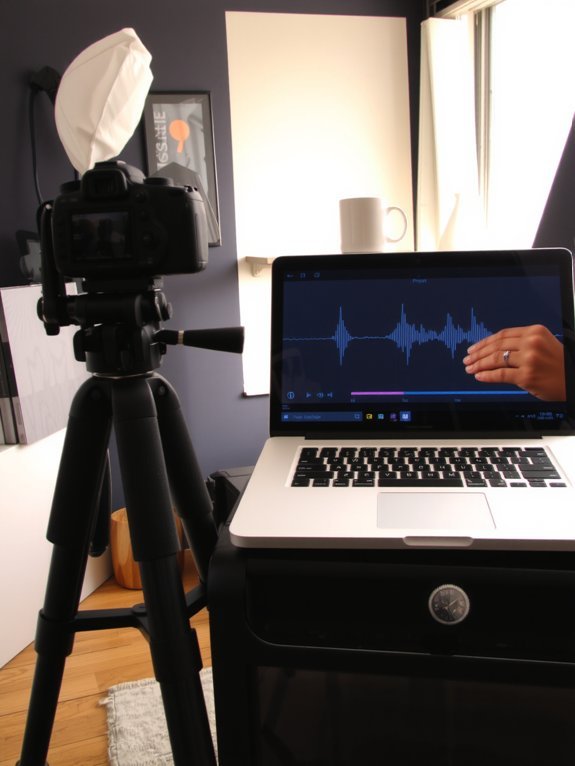
You want people to hear you, see you, and follow along without squinting or rewinding, so I’ll walk you through a simple audio setup that banishes echo and a video frame that actually flatters you. Get your mic close, keep your background tidy, and capture your screen at crisp resolution with smooth mouse moves—no jumpy clips or blurry slides allowed. I’ll show practical tricks, quick gear picks, and a few embarrassing mistakes I made so you won’t repeat them.
Clear Audio Setup
One simple truth: bad audio kills great lessons faster than a sleepy cat kills a Zoom call. I’ll say it again: clear sound sells courses. You’ll start with microphone selection—get a decent condenser or dynamic mic, test gain, stay off the laptop’s tinny mic. Listen closely, you’ll hear breaths, clicks, room echo. Then fix the room with practical soundproofing techniques: hang blankets, add rugs, tuck foam behind you, seal window gaps. I talk into the mic like it’s an enthusiastic student, I pop-filter, I keep water nearby because my voice is dramatic. Record a short clip, play it back, adjust distance, EQ lightly. Clean audio feels intimate, professional, and honest. Do this, and students won’t bail after five seconds.
Crisp Video Framing
When your face fills the frame right and the lighting flatters instead of frying you, students actually pay attention — it’s that simple. I tell you, I learned framing the hard way, squinting at blown-out whites. You’ll pick a clean background, eye-level camera, and a slight three-quarter angle, because flat-on is boring. Use basic framing techniques: headroom, rule-of-thirds, and balance with a tiny prop to add life. Watch your hands, move with intention, don’t fidget. Video composition matters more than fancy gear; composition guides the eye, and the eye pays tuition. Light from a soft source, diffuse shadows, gentle contrast. Test, tweak, record a short clip, then critique it like a picky student. You’ll look pro, and your course will sell.
Smooth Screen Capture
You’ve nailed your framing and lighting, so now let’s capture the screen without sounding like a robot reading from a script. You’ll want clean screen recording, steady cursor movement, and no frantic clicking that makes viewers seasick. Speak like you’re explaining to a friend, pause for emphasis, and zoom into important bits so eyes don’t wander. I use software recommendations like OBS for free control, and Camtasia when I crave polish and quick edits — pick what matches your patience and budget. Record short takes, trim ruthlessly, and add subtle mouse trails or keystroke overlays if it helps. Export at 1080p, 30–60 fps, decent bitrate, and check audio sync. Small edits make you look professional, not robotic.
Creating Supporting Materials and Quizzes
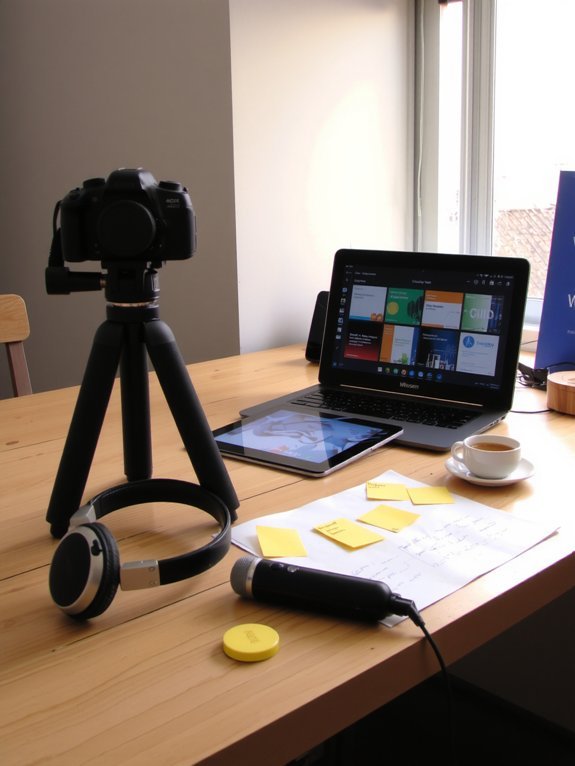
Think of supporting materials and quizzes as the toothbrush and floss of your course—small, boring tools that make everything else shine; I’m here to help you wield them without sounding like a dental hygienist. You’ll make downloadable PDFs, checklists, and slide decks that smell faintly of usefulness, not dust. Add interactive content like drag-and-drop exercises, stamped templates, and short videos that show a hand doing the work. Quizzes? Keep them bite-sized, punishing only when deserved, and full of engaging assessments that actually teach. I’ll show you where to seed hints, where to celebrate progress, and how to use images and sound for texture. Do this right, and students stick around, smile, learn, and tell their friends—your bank account nods approvingly.
Pricing Strategy and Udemy Promotion Options

Although price tags don’t sing, they’ll sure make your course do a jig in the marketplace if you set them right—so let’s stop guessing and get tactical. You’ll use dynamic pricing to test demand, nudge conversions, and watch which price hums. Start with introductory offers, raise prices slowly, peek at analytics, and adjust. Pair pricing with promotional strategies: coupons, flash sales, email blasts, and Udemy deals. Be bold, but honest, and keep value loud.
| Tactic | When to use |
|---|---|
| Intro Price | Launch week |
| Coupon | Re-engagement |
| Flash Sale | Low sales period |
| Udemy Deal | Big exposure push |
| Raise Price | Stable enrollments |
You’ll listen to students, iterate fast, and laugh at bad guesses.
Publishing Your Course and Optimizing the Landing Page
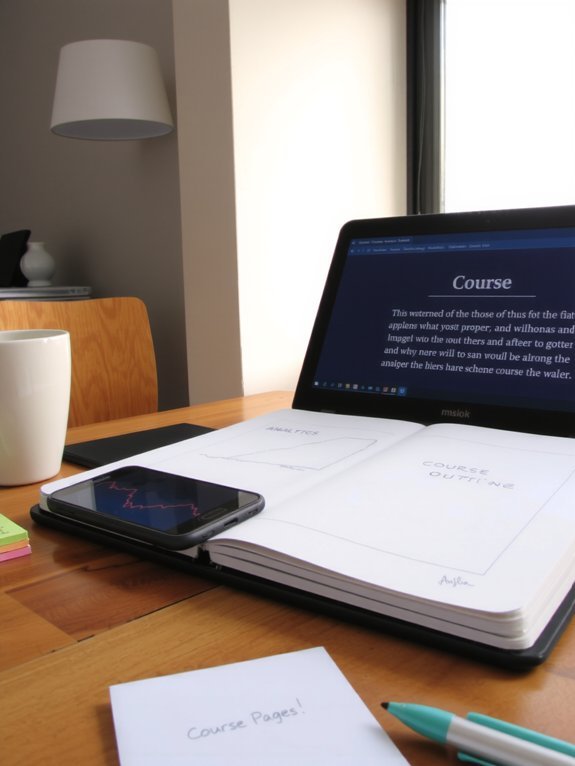
When you hit “Publish,” don’t expect fireworks — expect a tiny, enthusiastic crowd at the door and a whole lot of fine-tuning to turn that trickle into a line around the block. You’ll tweak headlines, re-record a shaky intro, and squint at screenshots until they pop. I’ll tell you what matters: clear landing page design, a punchy subtitle, crisp promo video, and bullet-ready outcomes. Use conversion optimization tactics — bold CTA, social proof, and a short trailer that smells like confidence, not desperation. Preview on mobile, listen for awkward pauses, fix timestamps. Test price display and refund clarity. Rinse, analyze, repeat. It’s hands-on, kind of fun, and yes, oddly addictive — like polishing a tiny, revenue-generating gem.
Marketing Outside Udemy to Drive Sales
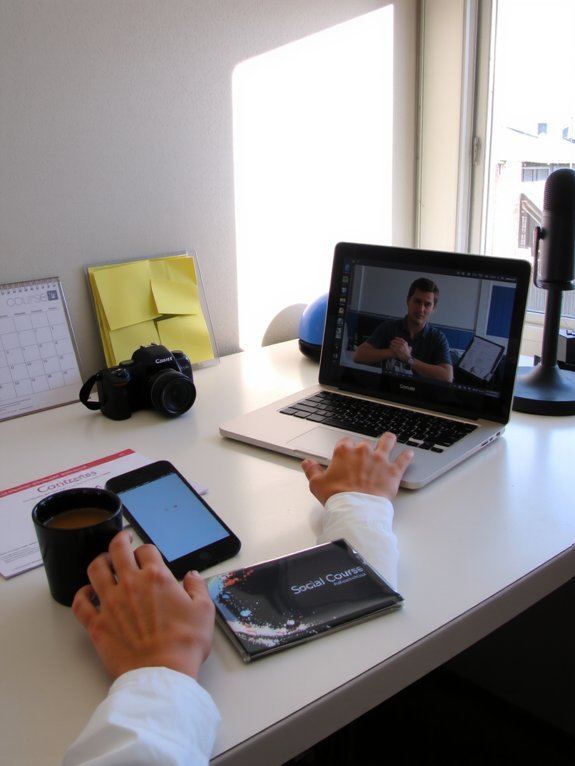
Someone’s got to knock on doors beyond Udemy, and that someone is you — so let’s get loud, smart, and a little charming. You’ll post short, punchy clips on social media, smell the coffee in morning DMs, and bait curiosity with clear hooks. You’ll send crisp email marketing that teases value, not spam. Build content marketing—how-to posts, transcripts, mini-lessons—so curious folks find you via SEO tactics. Join online communities, answer questions, drop value, don’t beg. Recruit affiliate partnerships, give honest previews, and track clicks. Try influencer collaborations, small creators first, coffee-chat style. Run modest paid advertising tests, watch what sticks, kill what flops. Be playful, iterate fast, celebrate tiny wins, and keep the conversation human, messy, and real.
Iterating, Updating, and Scaling Your Course
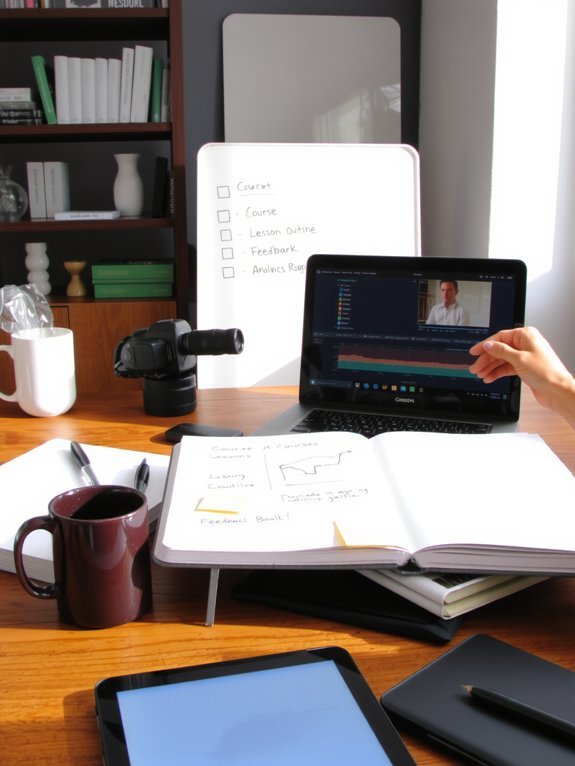
Because your course is living, not locked in amber, you’re going to tinker, tweak, and occasionally karaoke into the mic at 2 a.m. — and that’s a good thing. You’ll listen to course feedback like it’s a secret recipe, sift through comments, watch where students pause, and patch weak spots. Update videos, swap slides, add a cheat sheet, or record a brisk ten-minute FAQ—small edits, big payoff. Track student engagement with quizzes, heatmap clicks, and messages, then double down on what sticks. Scale by repackaging modules, offering bundles, or launching a mini-series — think franchise, not garage band. Keep testing prices, promos, and formats. Stay curious, iterate fast, and enjoy the weird joy of fixing your own tiny masterpiece.
Conclusion
You can make real money on Udemy, if you treat it like a hustle, not a hobby. I tested the “build once, sell forever” theory — it’s half true: content lasts, marketing doesn’t. Pick a topic people want, teach like you mean it, polish videos until they sound buttery, then sell it everywhere. Update regularly, listen to students, and promote like your rent depends on it. Do that, and the earnings follow.