


Funny coincidence: you’re already doodling the exact thing people will buy, so let’s turn that snack-table sketch into cash. You’ll set up shop, upload crisp art, pick the right products and tags, and tweak placements until the mockups pop — think bright colors, crisp edges, no awkward cropping. I’ll show the promos that actually work, seasonal plays that pay, and the simple metrics to watch; stick around and you’ll stop guessing.
Understanding How Redbubble Works

If you’re wondering how Redbubble actually makes you money, let me pull back the curtain and admit it’s less mystical and more mechanical than you’d hope—good news, because machines are predictable. You upload art, they print on demand, they ship it, you collect a royalty. I’ll say it plainly: learn the Redbubble mechanics, watch listings, tweak tags, rinse and repeat. Picture a tidy factory line, humming, stickers and shirts sliding by — you’re the designer at the end, waving cash. Marketplace dynamics matter: trends spike, niches whisper, visibility shifts like weather. You’ll test designs, smell ink in mockups, adjust margins, and cry a little when a favorite flop-sweats. I promise, you’ll get better, faster, and yes, more profitable.
Setting Up Your Redbubble Shop Step-by-Step
Okay, let’s get your shop open and actually earning—first you’ll make an account, pick a snappy display name, and fill out your profile so customers don’t think you’re a mystery ghost. Next you’ll upload designs, tweak titles and tags like you’re naming a hit song, and set smart margins so art looks crisp on tees and mugs. I’ll walk you through the exact clicks and tiny design fixes that stop your listings from looking amateur, and yes, we’ll laugh at my first terrible mockup together.
Account Setup Basics
Once you click “Sign Up” and feel that tiny thrill, you’ll see how simple this is—no tech PhD required, promise. I guide you through account verification, and the payment setup, step by step, like a friendly barista handing you a coffee and a checklist. You’ll confirm email, add ID if asked, choose your display name, then set up bank or PayPal for payouts. Don’t overthink it, breathe, click.
| Step | Action |
|---|---|
| 1 | Confirm email address |
| 2 | Complete account verification |
| 3 | Add payout method (bank/PayPal) |
| 4 | Set tax info and display name |
Once that’s done, your shop exists, you can breathe out, and start creating.
Uploading Optimized Designs
While you’re still buzzing from that “shop is ready” ping, let’s get your designs uploaded so they actually sell—yes, right now, gloves off, pixels in. I walk you through file prep, I don’t sugarcoat it. Resize to Redbubble specs, use PNGs for transparency, JPEGs for photos, check 300 DPI so prints don’t look like sad cereal. Name files with searchable phrases, then write titles and tags that match your design styles and speak to your target audience. Preview every product; tweak placement, scale, background. Write snappy descriptions that sell a vibe, not a laundry list. Hit publish, then test the product pages like a picky buyer. It’s tedious, but it’s how shirts stop gathering digital dust.
Crafting High-Quality, Marketable Designs
You’re going to hunt down niches and trends that actually sell, scan feeds and forums until patterns pop like flashcards in your face. Then you’ll polish files so colors pop and edges are razor-sharp, export at the right sizes, and slap your art on smart mockups that make people almost reach for their wallets. Trust me, it’s part science, part craft, and yes, a little showmanship—get those three right and you’ve got a shop that sings.
Niche and Trend Research
If you want people to buy your art, you’ve got to know who you’re whispering to, where they hang out, and what makes them reach for their wallets—no guessing allowed. You start with niche identification, poke around forums, Instagram, and tiny subreddits, listen to slang, note colors and mood. Then you run trend analysis, watch rising keywords, compare seasonal spikes, and jot patterns like a detective with a coffee stain. Picture scrolling, tagging, saving a screenshot that makes you grin — that’s a seed. Sketch fast, mock up a shirt, ask a friend to be brutally honest. Keep a swipe file of winning visuals, note what shoppers actually comment on, then double down on what feels true to you, not a copycat panic.
Design File Optimization
You’ve hunted down the perfect niche, squirreled away screenshots, and nicked a few ideas that made you grin — now it’s time to make pixels behave like money. I’ll say it plain: your art needs to be clean, crisp, and saved in the right design file formats, so Redbubble doesn’t mangle it. Work in vectors when you can, or export big PNGs with transparent backgrounds. Watch image resolution — aim high, then scale down, don’t upscale garbage. I zoom in, tidy edges, and nudge colors until they sing under studio lights in my head. Save layered originals, export flattened masters, label files clearly. Test at product sizes on your screen, squint like a critic, fix stray pixels, and call it done when it looks proud.
Product Mockup Presentation
Mockups are the storefront window for your art, and I’m going to show you how to make people stop, stare, and click—no sleight of hand required. You’ll pick mockup tools that feel like magic wands, drag your design into crisp scenes, tweak lighting till it pops, and watch colors sing. I’ll nag you: don’t use blurry backgrounds or awkward crops. Frame products on real bodies, on textured walls, in crisp flat-lay shots, then add close-ups that let viewers almost feel the print. Use presentation techniques like consistent shadows, lifestyle contexts, and honest scale indicators. Be playful in captions, honest in angles, and ruthless with anything that distracts. Good mockups sell belief, and belief buys.
Optimizing Listings for Search and Discovery
When I first dove into Redbubble, I learned fast that great art alone won’t sell itself, so I started treating listings like storefront windows—clean, lit, and impossible to miss; you’ll want titles that snap, tags that actually match what people type, and descriptions that answer questions before buyers ask them. You’ll do keyword research, learn how search algorithms favor clarity, and write copy that clicks. Be specific, use natural phrases, and avoid stuffing tags like a turkey.
| Element | Action |
|---|---|
| Title | Keep it short, descriptive, keyword-rich |
| Tags | Mix broad + niche, mimic buyer language |
| Description | Lead with benefit, add context, use calls-to-action |
Test, tweak, track trends, and don’t be precious — optimize like you’re window-shopping your own work.
Choosing Products and Design Placements Wisely
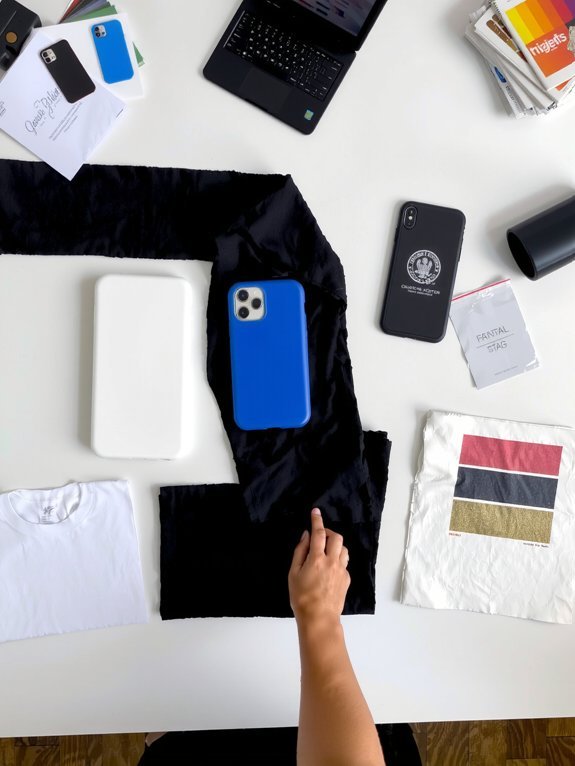
You’ll pick the right products first — stickers, tees, and phone cases sell differently, so I’ll show you which ones usually win and why they feel good in the hand or on-screen. Think about where your art sits, too: center chest, pocket area, or full-bleed prints change how a design reads, so you’ll test placements on real mockups, squinting like a critic and tweaking. I’ll also teach you how to optimize for mockups so your listings pop in thumbnails, look crisp on zoom, and practically beg someone to click.
Best Product Types
Because shoppers don’t all want the same thing, I’ll tell you straight: pick products like a picky diner scanning a menu—know what to order and what to skip. You’ll lean on trending products, but don’t be a one-hit wonder; mix in steady sellers like stickers, phone cases, and tees that feel good to touch. Add seasonal favorites—cozy hoodies for fall, bright tote bags for summer markets. Think tactile: soft fabric, glossy prints, sturdy mugs that clink. Test a few, photograph them worn and in-use, then double down on winners. I’ll admit, I’ve launched flops (they’ll make you humble), but the winners pay rent. Keep listings tight, images vivid, and inventory focused — quality over chaos.
Strategic Design Placement
If you want your art to look like it was born for the product, not slapped on as an afterthought, then you’ve got to think like a tailor, not a decorator — fit matters. You’ll pick spots that sing: center for posters, chest for tees, wrap for tote bags. Use design placement techniques that respect seams, pockets, and curves, and trust me, effective product positioning sells more than a cute doodle.
| Product | Best Placement |
|---|---|
| T-shirt | Chest, pocket area |
| Tote | Center panel, side wrap |
| Mug | Offset, near handle |
| Hoodie | Chest, hood edge |
| Phone case | Center, camera-safe zone |
Try small mockups in-context, tweak scale, and listen to how the piece breathes.
Optimize for Mockups
When I mock up a design, I think like a mini stylist—sliding the art around, squinting at edges, and imagining how it feels to hold the finished piece in your hands; you’ll want that same hands-on curiosity. You’ll test mockup styles, flat lays, on-model shots, and close-ups, nodding when scale feels right, rejecting when it looks cramped or lost. Pick products that flatter the artwork, move a bit, and show texture — a mug rim, a tote stitch, a tee fold. Use reliable mockup resources, keep placements within safe zones, and preview at real sizes. Trust your eyes, trust small edits, be stubborn about alignment, and be playful — buyers notice the care.
Pricing Strategies and Royalty Optimization
Alright, let’s talk numbers — you’re not just slapping art on a shirt and hoping for the best, you’re running a tiny empire where price tags are your megaphone. You’ll set royalties with care, I’ll show you the tug-of-war: higher royalties mean fatter paydays, but fewer clicks. Practice royalty management, test increments, and watch conversion rates like a hawk. Use competitive pricing, peek at similar designs, then undercut or justify a premium with quality mockups and crisp descriptions. Run timed sales, note elasticity, and tweak. Offer a low-entry product to lure buyers, upsell with bundles. Track which prices sell, map profit per SKU, then rinse and repeat. You’ll be nerdy about numbers, and oddly proud of it.
Building a Consistent Brand Identity
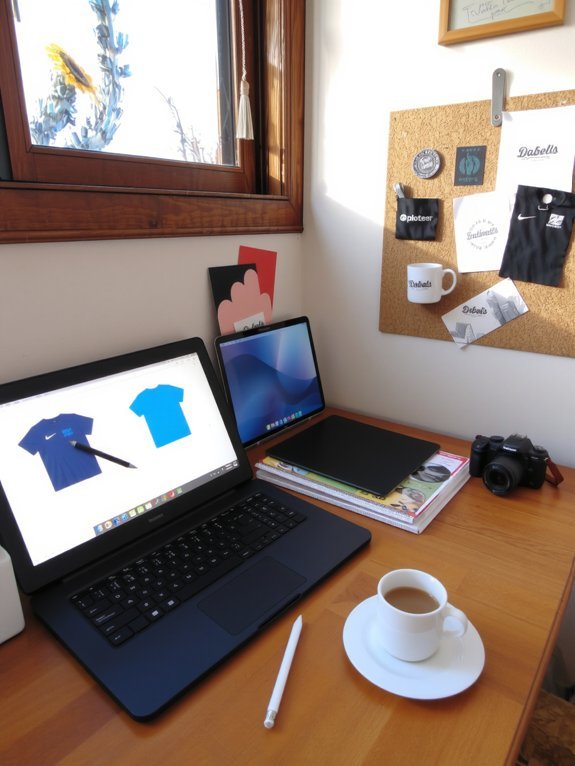
Because your shop’s look is the handshake that convinces strangers to trust you, you’ve got to craft a brand that feels like a person, not a jumble of random tees. You decide the vibe — colors, fonts, tone — and stick to it. Brand consistency means your banner, product mockups, and description voice all whisper the same story. Pick a tight palette, two fonts, a logo that survives a thumbnail, then repeat it until it’s recognizable. Your visual identity should smell like fresh coffee and skateboard wax — crisp, familiar, human. Update designs, yes, but don’t flip-flop. Test thumbnails, tweak contrast, keep product photos steady. People buy from personalities; give them one they can trust, smile at, and follow.
Promotion Tactics That Drive Traffic and Sales
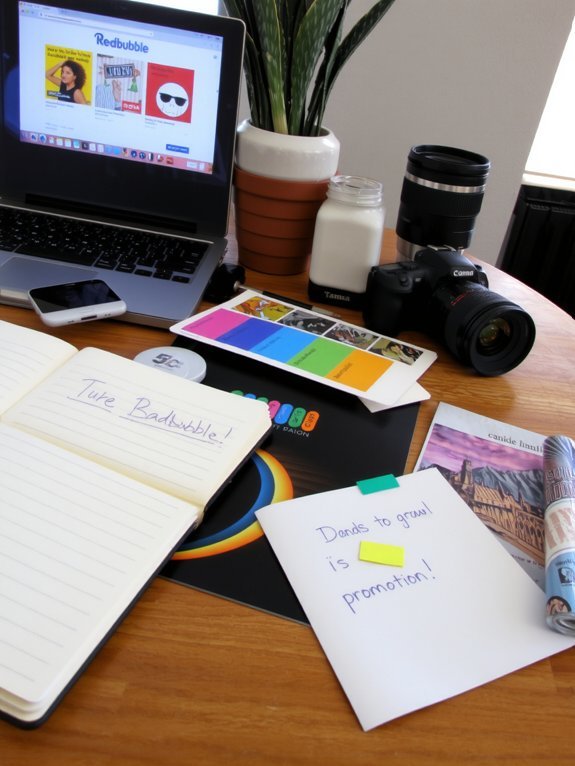
Want clicks that actually turn into sales? You’ll start by treating promotion like a conversation, not a billboard. Post eye-grabbing shots of your products, close-ups of texture, and quick behind-the-scenes clips; social media marketing isn’t a circus, it’s a steady handshake. I tell jokes, admit flops, and show the creative mess—people buy from people, not perfection. Use targeted hashtags, stories with swipe-up links, and pinned posts that highlight bestsellers. Reach out for influencer collaborations with creators who actually care about your niche; a sincere mention beats a fake shoutout. Offer discount codes, bundle visuals, and simple CTAs—“grab one, feel weirdly proud.” Track what moves, ditch what doesn’t, and iterate fast. You’ve got this.
Managing Seasonal Trends and Evergreen Niches
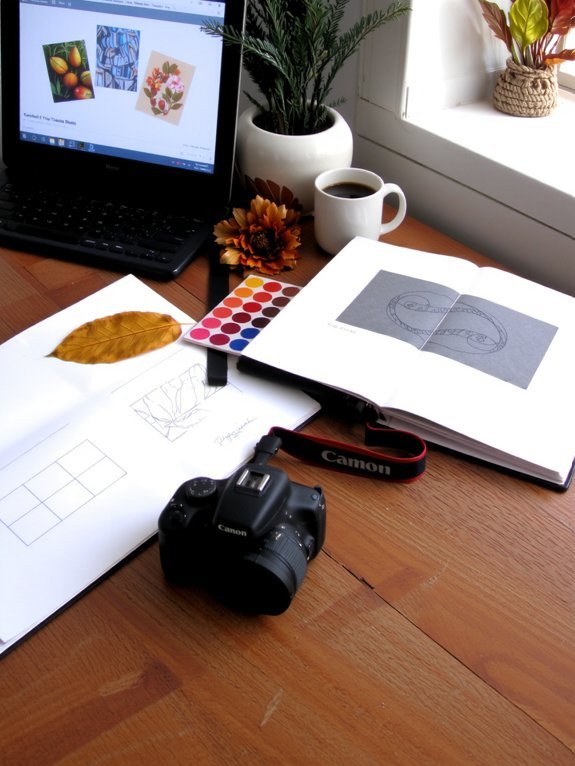
When holidays roll around or a random meme-moment blows up, you’ll either ride the wave or get washed out—so I keep one foot in the seasonal tide and one planted in evergreen soil. You’ll plan seasonal design strategies like holiday color swaps, limited-time mockups, and quick-day releases, snapping photos of textures, testing fonts, and humming to yourself like a discouraged DJ. Then you’ll pivot—hard—to evergreen niche selection: hobbies, pet lovers, timeless quotes, reliable fandoms. I sketch, I batch, I label files obsessively, and I schedule drops so you don’t panic-sell. Mix trendy prints with steady sellers, price smart, refresh listings, and stash backup designs. Treat trends like fireworks, and evergreen like the campfire you’ll sit by for years.
Tracking Performance and Scaling Your Business
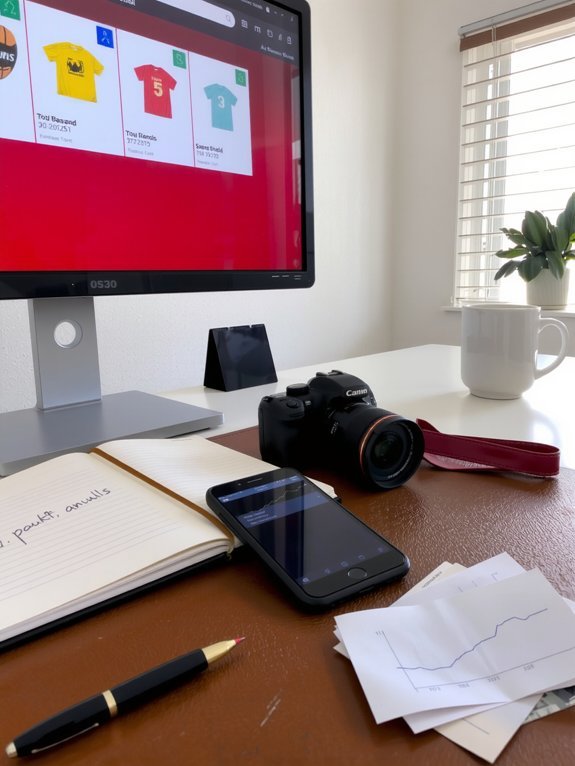
If you want to grow this thing into a real business, you’ve got to watch the numbers like a hawk that drinks cold brew—sharp eyes, jittery, slightly obsessed. I track performance metrics every morning, coffee steam in my face, clicking through Redsbubble stats, noting which designs sing and which flop. You’ll log views, conversion rate, and top tags. Celebrate small wins, tweak the duds, rinse, repeat. For scaling, double down on winners, outsource mockups, hire a VA for uploads, run targeted promos, and reinvest profits. Keep a simple dashboard, I swear it saves sanity. Business growth feels messy at first, then thrilling. You’ll learn fast, fail cheap, iterate often, and eventually sleep better knowing the numbers back your moves.
Conclusion
You’ve got this — seriously, like rocket-fueled confidence. Use niches you love, polish designs until they sing, and tag like a detective. I’ll nudge you: test placements, pick trending products, post lively pics, and talk to fans like real humans. Watch analytics, tweak what flops, double down on what hums. Keep seasons in mind, but don’t ignore evergreen cash cows. Stay curious, stubborn, and a little weird — that’s how you win.


