


Like sneaking backstage at a concert, you can get into transcription and see how the show is made — but you’ll have to learn to keep rhythm. You’ll type what you hear, tune your ears to accents and breath, and build speed with the right software, headphones, and a stubborn focus on accuracy. I’ll walk you through niches, rates, clients, and the productivity hacks that turn minutes of audio into steady pay, if you want in.
What Transcription Work Involves and Types to Consider

When you sit down to transcribe, you’re not just typing words—you’re eavesdropping with purpose, turning spoken moments into tidy, searchable text; I’ll warn you, it’s oddly satisfying. You’ll hear accents, laughs, coughs, and you’ll decide what matters, fast. Transcription types run from verbatim chaos to clean, edited prose, and you’ll pick gigs that fit your ear and patience. Expect interviews, lectures, podcasts, and legal recordings, each with its own rhythm and rules. You’ll set up workflow processes: listen, mark timestamps, rewind, correct, proof, export. Often you’ll mutter to yourself, that’s okay — I do it too. Your brain will learn patterns, your fingers will gain speed, and money will follow, modest but steady.
Essential Equipment and Software to Start With

You’ll want a good headset and microphone first — clear sound keeps you sane, and your clients happier than you after a double espresso. Get reliable transcription software next, the kind that actually saves your progress and lets you slow audio without sounding like chipmunks. Then make a comfy workstation, chair hugged to your spine, keyboard within reach, because bad posture will ruin your day faster than a missed deadline.
Good Headset and Microphone
A good headset and microphone are your frontline tools, trust me—I’ve mangled more audio files than I’d like to admit, and nothing ruins a day faster than fuzz and pops. You’ll hear details you’d miss without quality gear, so don’t skimp. Try popular headset brands for comfort and noise isolation, they save your neck and sanity during long sessions. For microphones, learn microphone types: dynamic for noisy rooms, condenser for crisp studio sound, USB for plug-and-play ease. I prefer a snug headset, and a separate mic on a boom arm, so I can tweak position and banish sibilance with a twist. Listen, adjust your gain, and clap once to check—if it sounds clean, you’re ready to earn.
Reliable Transcription Software
Since transcripts don’t magically appear, you’ll want transcription software that feels like an honest-to-God teammate—fast, steady, and not prone to melodrama when audio gets messy. I’ve tried clunky players that sound like tin cans, and slick apps that actually help. You’ll pick from transcription software options like automatic services for speed, or foot-pedal friendly editors for precision. Look for reliable tools with adjustable playback, timestamping, and noise reduction, so you can hear breaths, laughter, and that one-off technical term. Try trial versions, test with real files, and keep an eye on export formats clients want. Trust me, the right app turns chaos into clear text, and saves your ears, your time, and your sanity.
Comfortable Workstation Setup
Even if your living room looks like a tech graveyard, you can build a workstation that feels like command central—comfortable, quiet, and annoyingly efficient. I tell you, first invest in an ergonomic chair, your back will thank you mid-shift, and you’ll look less like a slumped question mark. Get a sturdy desk, add a monitor at eye level, keyboard angled for wrists, simple lighting that doesn’t glare. I keep noise-cancelling headphones nearby, a mic that doesn’t make me sound like a robot, and a timer for focused sprints. Desk organization matters—tray for cables, cup for pens, sticky notes for timestamps. Move, stretch, tweak height. Small comforts, big productivity. You’ll feel like a pro, not a caffeine-dependent amateur.
Basic Skills and Techniques to Improve Speed and Accuracy
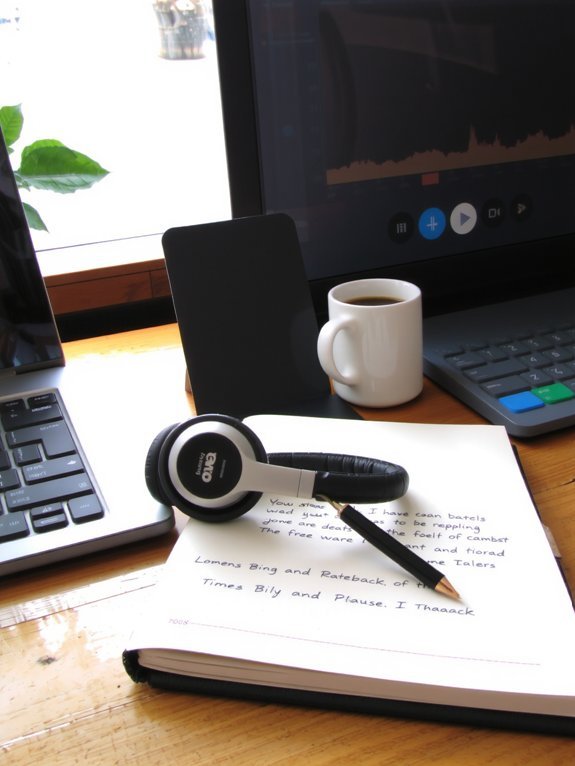
When you want to jack your words-per-minute without sounding like a robot, you learn a few tricks and actually practice them—no magic, just muscle memory and smarter habits. I walk you through typing techniques that feel like a rhythm, fingers tapping, ears keyed to cadence. You’ll train shortcuts, learn proper hand placement, and use consistent punctuation so your accuracy skyrockets. Transcription practice becomes a daily ritual: short sessions, focused replay, slowing tricky speakers, then speeding up. I joke when you flub a phrase, breathe, correct, move on. You’ll build pattern recognition, spot accents faster, and trust edits instead of guessing. Do this, and your speed improves, your paychecks smile, and your confidence grows.
Industry-Specific Transcription: Medical, Legal, and More

You’ll want to learn the tight, jargon-packed lingo of medical files, because one wrong abbreviation feels like stepping on a Lego. Legal transcripts demand ironclad accuracy and confidentiality, so you’ll adopt strict formats and wear metaphorical gloves. Once you master those, niche specialties—like podcast captions for true-crime shows or vet notes—let you charge more and actually enjoy the work.
Medical Transcription Essentials
If you want steady work and don’t mind wearing headphones until your ears hum, medical transcription is where precision meets paycheck. You’ll learn medical terminology that sounds like a tongue twister, then translate it into clean notes, fast. I tell you, at first my brain felt like alphabet soup, but repetition tames it. Get transcription certifications if you want to stand out; clients trust credentials. You’ll listen to muffled clinic rooms, tap keys, correct timestamps, and flag unclear audio—tiny victories, real cash. Expect tight deadlines, patient privacy rules, and a reward when a perfect report hits the inbox. You’ll need focus, good ears, and patience; I promise, the learning curve bites, then wags its tail.
Legal Transcription Requirements
Because courtrooms have their own grammar and the stakes are higher than a typo, legal transcription demands a different kind of ear and a sterner pen. You’ll learn legal terminology, pick up protocols, and clean audio until it sings. You’ll proofread with a magnifying-glass gaze, flag unclear speakers, and deliver verbatim transcripts that survive scrutiny.
| Skill | Tool | Outcome |
|---|---|---|
| Legal terminology | Reference guides | Accurate citations |
| Court format | Templates | Consistent structure |
| Ethics | NDAs | Client trust |
You’ll consider certification options, they boost credibility, and yes, clients notice. I’ll warn you: it’s meticulous work, but satisfying. You’ll hear gavels, hushed breaths, then type clarity from chaos — and get paid for it.
Niche-Specialty Opportunities
When you lean into a niche, your ears become a specialty tool — and that’s where real money hides. You’ll chase medical jargon, legal rhythms, tech acronyms; you’ll taste the metallic click of a stethoscope in a Zoom file. I’ll tell you straight: niche markets pay more, and they want reliable specialty skills. Learn terminology, style guides, and confidentiality, then practice until your fingers move like muscle memory. Start with short gigs, collect references, then raise rates. You’ll feel nerdy, proud, a little smug — good. Network with providers, join forums, pitch directly. Expect dry transcripts, late-night recordings, coffee-fueled focus. It’s steady work, it’s respected, it’s lucrative if you commit. You won’t regret becoming the go-to expert.
Setting Your Rates and Pricing Strategies

Three solid pricing approaches will keep you from flailing like a lost tourist at a bus terminal, and I’m going to walk you through them like a slightly overconfident tour guide. You’ll start with competitive analysis, sniffing out market rates, then highlight your value proposition so clients see why you cost more. Charge by audio minute for clarity, by hour when research’s heavy, or by project for fixed-scope peace of mind. Be bold, test, tweak, and write prices that make you proud.
| Approach | When to Use | Tip |
|---|---|---|
| Per minute | Clear audio | Round down for quick wins |
| Per hour | Messy files | Track time, be ruthless |
| Per project | Repeat clients | Bundle extras for profit |
Where to Find Clients and Reputable Platforms
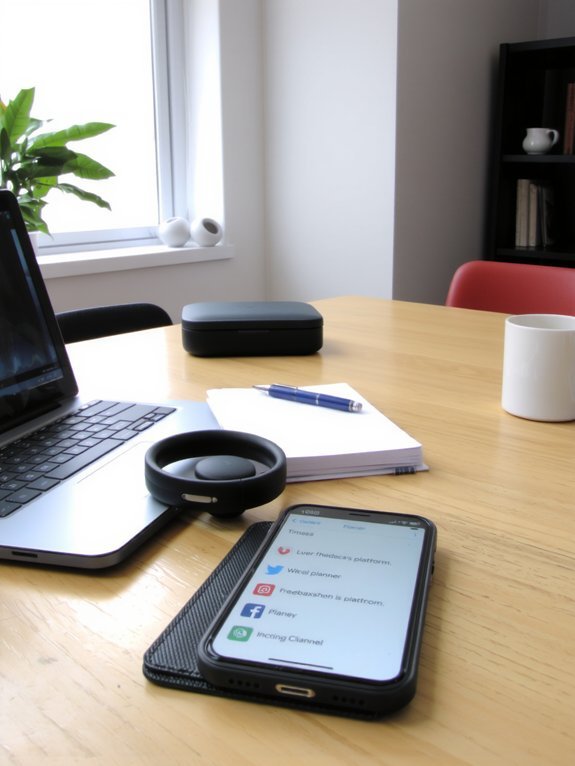
If you want steady work, you’ve got to go where the conversations are already happening — and believe me, they’re loud. I plunge into freelance platforms first; they’re like busy cafes, profiles clinking, bids flying. You’ll scan job boards, tweak your pitch, and snag shorter gigs fast. Then I schmooze—virtual handshakes, quick follow-ups, friendly reminders—client networking is gold, not glitter. Join niche forums, LinkedIn groups, podcast communities; listen more than you talk, offer a sample, then ask for referrals. Vet platforms by payment terms, dispute policies, and real reviews; trust your gut if something smells off. Keep a tidy spreadsheet, celebrate small wins, and remember: consistency beats one-off luck, every time.
Applying, Testing, and Building a Strong Portfolio
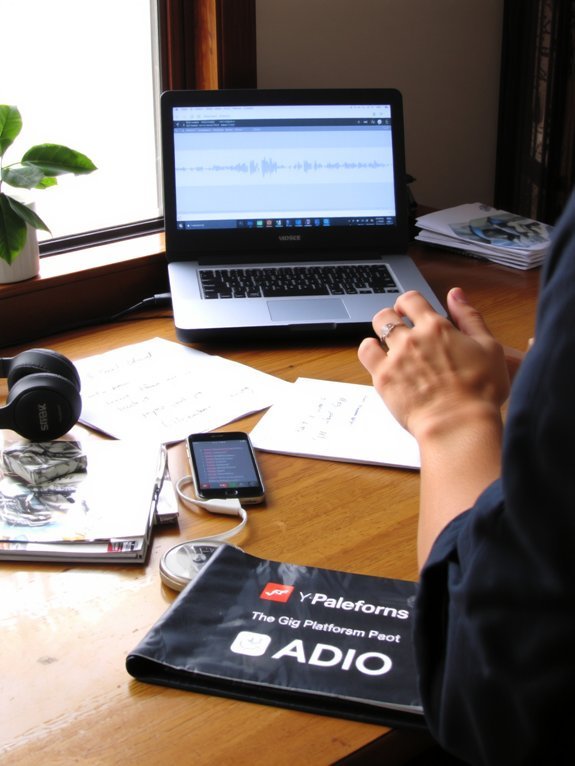
Because you’ve got to prove you can do the job before anyone hands you steady work, start treating applications like mini performances—you’ve got five seconds to impress, so don’t fumble the entrance. You’ll submit clean, error-free transcription applications, a short sample, and a friendly note that shows you listen. Test scores matter, but real clips sell. Build portfolio development by curating varied clips: interviews, noisy audio, timestamps. Show before/after fixes. Keep descriptions short, vivid, and specific.
| Clip Type | Why it Helps |
|---|---|
| Interview | Shows clarity, speaker ID |
| Noisy Audio | Proves noise-handling |
| Multiple Speakers | Demonstrates labeling |
| Timestamped | Shows precision |
| Edited Fixes | Highlights proofreading |
Time Management, Productivity Hacks, and Workflow Tips
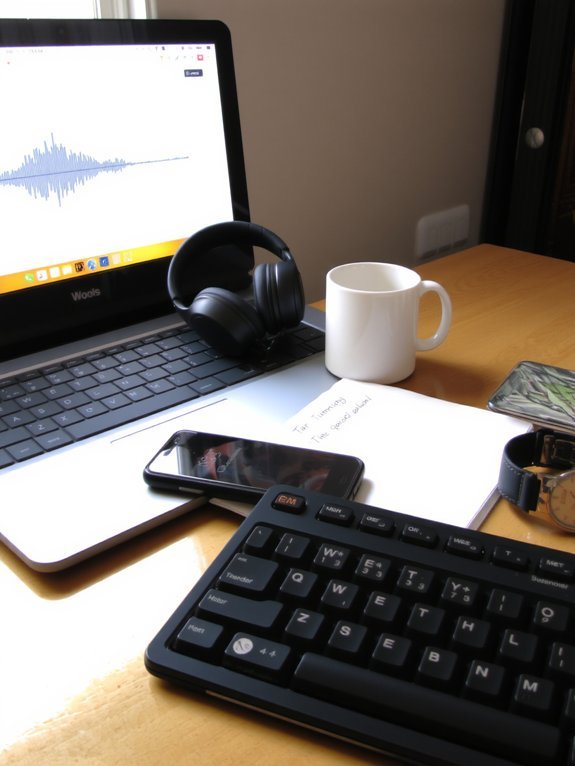
You’ve proven you can turn messy audio into polished text, now let’s make sure you actually get it done on deadline without turning into a frazzled snack run—yes, I speak from experience. I tell you this: use time blocking, carve morning hours for hard files, afternoons for light edits. Grab productivity tools, a simple timer, noise-cancelling headphones, a tidy desk that smells faintly of coffee. Learn focus techniques—Pomodoro, single-tab work, breathing resets—so your brain stops wandering to memes. Practice task prioritization, label jobs by pay and deadline. Master distraction management: phone face-down, notifications off, family briefed. Build efficiency strategies, templates, macros, hotkeys. Set clear goal setting rituals, weekly reviews, and protect work life balance, so you earn, breathe, and keep your sense of humor intact.
Avoiding Scams and Protecting Your Earnings

While you’re juggling deadlines and snacks, remember predators love profitable chaos, so let’s talk about locking down your cash before you notice it missing. I’ve seen inboxs that smell like rotten promises, so I’ll tell you what works. Trust reputable platforms, verify clients, never pay to get work, and demand clear payment terms up front. Keep records—screenshots, timestamps, a tidy spreadsheet that hums like a tiny accountant. Use two-factor auth, separate bank or PayPal account, and change passwords like seasonal socks. Practice scam awareness, ask for references, and pause if something feels greasy. For earnings protection, invoice promptly, set milestones, and don’t release final files until you’re paid. You’ll sleep better, I promise.
Conclusion
You’ve learned the tools, the tricks, the niches, and the traps. Now jump in: practice transcribing a messy interview, polish a clean sample, pitch a clear rate, and deliver on time. Keep learning, keep networking, keep protecting your work. I’ll cheer from the sidelines, you’ll sweat the small stuff, we’ll both laugh at the first terrible audio file — then celebrate your first paid file, your first repeat client, and the steady hum of earnings.


