Most people don’t know that niche phrasing—like “email English for engineers”—lets you charge twice as much as generic conversation practice. Picture your laptop glow, a steaming mug, and a calendar full of paying students who actually show up; you’ll need a crisp niche, repeatable lessons, and a salesy-but-sincere trial offer to get there. I’ll show you the exact steps, tools, and pricing tweaks that turn lessons into steady income—but first, pick who you want to teach.
Why Online Language Tutoring Is a Lucrative Side Business

If you’ve ever wished your hobby could pay rent, now’s your chance — and yes, you’ll still get to wear sweatpants. You’re stepping into high demand work, where a few clear lessons a week can add real cash, and you’ll love the flexible schedule that lets you teach at dawn, lunch, or midnight. Imagine a global reach: students pinging in from Tokyo, Madrid, and São Paulo, accents filling your headphones, language diversity keeping lessons fresh. There’s minimal startup — a camera, mic, and courage. You’ll see skill enhancement, both theirs and yours, feel personal fulfillment when a grammar lightbulb clicks, and join an online community that cheers your wins. I promise, it’s fun and profitable.
Choosing Your Niche and Target Students

Pick one thing and own it — seriously, your future students will thank you. I want you to treat niche selection like choosing a favorite coffee: bold, specific, and a little weird. Say you teach business English to software developers, or travel Spanish to food lovers; smell the coffee, see the classroom, hear the jokes landing. Narrowing your target audience makes marketing easy, your lessons sharper, and booking steady. Ask who needs you most, what problems you solve, where they hang out online. Test one idea, tweak the offer, collect tiny wins. Be brave, ditch “general” like yesterday’s muffin, and watch word-of-mouth grow. You’ll feel smarter, busier, and yes, richer — in satisfaction and cash.
Picking Platforms and Tools That Work for You

While you’re dreaming up the perfect niche, don’t forget the toolbox that’ll actually get you paid — I’m talking platforms, apps, and that gloriously faithful headset you’ll come to love. Pick platforms that match your teaching style, check platform features like scheduling, video quality, and built-in whiteboards, and say no to clunky menus that make you rage-quit. Test audio, camera, screen sharing; pretend you’re a picky chef tasting tools. I’ll recommend one main hub and a backup. Prioritize tool integration so your calendar, payment links, and lesson notes sync, not clash. Try free tiers, run mock lessons with a friend, and smell the coffee—good tech feels effortless. You’ll teach better when tech fades into the background.
Setting Rates, Packages, and Payment Policies

You’ll set your rates so they feel fair, competitive, and not like you’re charging pocket change — I’ve had students gasp at my hourly price, then stick around because the lesson clicked. Pick payment methods that make life easy, like Stripe or PayPal, and spell out your cancellation and refund rules in plain language so you don’t end up in awkward email stand-offs. Trust me, a clear pricing page smells professional, saves you headaches, and makes getting paid as simple as breathing.
Setting Competitive Rates
Let’s talk money — yes, the thing everyone tiptoes around like it’s a sleeping dragon. You’ll set competitive rates by doing market research, then a sharp competitor analysis, smelling out gaps and sweet spots. Test pricing like a chef tastes soup: adjust, sip, tweak. Offer clear packages, hourly and block options, and a trial that tastes like victory. Be bold, not greedy.
| Package | Per Hour |
|---|---|
| Trial (30m) | $10 |
| Standard (60m) | $25 |
| Intensive (90m) | $40 |
| Block of 10 | $220 |
Name perks—feedback, resources, quick SMS nudges. Watch student responses, tweak, and own your value. You’re the guide; charge like one.
Payment Methods & Policies
Three things make or break a smooth billing system: clarity, convenience, and a tiny bit of stubbornness — you set the rules and you stick to them. I tell students upfront which payment gateways I accept, so they don’t hunt for loose change. Offer PayPal, Stripe, or bank transfer, and watch bookings flow. Pack lessons into bundles, tier pricing, and add a “no-show” fee, spoken gently but firmly. Write crisp refund policies: timeline, conditions, and how you handle partial credits. Send invoices that smell like professionalism — crisp subject line, clear due date, polite reminder. Say it out loud, in your bio, and on booking pages. Be fair, be firm, and laugh when someone asks for “just one free lesson.”
Designing Effective, Repeatable Lesson Plans
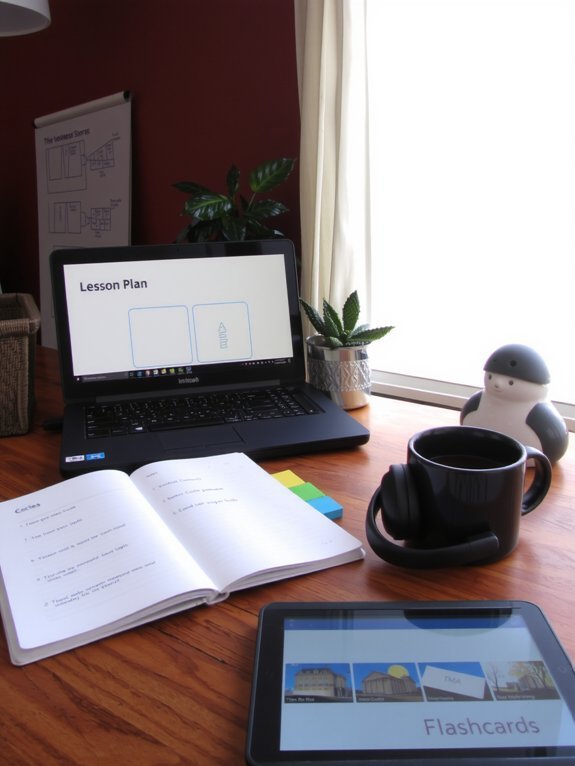
If you want lessons that feel effortless to teach and irresistible to students, start by building a repeatable skeleton and then dress it up for each student’s tastes; I swear, it’s less boring than it sounds. I’ll show you a tight lesson structure: warm-up, core task, focused practice, and cool-down. You’ll prep a template, like a chef’s mise en place, then swap spices — jokes, visuals, or a local song — so student engagement spikes. Say something simple, ask a curious question, hand them a colorful slide, correct gently, celebrate wins. Keep timing crisp, record notes, reuse what works. You’ll sound confident, not robotic. Repeatable plans free your brain, and make students keep coming back for more.
Marketing Yourself and Building a Student Base

Marketing is the loudspeaker for your lessons — you can have the world’s best plan, but if no one hears it, you’ll be teaching crickets. I tell people to craft clear branding strategies: pick a color, a tone, a promise, and stick to them like gum on a shoe. Show your face, record a 60-second demo, post it where students hang out. For student outreach, send friendly messages, offer trial mini-lessons, and ask for referrals with a cheeky incentive. I’ll stage quick live sessions, answer questions in comments, then follow up with calendar links. Be visible, be human, be oddly memorable. You’re selling learning and connection, not just vocabulary—so make it smell like coffee and feel like a chat.
Scaling Up: From Solo Tutor to Small Tutoring Business

You’re ready to stop being a one-person show, so let’s talk hiring and training—picture you interviewing a bright, nervous tutor, handing them a syllabus, and hearing the click of a calendar booking as your schedule breathes easier. I’ll show you how to build simple systems and lay down automation—think templated lesson plans, scheduling software that texts reminders, and a tidy onboarding checklist that spares you tedious emails. It won’t be perfect at first, but you’ll taste the freedom when lessons run like clockwork and you’re finally free to coach, grow, and—yes—take a weekend off.
Hiring and Training Tutors
Somewhere between juggling lesson plans and answering midnight emails, you’ll hit a wall and realize one brain can only do so much—time to hire. You scout candidates, you listen to samples, you squint at resumes for tutor qualifications that actually matter: teaching experience, clear pronunciation, patience. You’ll test lessons, watch for warmth, check tech habits. Then you build training programs, hands-on and short, with roleplay, feedback loops, and scripts for tricky parents. I’ll crawl through recordings with them, point out tiny wins, praise, correct. You’ll set clear pay, schedules, and simple policies, then breathe. It feels weird at first, like giving away your baby, but it’s exhilarating—more students, more freedom, finally coffee that’s still hot.
Systems and Automation
1 smart system saves you ten headaches later—trust me, I learned that the hard way. Set up automation tools to handle reminders, invoices, and follow-ups, so you stop nagging students at midnight. I show up, click a button, and a tidy sequence hums to life; it smells like fresh coffee and order. Choose scheduling systems that sync calendars, block double-books, and let students self-book, no awkward emails required. You’ll train templates, tweak workflows, and watch cancellations refill like magic. Be hands-on at first, then step back, like a proud parent waving at a tidy classroom. Keep logs, test triggers, and celebrate the tiny wins, because scalable sanity is the real profit.
Conclusion
You’ve built a tiny engine that earns while you sleep, and it purrs because you picked a lane, taught with heart, and marketed like a human. Keep your lessons lean, price smart, and automate the boring bits — you’ll trade chaos for calm cash. I know it’s messy sometimes, I’ve spilled coffee on my notes too, but stick with it: students arrive, referrals ripple, and soon your side hustle feels less like hustle and more like craft.