Forty percent of creators report making steady income from courses, which means you can too if you stop guessing and start testing. You’ll map a hungry audience, craft a no-fluff curriculum, and shoot lessons with a phone that actually looks professional—then price smart and launch like you mean it. I’ll walk you through the exact moves, tactics that save time, and the few mistakes that tank results, so stick around for the part where most people mess up.
Validating Your Course Idea and Audience Demand

Want proof your course won’t be crickets and tumbleweed? You start with market research, not wishful thinking. I’ll tell you what to do: talk to real people, send a two-question survey, run a quick poll in a forum, or slide into DMs with a friendly, curious tone. Listen hard, jot down quotes, notice where they wince—those are gold. Then test a mini-offer: a webinar, cheat sheet, or paid pilot. Watch conversions, gather audience feedback, and tweak the pitch until it sings. You’ll get sweaty palms, I know, but those numbers calm you down fast. If people pay, you’ve got demand; if they don’t, you’ve got data. Pivot, repeat, and build from fact, not fantasy.
Designing a Curriculum That Promotes Real Learning

You want learners to leave with actual skills, not just fuzzy confidence, so start by writing crisp learning objectives that smell like a promise — specific, measurable, and impossible to wiggle out of. Then give them hands-on practice they can taste and touch, with tasks, feedback, and little failures that teach better than lectures ever could. Finally, schedule spaced retrieval checks — short quizzes, timed tasks, and revisits — so knowledge sticks like gum on a shoe instead of blowing away.
Clear Learning Objectives
Clarity matters, big time — and I say that while nursing a too-hot mug of coffee and a stack of half-finished lesson plans. You’ll write crisp learning outcomes, not vague promises. Make each objective a measurable goal, so students and you know when learning happened. Say what learners will do, by when, and how well.
| Objective | Test |
|---|---|
| Describe concept | Quick quiz |
| Apply skill | Mini project |
| Analyze case | Written brief |
| Teach peer | Recorded demo |
Write objectives in active verbs, swap “understand” for “explain” or “create.” That keeps you honest, keeps students focused. You’ll cut waste, sell clarity, and sleep better — maybe. Trust me, your course will breathe.
Active Practice Opportunities
Clear objectives give you the map; practice puts feet on the trail. You’ll build hands-on tasks, quick drills, and real projects that let learners touch progress, hear mistakes, and fix them fast. I cue sketches, role-plays, and mini-labs, so learners sweat a little, laugh a lot, and actually do the work. Sprinkle active learning throughout: problem sets, simulations, timed sprints. Don’t babysit—coach. Use peer feedback loops, short demos, and checkpoints that smell like victory, not busywork. I’ll show you how to scaffold difficulty, give clear rubrics, and offer instant examples so people don’t flounder. Design practice that feels alive, messy, and real—because that’s where skills stick, and where students’ll happily pay for your wisdom.
Spaced Retrieval Scheduling
When learners forget—or, let’s be honest, when our brains go on vacation—they need a nudge that brings knowledge back into focus, and that’s the whole point of spaced retrieval scheduling. You’ll design short, tasty reviews, timed so memory gets a workout without whining. Use spaced repetition and sprinkle retrieval practice into lessons: quick quizzes, flash prompts, tiny projects. You’ll hear the click when a student’s face lights up — proof the trick works.
| Session Type | Action |
|---|---|
| Day 1 | Teach, demo, hands-on |
| Day 3 | Quick quiz, retrieval practice |
| Day 7 | Short project, spaced repetition |
Keep it playful, precise, and tempting, so learners return, remember, and rave — and you sell courses that stick.
Producing Engaging Course Content Without Fancy Gear

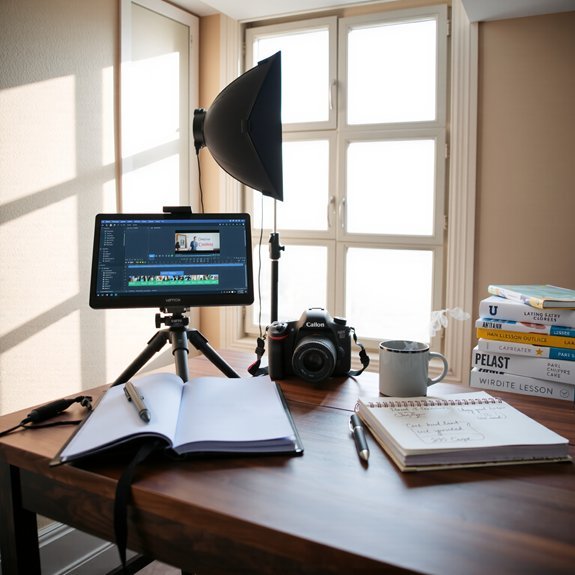
You don’t need a Hollywood kit to make lessons that stick — start by writing clear learning objectives, so every clip has a purpose and your students know what success looks like. I promise, a quiet corner, your phone on a tripod, and a simple mic will get you more than halfway there; I even record with a lamp and a blanket fort when the house is noisy. Keep shots steady, sound sharp, and your goals visible, and you’ll turn humble gear into confident, engaging content.
Clear Learning Objectives
Think of learning objectives as your course’s compass — tiny signposts that keep you and your students from wandering into a fog of half-finished ideas. You’ll write crisp learning outcomes, tidy and testable, so everyone knows what mastery looks like. Say it out loud, then chop it into bite-sized tasks. Pair each outcome with clear assessment criteria, so grading feels fair, not mystical. You’ll map activities to objectives, pick examples that click, and toss in a quick quiz that actually teaches. I promise, you don’t need polish to be precise; you need intention. Create a checklist, record a brief demo, and watch confusion shrink. You’ll be stern, but kind, ruthless with fluff, generous with clarity. Students will thank you, eventually.
Simple Recording Setup
Nice learning objectives make your course a map; now let’s make your lessons sound like people, not robots. You’ll pick a quiet corner, dump clutter, close the door — that’s your recording environment. Toss in a lamp for warm light, face a window for soft daylight, and pull a blanket over a chair if echoes haunt you. Use a simple USB mic, not a spaceship rig; speak close, but not mouth-breath close. I test levels, clap once to check reverb, and smile because mistakes are human. Record in short chunks, edit out jams, keep takes under five minutes. Good audio quality hides shaky delivery, so prioritize clear voice, steady pacing, and a little personality. Your listeners will thank you, and so will your sales page.
Choosing the Right Platform and Delivery Format

How do you want your course to feel: a cozy living-room chat with snacks, or a slick, buttoned-up studio production that smells faintly of new tech? You choose tone, then match platform features and delivery methods. Pick a host that handles video, quizzes, downloads, captions. Decide live, drip, or on-demand, and don’t overcomplicate it.
| Cozy (living-room) | Studio (polished) |
|---|---|
| Webcam, soft lighting | Camera, key light |
| Casual edits, laughs | Tight edits, cues |
| Live Q&A, chit-chat | Pre-recorded, polished |
You want ease, not heroics. Test a module, feel the upload speed, taste the UI. If a platform frustrates you, it’ll frustrate students. Keep it simple, and design for repeatable delight.
Pricing Strategies and Launch Marketing Tactics

If you want people to pay for your course, you’ve got to be deliberate about price and loud about launch—no hiding behind vague promises or half-hearted discounts. You’ll set price by testing value perception: list benefits, stack bonuses, and ask early fans what feels fair. Do a quick competitive analysis, peek at rivals’ price points, and steal their best ideas without copying their mistakes. Build urgency with limited seats, timed bonuses, and loud countdowns that hum like a beehive. Run a soft pre-launch to gather testimonials, then blast your launch email sequence, social shorts, and a live kickoff—yes, sweating on camera will humanize you. Track conversions, tweak copy, celebrate small wins, and remember, bold sells better than polite.
Scaling, Iterating, and Building Recurring Revenue

Alright, you’ve priced it, shouted it from the rooftops, and survived the sweaty live kickoff—now we scale. You tighten systems, automate emails, and binge on analytics like caffeine; you watch conversion graphs climb, grin, then tweak. Use scaling strategies: batch content, hire a VA for student questions, and spin repurposed lessons into micro-courses. Iterate fast—test a new lesson, listen to feedback, fix the awkward slide, repeat. Build recurring revenue by adding memberships, monthly coaching, or subscription content, so cash shows up without drama. I’ll be blunt: you won’t nail it first try, and that’s fine. Stay curious, cut slow processes, celebrate small wins, and keep your ear to students—those voices will tell you where to grow next.
Conclusion
You’ve got this—seriously. Nail the niche, build a curriculum that actually teaches, film with your phone like a pro, pick a platform that doesn’t make you cry, price it smart, and sell with gusto. You’ll tweak stuff, gather fans, and watch small wins stack into steady cash. I’ve stumbled, laughed, and learned; you’ll do it faster. So go make that course, brew some coffee, hit record, and surprise yourself.