



You’re about to turn blank pages into steady cash, and yes, it’s simpler than it sounds—if you stop chasing fads and start hunting niches; I’ll walk you through finding buyers, designing interiors that feel tactile and useful, and crafting covers that actually stop the scroll, all while avoiding the usual rookie mistakes. Picture coffee-scented mornings, quick keyboard clicks, a tidy upload, and a sale ping; stick around and I’ll show you how to make that ping repeat.
What Are Low-Content Books and Why They Work

Think of a blank notebook whispering promise — that’s a low-content book. You’re holding simple pages: journals, planners, coloring books, logbooks. The low content definition? Items with minimal text, relying on layout and design, not long prose. You smell fresh paper, you tap the cover, you grin because production is easy, listings are fast, margins can add up. You watch market trends shift — seasonal themes spike, retro styles resurface, minimalism sells steady. You don’t need to be a novelist, you need taste, pattern sense, and patience. I’ll admit I’ve pasted weird samples at 3 a.m., but they sold. You’ll sketch, test, tweak, then list. Small steps, steady rhythm, cash trickles in.
Choosing Profitable Niches and Target Audiences
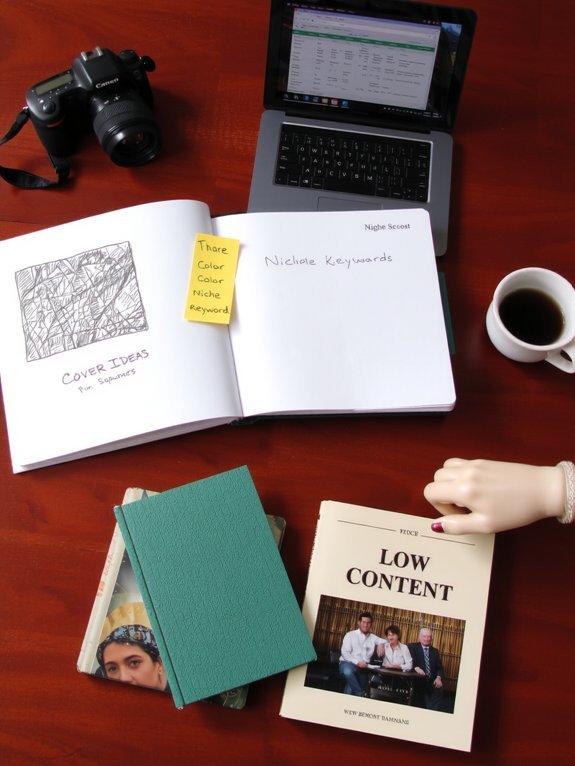
You’ll start by sniffing out niche demand, scanning search trends and bestseller lists like a bloodhound after a treat. Then you’ll carve the audience into tiny useful slices — hobbyists, busy parents, niche pros — so your cover, blurbs, and interior hit them in the sweet spot. Finally, you’ll spot gaps competitors missed, pounce on the low-hanging opportunities, and laugh when passive income actually shows up.
Niche Demand Research
Curious where the money really hides in KDP low-content books? You dig into niche analysis, sniff market trends, and follow the crumbs readers leave. I’ll show you how to check demand — search keywords, peek competitors, and eyeball bestseller ranks. Feel the tiny thrill when a gap appears; it’s like finding a secret cash drawer.
| Action | Tool | What to look for |
|---|---|---|
| Keyword search | Amazon, KW tools | Volume, relevance |
| Competitor scan | Listings, covers | Quality, price |
| Trend check | Google Trends | Rising interest |
You’ll test ideas fast, make simple prototypes, and watch sales signals. I’ll laugh when you’re nervous, then we’ll tweak until it lands.
Audience Micro-Segmentation
When you zoom in, the big “planner” market suddenly looks like a crowded farmers’ market—everyone selling the same lemons, but a few stalls have exotic spice jars nobody asked for yet. You lean in, sniff a cinnamon jar, and think like a tiny detective. Build audience personas: give them names, habits, weird coffee orders, and calendar pain points. Sketch morning routines, file drawer chaos, favorite fonts. Then map engagement strategies: where they scroll, what hooks make them stop, which cover colors taste like victory. Test one micro-niche, watch clicks, tweak the interior. Talk to customers, read reviews, wink at competitors. You’ll find tiny pockets of hungry buyers, and yes, you’ll laugh at how obvious the win was afterward.
Competitive Gap Spotting
If you’re tired of shouting into the same crowded planner aisle, start acting like a tiny market spy: I mean, genuinely poke around, sniff out the gaps, and take notes. You’ll stare at listings, scroll reviews, smell digital dust — yes, really — and jot down unmet needs. Do a quick gap analysis: who’s ignored, what format’s missing, which cover vibes are overused. Watch market trends like a hawk, not a tourist. I’ll ask dumb questions, I’ll click annoying filters, and you’ll laugh, then find gold. Pick a niche that whispers demand, not screams competition. Design simple pages, test a few covers, tweak based on feedback. Small bets, fast turns — that’s how you win dirt-cheap.
Designing Interior Pages for Journals and Planners

Alright, let’s plunge into the page guts — I’m talking lines, grids, headers, and the tiny rules that decide whether someone keeps using your journal or tosses it in a drawer. You’ll treat interior design like a gentle dictator: clear, consistent, and oddly charming. Choose margins that breathe, fonts that whisper, and spacing that guides a pen. Aim for neat page layout, predictable rhythm, and small delights — a faint dotted grid, a date box, a gratitude prompt.
| Type | Use | Tip |
|---|---|---|
| Lined | Notes | 7–8mm spacing |
| Dotted | Flex | 5mm grid for drawing |
| Planner | Tasks | Lightweight headers |
| Habit | Tracking | Tiny check boxes |
Test by printing, you’ll cringe then improve, and readers will stick around.
Creating Eye-Catching Covers That Sell
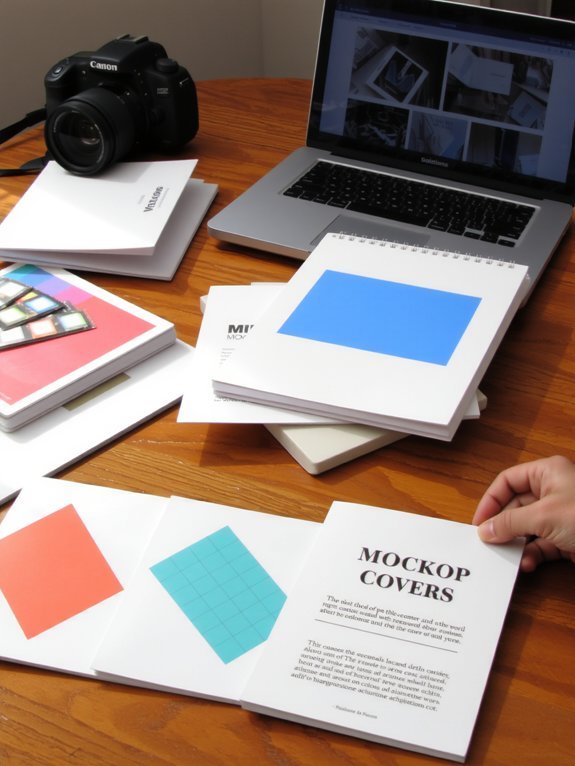
You’ve sorted the inside — margins that breathe, headers that whisper, pages that actually get used — now let’s make sure someone notices the book on a scrolling feed before they ever see the neat lines. You want a cover that screams “pick me” without yelling. Start with color psychology: warm tones invite, cool tones calm, contrast grabs the eye like a neon thumb. Pair that with smart font selection; choose one hero typeface, don’t mash a bakery into a bank vault. Use a single, high-contrast image, texture, or pattern, tilt it slightly, add a shadow, make it tactile. Keep spine and thumbnail legible. Test tiny — if it reads at phone size, you win. Be bold, be readable, and don’t overcomplicate.
Formatting and Uploading Your Book on KDP

While the cover grabs attention, the file you upload has to survive the KDP gauntlet — and I’m here to make that part painless, not terrifying. You’ll follow clear formatting guidelines: correct trim size, bleed settings, RGB/CMYK advice, and embedded fonts. I walk you through exporting a crisp PDF interior, a matched cover PDF, and a quick sanity check — zoom in, flip pages, smell the digital ink (metaphorically). During the uploading process, you’ll name files smartly, pick categories, add keywords, and preview on KDP’s mockup viewer, catching layout shifts before they haunt you. I’ll be frank, it’s fiddly, but you’ll learn the rhythm, breathe, click upload, and celebrate a tiny, righteous victory.
Pricing Strategies and Royalty Optimization

You need to price like a pro, so I’ll walk you through scanning competitor listings, feeling the market pulse, and spotting sweet spots where customers bite. Pick the right royalty option, I’ll show you how each rate changes your take-home, and we’ll test bundles and discounts to nudge buyers without killing profit. Trust me, you’ll learn to tweak prices like a chef seasons soup—little pokes, big payoff.
Competitive Market Pricing
Price is a muscle, and I’m about to make you flex it—gently, not like a gym bro hitting deadlifts. You’ll watch market trends like a hawk, scan top listings, and sniff out gaps with a smirk. I guide you to set prices that match value, placement, and buyer mood, not ego. Scout similar journals, note page counts, cover quality, and price bands, then test small shifts. Slip a $0.50 change, listen to sales sing or sigh. Use odd pricing, bundles, and discounts to tease clicks, but don’t undercut yourself into oblivion. Keep a spreadsheet, refresh weekly, and let data boss you around. Pricing strategies are a conversation—join it, charm it, then close the deal.
Royalty Rate Selection
Alright, let’s stop flexing price muscles and talk about who actually gets the steak — you, Amazon, or a sweet middle slice. You pick a royalty structure, you choose a pricing model, and you watch the cut. I’ll walk you through the tradeoffs: higher list price, bigger per-sale bite, fewer impulse buys; lower price, more eyeballs, slimmer margin. Picture coins clinking, customers hesitating, you shrugging and testing. Use simple experiments, tweak by a dollar, track units and profit. Speak to your niche, know print costs, and don’t romanticize volume alone. I like to A/B one cover at a time, measure, then scale winners. It’s pragmatic, a little nerdy, and honestly, kind of fun.
Bundles and Discounts
Think of bundles and discounts as tactical combos — like slapping hot sauce on a burger to make folks bite twice; they boost perceived value, nudge fence-sitters, and let you sell more without gutting your royalty per unit. I’ll walk you through bundle types that sell: single-theme packs, seasonal sets, and mixed-use bundles that feel like a tidy toolkit. You’ll test discount strategies — small percentage cuts, “buy two get one,” or time-limited flash sales that smell like urgency. Picture a customer scrolling, pausing, sniffing curiosity; you offer a neat stack of notebooks, a matching planner, and a cheeky sticker, all at a tiny discount. Track sales, royalty impact, and customer feedback, then iterate. It’s smart, simple, and a little bit cheeky.
Listing Optimization: Titles, Keywords, and Categories
Once you nail your title, the rest of the listing practically sings — and yes, I mean sing like a shower solo that actually sounds good. You want a title that hooks, tells, and converts, so I test short punchy lines, then breathe, then tweak. My listing strategy pairs clear promise with a tiny ego check: no hyperbole, just benefit. Do keyword research like you’re eavesdropping in a café, listen for phrases buyers use, then fold them into subtitle and backend fields. Pick categories that match intent, not wishful thinking, so your book shows up where people already shop. Write crisp bullets, add sensory cover details, and preview the buy box — make clicking feel inevitable, not accidental.
Scaling Your KDP Low-Content Business

If you want your KDP side hustle to stop being a sleepy weekend hobby and actually earn like a business, you’ve gotta scale—and yes, that means doing the boring stuff with swagger. You’ll plan business expansion like a chef batching sauces: tweak templates, batch interiors, and crank uploads until the keyboard hums. I tell you, batching saves time, and automation feels like espresso for your schedule. Use marketing strategies—email, socials, tiny ads—to push winners, kill duds, rinse, repeat. Outsource grunt work, hire a designer, or trade favors with a freelancer. Track royalties, watch trends, pivot fast when a niche stutters. Picture stacking colorful covers on a virtual shelf, each sale a tiny bell. It’s tedious, thrilling, and totally doable.
Conclusion
You’ve got the map and the shovel, now start digging. Picture your niche like ripe fruit — smell it, taste it, pick it. Design clean pages, a cover that winks, upload with care, tweak price, watch sales blossom. I’ll cheer from the sidelines while you learn, fail fast, and win slow. Keep testing, keep listening to buyers, and scale what sells. Do that, and those quiet notebooks will pay rent.


