You’re ready to sell your handmade stuff on Amazon, and I’m here to talk you through the parts that actually make money, not fairy-tale advice. You’ll pick a clean shop name, shoot crisp photos that smell like sunlight and coffee, write short punchy titles that grab clicks, price to cover fees plus profit, and tweak listings like a lab scientist—little tests, big wins. Stick with me, because the smart moves start after setup.
Setting Up Your Amazon Handmade Shop and Meeting Eligibility Requirements
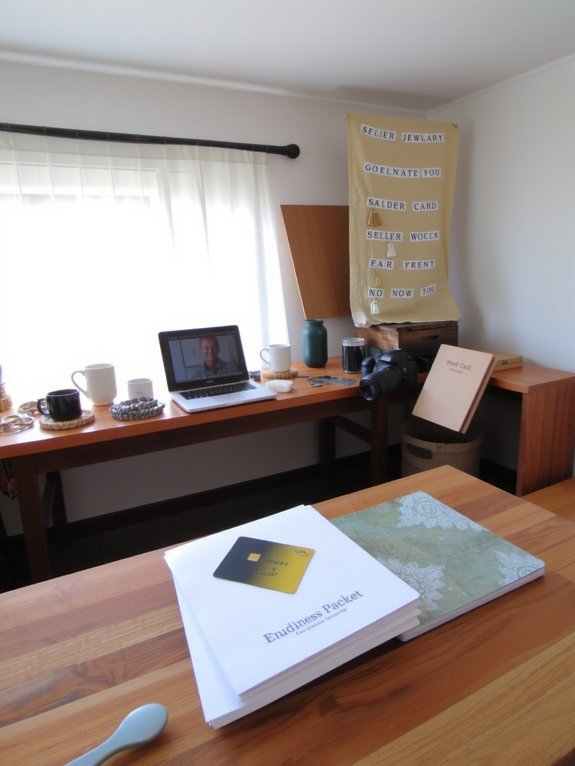
If you want to sell on Amazon Handmade, you’ll need to meet a few rules before you can fling open the virtual doors—so grab a mug, sit down, and let me walk you through the checklist. You’ll start with shop setup: pick a name that smells like your brand, upload a crisp logo, enter bank and tax details, and choose shipping options that don’t make you cringe. Then check eligibility criteria: Handmade items only, no resold mass-produced goods, and you must prove you craft or oversee creation. I’ll hold your metaphorical hand while you gather photos, descriptions, and verification docs. It’s honest work, mildly bureaucratic, and totally doable—let’s get you listed.
Crafting Product Listings That Convert: Photography, Titles, and Descriptions

Because pictures sell before words do, you’ll want listings that hit the eye, explain the thing, and seal the deal—fast. You’ll nail product photography by using natural light, clean backgrounds, and close-ups that show texture, stitch, and shine; think touchable, real. Titles must be clear, searchable, and short—no fluff. Then write engaging descriptions that tell a tiny story: who made it, how it feels, what problem it solves, and care instructions. Be specific, sensory, and honest, and sprinkle keywords naturally.
| Photo tip | Description tip |
|---|---|
| Shoot from multiple angles, include scale | Start with benefit, then specs |
| Use props sparingly, show texture | End with care and a call to action |
Test, tweak, repeat, and watch conversions climb.
Pricing Strategies and Understanding Fees to Protect Profit Margins
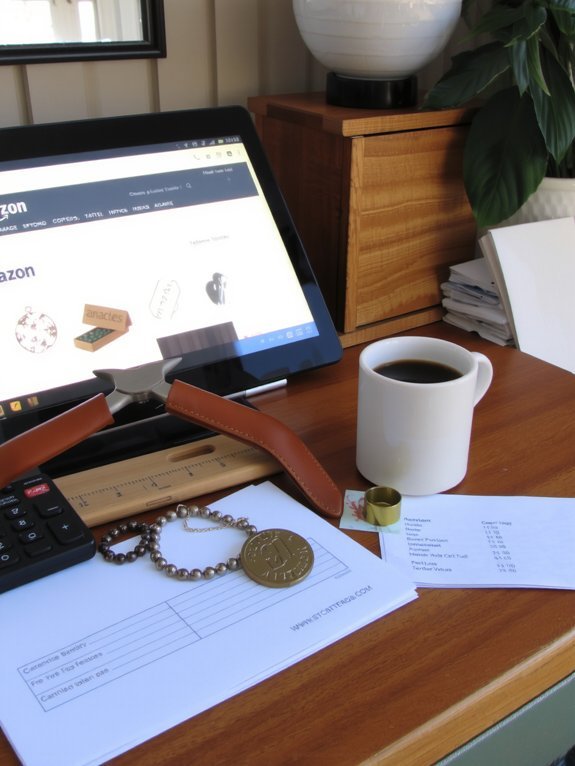
You’ve got to know exactly what each item costs you — materials, tools, shipping boxes that smell like the hardware store, and the hours you spend stitching or painting. Then factor in Amazon’s fees, because those percentages and referral charges quietly eat your margins like raccoons at a picnic. I’ll help you set prices that cover real costs and leave a tidy profit, so you’re not working for exposure and cold coffee.
Calculate True Product Cost
Since I started selling my ridiculous little clay mushrooms, I learned the hard way that a pretty price tag doesn’t mean you’re making money, it just means you look rich on paper; so let’s dig into the real math. You’ll tally material costs, labor expenses, packaging, and overhead, then add a tiny margin that actually pays you, not just your bills. Be ruthless: weigh clay, count minutes, time every glaze session. Smell of kilns, sore fingers — those are costs too.
| Item | Cost |
|---|---|
| Materials | $ |
| Labor (minutes→$) | $ |
| Packaging | $ |
| Overhead | $ |
Final price = total cost ÷ (1 − target margin). Test, adjust, repeat.
Understand Amazon Fees
1 thing will sink your clay-mushroom empire faster than a cracked glaze: fees you didn’t see coming. I tell you this over a chipped mug, because I’ve learned the hard way. Read every line: Amazon commissions, selling fees, and payment processing charges nibble at your price like curious mice. Know refund policies too; returns can double-dip into your costs. Factor tax implications early, don’t pretend they’re a surprise party. Do competitive analysis and watch market trends so you can adjust without panic. Tally everything into profit margins, down to packing tape that smells like lavender. Be blunt, update spreadsheets, and whisper to your listings when you raise prices. You’ll sleep better, and your mushrooms will keep thriving — glazed and profitable.
Set Profit-Based Pricing
Alright, now that we’ve picked the bones clean of hidden fees and tax surprises, let’s talk about pricing that actually leaves you money in the jar. You’ll first list every cost — materials, labor, packaging, Amazon fees, shipping pads — then add a fair profit slice. Use competitive analysis like a magnifying glass, peek at similar listings, note textures, photos, and price gaps. Ask customers for feedback, test a few price points, and watch conversion rates like a hawk. Don’t guess. Charge what your craft’s worth, but be honest with your market. Try tiered pricing, bundles, limited editions. Adjust monthly, keep receipts crisp, and celebrate when profit shows up — treat yourself to coffee, you earned it.
SEO and Advertising Tactics to Increase Visibility and Sales
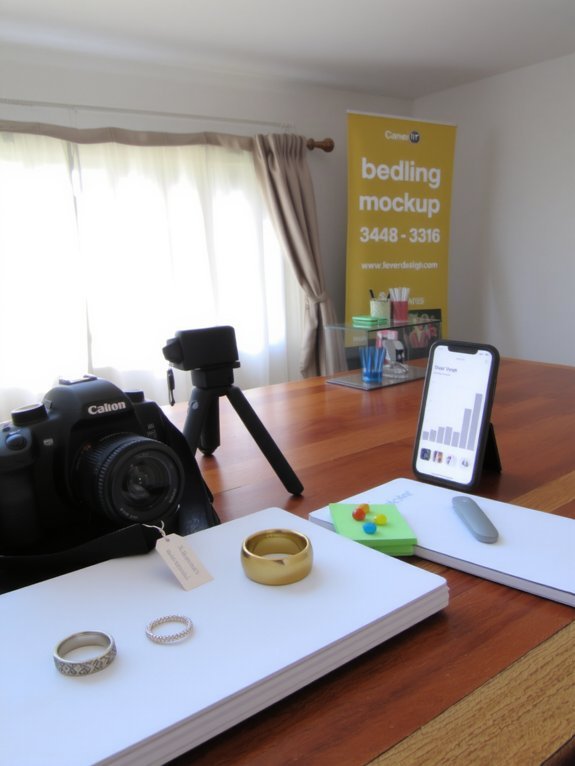
You want shoppers to find your work, so start by sniffing out the exact keywords they type — I mean, picture the tiny search bar like a treasure map, and you’re the slightly over-caffeinated pirate. Then we’ll use those words in titles, bullets, and backend search terms, and pair them with Sponsored Ads that boost your best listings like a megaphone at a craft fair. Stick with me, we’ll test ad bids, watch click-throughs, cut what flops, and celebrate the weird little win when a stranger buys your handmade mug at 2 a.m.
Keyword Research Essentials
Keywords are your map and your megaphone — they tell you where shoppers are hiding and help you shout so they can hear you. I’ll show you how to dig in. Use keyword tools, like a metal detector for phrases, to find what people actually type. Do niche analysis next, study the small pockets of demand, smell the hot trends, feel buyer intent. Craft titles and bullets that match search rhythm, sprinkle primary and secondary terms, don’t cram. Watch listings, tweak, repeat. I poke at analytics, squint at impressions, then change one word and listen for the ping of clicks. You’ll learn fast, fail cheap, and get better at being seen. It’s science, art, and a little bit of stubborn charm.
Sponsored Ads Strategy
While organic listings are your steady bread, sponsored ads are the sizzling topping that gets people to stop, salivate, and click; I’ll show you how to season them without burning the batch. You’ll try sponsored ad types like Sponsored Products, Brands, and Display, testing one at a time, tasting results, adjusting spice. I’ll walk beside you, poking at bids, trimming keywords, and pruning ACoS until it smells right. Use targeting options — automatic to gather intel, manual for precision, product targeting to ambush competitors. Rotate creatives, swap images, keep copy sharp. Set daily caps, watch the heat, kill bad keywords fast. It’s hands-on, slightly nerdy, and oddly fun; you’ll learn by doing, and sell more while you laugh at your own mistakes.
Fulfillment Options, Inventory Management, and Shipping Best Practices
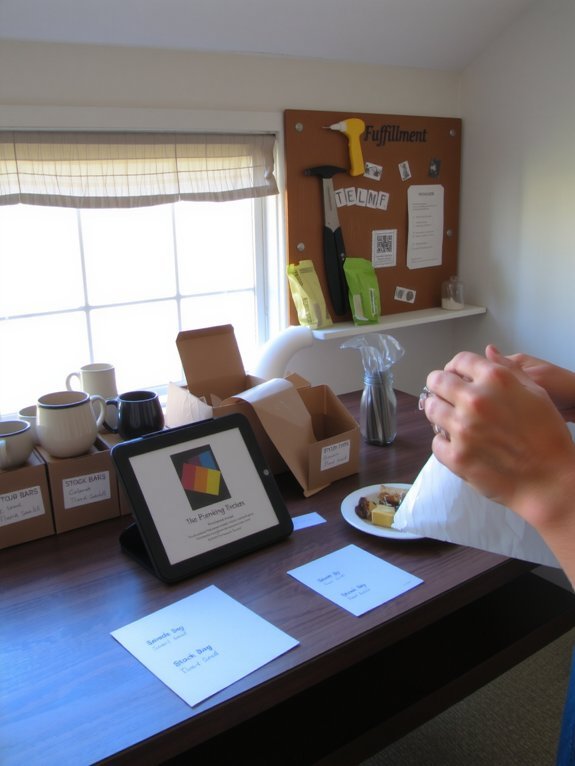
Because shipping can make or break a sale, I treat fulfillment like the backstage crew that either keeps the show smooth or trips everyone on the curtain pull — and yes, I’ve been that person who forgot bubble wrap. You’ll pick fulfillment strategies that match your hands-on craft: ship yourself for control, or use FBA/FBM hybrid for reach. Inventory management means a simple spreadsheet, daily counts, scented packing station (yes, it matters), reorder alerts, and buffer stock for holidays. Shipping solutions should include tracked courier options, clear carrier choices on listings, and packing that survives cat attacks and postal storms. Communicate ETA like a friend, refund fast, and learn from every returned sweater — you’ll get better, messier, and more profitable.
Scaling Your Handmade Business While Maintaining Quality
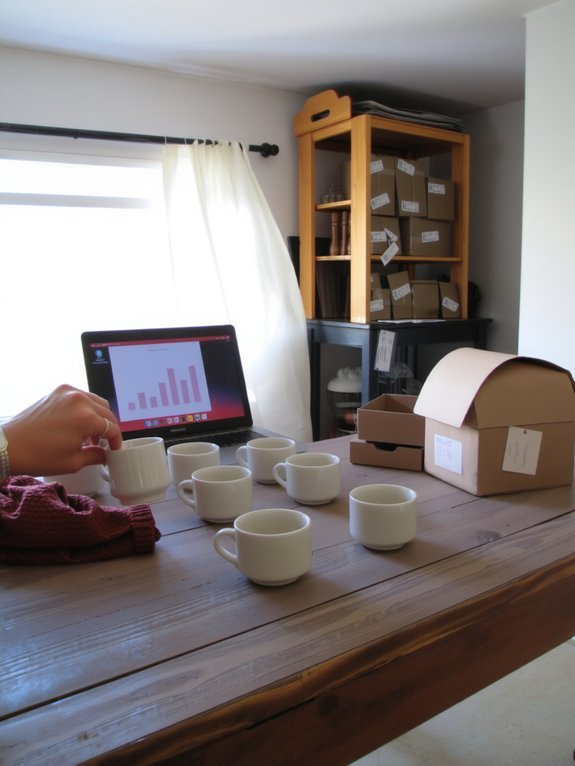
If you want to grow without turning your studio into chaos, you’ve got to treat scale like a delicate recipe—add teammates slowly, taste as you go, don’t dump in a gallon of glue and hope for the best. I’ll say it straight: hire one reliable person before you need five. Train them on quality control rituals—measuring, inspecting, packing—until it’s muscle memory. Keep a simple checklist, scent of fresh glue and coffee in the air, timers ticking. Use customer feedback as your compass; read reviews, call a confused buyer, fix the pattern. Automate boring bits, like invoices, but keep hands-on final inspections. I wobble too, but small steps, clear standards, and honest notes stop mistakes and keep your craft recognizable.
Conclusion
I tested a stubborn theory: you can turn messy craft nights into steady income on Amazon Handmade, and it’s true. You’ll set up a legit shop, shoot mouthwatering photos, write crisp listings, price smarter than your neighbor, and tweak SEO until sales hum. I’ll say it plainly — it takes work, caffeine, and stubborn optimism. But when a package clicks “shipped,” you’ll feel it: tiny victory, warm cash, and a grin that’s totally yours.