
You can make steady side income with Amazon FBA without quitting your day job, and I’ll show you the small, practical steps that actually work—starting with a tiny budget, thrift-store treasure hunts, and listings that don’t sound like robot poetry; picture you holding a $3 find, snapping a clean, bright photo, typing a sharp headline, and watching a sale trickle in while you sip coffee and pretend you’re not thrilled. Keep your expectations modest, track margins like a hawk, and if you want to know how to start smart, stick around.
Why Small-Scale Amazon FBA Works for Side Income

If you’re short on time but not on hustle, small-scale Amazon FBA fits like a snug sweater you actually want to wear — cozy, useful, and not loud. You’ll like it because it bends around your life: flexible hours let you list products between school drop-offs, or during coffee breaks, and you won’t give up evenings. It’s low investment compared to full-blown stores, so your wallet won’t stage a revolt. You source a handful of items, photograph them by a sunny window, write a crisp listing, ship to Amazon, and watch orders ping your phone while you cook. I’ll admit, it’s tiny drama — a few thrills, a few spreadsheets — but it’s steady, real cash, and oddly satisfying.
Setting Realistic Goals and Startup Budget

A sensible goal starts with a number and a deadline, not a fantasy. You tell me you want extra cash, I ask: how much, by when? Goal setting makes it real. Pick a monthly revenue target, pencil in launch and review dates, then slice it into weekly tasks.
Budget planning is brutal and freeing. Write down inventory cost, Amazon fees, shipping, packaging, advertising, and a tiny emergency fund that smells faintly of doom averted. I recommend a starter total you can afford to lose, then halve your drama.
You’ll track receipts, set up a simple spreadsheet, and check progress every Friday over coffee. Adjust goals, tweak spend, celebrate small wins—yes, even tiny victories deserve jazz hands.
Product Selection Strategies for Low Risk

Numbers matter, so grab your favorite mug and let’s stare them down together. You’ll scan product trends, listen for whispers of demand, and ignore the shiny, noisy fads. Do quick market research, check search volume, price stability, and review counts. I’ll nudge you to favor small, durable items that ship cheap, have steady margins, and won’t explode your storage fees. Picture yourself holding a matte, compact gadget, weighing it with your fingertips, imagining unboxing joy. Run the numbers: sell-through, ROI, and break-even. Say no to saturated listings with 500 five-star reviews. Prototype your listing in your head—title, images, bullet points—then re-run research. You’ll sleep better knowing risk is trimmed, not chased.
Sourcing Cheap, Reliable Inventory

You’re going to hit local thrift stores and wholesale closeouts like a bargain-hunting ninja, I promise it’s more fun than it sounds. Picture me kneeling in a fluorescent aisle, sniffing old sweaters and flipping price tags while you snag brand-name items for pennies on the dollar. Start small, move fast, and laugh when a hidden gem turns your trunk into instant cash.
Local Thrift Stores
Slow down and smell the polyester — thrift shopping’s its own little treasure hunt, and I’ll show you how to cash in without looking like a mad scavenger. You’ll learn to spot thrift store finds that flip fast, and I geek out over vintage collectibles — that faded lunchbox might be gold. Walk aisles slow, touch fabric, unzip bags, check labels, test zippers. Ask staff about restock days, smile, make friends; they tip me off. Use your phone, scan barcodes, compare prices, list winners immediately. Clean items, photograph in natural light, write honest descriptions. Expect misses, laugh, learn. You’ll build instinct over time, trust it, and pocket steady profit from other people’s nostalgia.
Wholesale Closeouts
If you can appreciate the strange perfume of thrift stores and the thrill of unearthing a faded lunchbox, you’ll love the different kind of hunt I’m about to show you: wholesale closeouts. You’ll dial into wholesale sourcing, scan pallet photos, and squint at manifests like they’re treasure maps. I’ll tell you straight: liquidation opportunities aren’t glamourous, they’re efficient — boxes of returns, shelf-pulls, overstocks, all priced to move. You touch the cartons, you nose the cardboard, you pick through sticker guts and decide fast. Buy smart, inspect samples, and calculate fees before you click. I screw up sometimes, you will too, but margins recover quicker than pride. Want reliable inventory? Closeouts teach you to buy cheap, sell clean, and repeat.
Calculating Amazon Fees, Margins, and Break-Even

Okay, let’s look under the hood: you’re going to learn the Amazon fees that nibble at your price — referral, FBA pick-and-pack, storage, and returns — so you can stop guessing and start pricing like a pro. I’ll show you how to plug those numbers into a simple break-even formula, so you can smell profit or see red before you buy a single unit. Stick with me, we’ll run the math, crunch the margin, and make your next sourcing trip a lot less scary.
Understanding Amazon Fees
When you start peeling back Amazon’s fees, you’ll feel like you’ve opened a mystery box that’s equal parts treasure map and LEGO instruction manual—confusing until you sort the pieces; I’ve been there, squinting at percentages and wondering if my profit just disappeared into a digital sock drawer. You’ll want to map Amazon fees: referral commissions, variable closing fees, FBA charges, and storage costs. Study the fee structure, note selling costs, and list seller expenses line by line. I tally profit calculations aloud, pretend I’m a detective, then wince when the fee impact shows up. Run simple math per SKU, watch using real numbers, and adjust prices. It’s tedious, but nail this, and you stop guessing and start earning.
Calculating Break-Even Point
Numbers are my least charming hobby and my most useful superpower, so let’s wrestle the break-even point into submission together: you’re going to add up every single cost—product cost, Amazon’s referral and FBA fees, storage, shipping to the warehouse, and even that $3 mystery expense you forgot—and divide that total into your expected selling price to see when the sale stops being a charity and starts being profit. Do a tidy break even analysis, trace profit margins, and don’t blink. Here’s a simple ledger to stare at, squint, then conquer:
| Item | Cost |
|---|---|
| Product cost | $10 |
| Amazon fees | $6 |
| Shipping & storage | $3 |
| Misc / buffer | $1 |
Subtract, breathe, adjust price or cut cost, repeat.
Creating Effective Listings That Convert
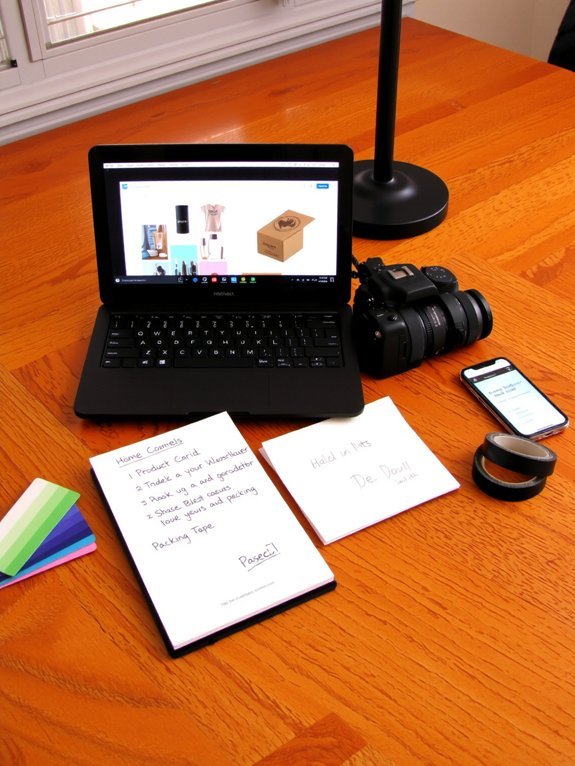
If you want people to buy your stuff, you’ve got to seduce them with words and pictures—plain and simple. I tell you, start with keyword optimization, sprinkle relevant search terms into titles, bullets, and backend fields, don’t stuff, just prioritize. Use compelling images that pop, show scale, texture, and action — shoppers want to see it in life. Write persuasive descriptions that answer questions, banish doubt, and sell benefits, not features. Do competitive analysis, peek at winners, then outdo them. Encourage customer reviews, they’re social proof gold. Run A/B testing on images and copy, track clicks and conversions. Apply listing enhancements and smart SEO strategies, tweak, repeat — don’t set it and forget it.
Pricing Tactics and Promotions for New Sellers

Because price is the first thing a buyer sees, you’ve got to treat it like a headline that either grabs them or sends them scrolling—fast. You’ll use pricing psychology to nudge choices: charm with .99 endings, anchor higher-priced options next to your bestseller, and flash a “limited time” tag that smells like urgency, not desperation. Try small discounts first, watch the click heat, adjust. Mix promotional strategies—coupons, lightning deals, and bundled offers—so your listing sparkles without tanking profits. I’ll remind you, loudly but kindly: don’t slash price to prove love. Test, measure, repeat. Picture a shopper pausing, smiling, tapping buy; that’s your goal. Keep it playful, lean, and profit-focused, like a smart bargain hunter with taste.
Managing Inventory and Replenishment Efficiently

When your shelves whisper “sold out” at 2 a.m., it’s your fault—and also kind of your superpower, because smart replenishment stops that panic and turns you into the calm person who always has what customers want. You track inventory turnover like a hawk, you listen to sales rhythms, and you set reorder points that actually mean something. Walk your warehouse, smell cardboard, feel the heft of boxes, and note slow movers. Use simple forecasts, buffer stock, and safety lead times, so stock levels don’t nose-dive. Automate reorder alerts, place smaller, frequent buys, and lean on fast suppliers. You’ll cut cash tied in inventory, avoid dead stock, and sleep better. I promise, spreadsheets and discipline beat chaos.
Handling Customer Service and Returns Like a Pro

You want returns to be easy, so you write a clear, no-surprises policy that customers can scan in five seconds and actually understand. I’ll show you how to set up an efficient response system, the kind that pings you before frustration turns into a one-star review, with canned replies, fast follow-ups, and a little human warmth. Picture calm inboxes, refunded orders handled like clockwork, and customers saying “wow” instead of “why,” and we’ll get you there.
Clear Return Policy
If you’re running an Amazon FBA shop, a crisp, no-nonsense return policy is your safety net and your secret handshake with customers, and I’ll tell you why: it keeps headaches low, trust high, and refunds predictable. You want clear rules, written like a human, not a lawyer. State windows, condition requirements, and who covers shipping — bold the important bits, breathe some friendly tone into the text, and watch nervous buyers relax. A tidy return policy boosts customer satisfaction, reduces disputes, and saves you time in the long run. Picture a calm inbox, a satisfied buyer clicking “return” without drama, you approving fast, and both sides sipping victory coffee. I promise, it’s less painful than packing boxes at midnight.
Efficient Response System
You’ve got the return policy nailed down, now let’s make sure the rest of customer contact doesn’t look like a burned-out inbox at 2 a.m. You’ll set up templates that sound human, not robotic, and you’ll keep replies short, helpful, and warm. Think efficient communication: canned answers for basics, personalized lines for curveballs. I’ll show you how to triage messages—urgent refunds, shipping questions, praise—and assign times to clear them, so timely responses become second nature. Use alerts, snooze threads, and quick macros, read the tone, mirror it, apologize fast when needed, add a small fix. Customers feel heard, you sleep better. It’s customer service with muscle and a smile, nothing dramatic, just sharp.
Testing, Tracking Results, and Scaling Carefully

When the first few units land in Amazon’s warehouse and your inbox starts pinging like a tiny, hopeful drum circle, don’t sprint—observe. You’ll test pricing, images, and copy with gentle A/B nudges, use testing methods that don’t blow your budget, and watch tracking metrics like a hawk with a spreadsheet addiction. Smell the cardboard, click through your listing, read buyer notes, learn fast.
| Action | What to watch |
|---|---|
| Price test | Conversion rate |
| Image swap | Click-through rate |
| Promo run | Sales velocity |
| Review follow-up | Rating trend |
| Restock plan | Sell-through rate |
Scale only when metrics sing, margins hold, and you can sleep. Small, steady wins beat fireworks.
Conclusion
You can do this, I promise — start small, keep the math tight, and celebrate the tiny victories. I tested the “thrift-store-hunt” theory myself: found a vintage board game, scanned it, listed it, watched the buy box glow. You’ll feel the click when margins line up and stock turns. Track fees, tweak prices, and treat returns like feedback, not failure. Do that, scale slowly, and you’ll turn spare hours into steady side cash.