You can turn your best images into steady income by licensing them to the right buyers, but it takes strategy. Focus on technical excellence, clear metadata, and the licensing model that fits each use. Set prices that reflect value, protect your rights with solid contracts, and make your portfolio discoverable. If you want predictable revenue rather than one-off sales, there are specific steps that make that shift possible—here’s where to start.
Key Takeaways
- Build a focused, high-quality catalog of versatile, timeless images that appeal to commercial and editorial buyers.
- Embed accurate IPTC/XMP metadata and register copyrights to improve discoverability and legal protection.
- Choose licensing models (royalty-free vs rights-managed) based on income goals and the image’s scarcity value.
- List images on multiple reputable marketplaces and offer direct licensing to capture diverse revenue streams.
- Use clear contract terms, watermarks for pitches, and a monitoring/enforcement workflow to protect and monetize usage.
Why Licensing Photos Is a Smart Way to Earn Passive Income

Because licensing turns a single image into a recurring revenue stream, it’s one of the most efficient ways to monetize your photography skills. You’ll leverage photo licensing to convert work into scalable passive income: each license multiplies return without proportional effort. You control usage terms, durations, and territories, so your pricing reflects value and exclusivity. Implement clear metadata, model/release compliance, and standardized licensing contracts to reduce negotiation friction and legal risk. Automate distribution through platforms and grow catalog diversity to increase discoverability and long-tail earnings. Track license types, renewal opportunities, and performance metrics to prioritize high-yield assets. With disciplined rights management and strategic placement, you’ll transform individual images into predictable revenue streams that compound over time.
Choosing Photos That Sell: Subjects, Style, and Market Fit

You’ll focus on subjects that remain relevant across seasons and industries, like everyday people, food, technology, and nature, because timeless, widely usable images sell consistently. You’ll maintain a consistent visual style—lighting, color palette, and composition—so buyers can quickly integrate your work into projects without extra editing. By matching subject choices and style to target markets, you’ll maximize licensing opportunities and reduce time wasted on images with limited demand.
Timeless, Widely Usable Subjects
Timeless subjects — landscapes, architecture, genuine human emotions, everyday objects — sell because they work across industries and campaigns, so aim for photos that are versatile, easily cropable, and free of dated trends. You’ll prioritize nature scenes and urban landscapes that read clearly at multiple sizes and aspect ratios. Frame with negative space for text placement, avoid faddish color-grading, and capture neutral, relatable expressions rather than stylized poses. Shoot common objects from practical angles so editors can repurpose them for ads, articles, or product mockups. Focus on high technical standards: tack-sharp focus, clean backgrounds, accurate exposure, and generous resolution. If your image communicates universally and adapts to layout needs, clients will license it repeatedly across contexts.
Consistent Visual Style
After nailing timeless, widely usable subjects, focus on a consistent visual style that makes your work instantly recognizable to buyers and easy to group into themed collections. You’ll define color palettes, lighting setups, composition rules, and post-processing presets that enforce visual consistency across shoots. Treat your portfolio like a product line: standardize focal lengths, depth-of-field choices, and retouching intensity so images pair cleanly in licensing bundles. Buyers search for cohesive sets; your branding strategy should communicate predictability and professional reliability. Measure performance, drop underperforming variants, and iterate presets based on sales data. By codifying technical parameters and marketing them as a curated aesthetic, you’ll increase discoverability, command higher fees, and turn sporadic sales into scalable licensing revenue.
Preparing Files: Resolution, Formats, and Metadata Best Practices
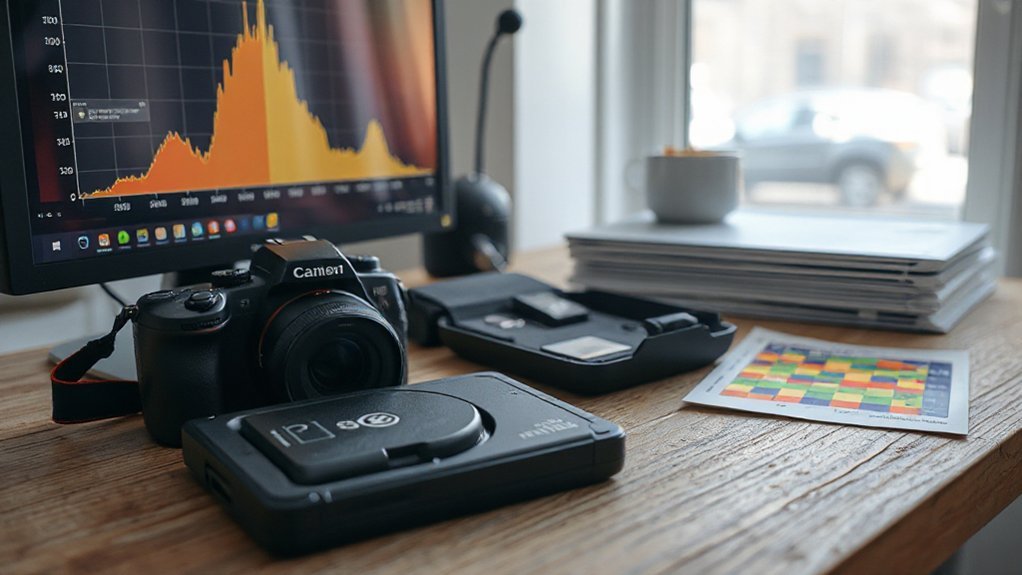
You’ll want to prepare files that meet commercial standards for ideal image resolution so buyers can use them for print and web without quality loss. Use the right file formats — TIFF or high-quality JPEG for finished images, PNG for graphics with transparency, and RAW/PSD when clients need editability — to match licensing needs. Embed accurate metadata (IPTC/XMP) including copyright, contact, and usage terms so your work is discoverable and legally protected.
Optimal Image Resolution
Anyone preparing photos for licensing needs to understand ideal image resolution because it directly affects usability, buyer satisfaction, and your earnings. You’ll choose an excellent image size that balances sharp reproduction with manageable file weight; aim for pixel dimensions that meet print and digital briefs without overshooting. Maintain excellent image quality by preserving detail, avoiding aggressive noise reduction, and exporting at resolutions buyers expect for intended use. Include clear resolution notes in metadata so buyers trust the file instantly. Be decisive: high-res for editorial and large-format, medium-res for web, and offer scalable options.
- Pride when clients get flawless prints
- Confidence knowing your files meet specs
- Relief avoiding rejected downloads
This technical discipline converts quality into repeat licensing revenue.
File Formats Explained
Because buyers expect predictable, usable files, choosing the right file formats is as important as nailing resolution — you’ll package images so they open cleanly, print sharply, and integrate into workflows without extra work. You’ll deliver JPEG for its widespread compatibility and JPEG advantages: small files, quick previews, and broad client acceptance. Keep RAW as your archive for RAW flexibility — edits without compression artifacts. Use TIFF for print and high-end retouching because TIFF quality preserves color and detail. Offer PNG uses for web graphics with transparency. Include HEIC compatibility notes for modern mobile workflows, but provide converts for legacy systems. For simple, legacy demands, BMP simplicity can work, though it’s bulky. Be decisive: match format to buyer needs.
Embedding Metadata Properly
When you embed metadata properly, you make your images discoverable, legally protected, and instantly usable for buyers and agencies. You’ll use metadata standards like IPTC and XMP, filling title, description, keywords, creator, copyright, and usage terms. Apply consistent controlled vocabularies and UTF-8 encoding so search and licensing platforms parse your files reliably. Use proven embedding techniques — batch tools, camera presets, and DAM software — to avoid human error and keep provenance intact. Test files in both RAW and export formats to guarantee metadata persists. Don’t forget to retain original files and sidecar support where needed.
- Pride in a professional, searchable portfolio
- Confidence that rights are clear and enforceable
- Relief knowing buyers can find and license your work
Understanding Licensing Types: Royalty-Free Vs Rights-Managed

A clear grasp of royalty-free versus rights-managed licensing lets you control revenue, usage, and long-term value for each image you sell. You’ll choose royalty-free when you want broad, repeatable distribution: buyers pay once for non-exclusive, often perpetual use, which maximizes volume as licensing trends favor quick access. Use rights-managed when you need scarcity and higher per-use compensation: you’ll limit scope, duration, territory, and exclusivity to match specific market demand and client intent. Technically, RF simplifies cataloging and reduces transaction friction; RM requires precise metadata, usage logs, and contract clauses. You’ll balance income stability against upside potential—RF for steady streams, RM for targeted high-return placements—while tracking trends and protecting future exploitation rights.
Pricing Strategies and Negotiation Tips for Licensing Deals

Although pricing may feel part art and part math, you should anchor every license quote in objective factors—usage scope, duration, exclusivity, audience size, and distribution channels—then adjust for your brand value and market data. You’ll choose pricing models (RM vs RF structures, flat fees, or CPM-style tiers) that map to risk and client expectations. Use clear line items, defined deliverables, and walk-away thresholds.
Anchor every license quote in objective factors—usage, duration, exclusivity, audience, channels—then adjust for brand value.
- You want respect for your work and fair compensation.
- You need control over where your images appear and how they’re valued.
- You expect negotiation to reflect measurable value, not guesswork.
Adopt firm negotiation tactics: set a minimum acceptable fee, tiered upsells, and concession swaps (shorter term for higher fee). Track deals to refine pricing rules.
Protecting Your Work: Contracts, Watermarks, and Copyright Enforcement
Pricing and strict negotiation only protect what you can prove and control, so you’ve got to lock down legal and technical safeguards around your images. You’ll draft contract essentials: clear scope, license type, duration, territory, exclusivity, usage limits, credits, indemnity, termination, and payment milestones. Use template clauses but customize for each deal; insist on written amendments. Embed watermark techniques during pitching: visible low-opacity marks for previews, robust metadata, and tiled or adaptive watermarks that survive cropping. Register copyrights proactively to enable statutory damages and send DMCA takedowns quickly. Monitor image use with reverse-image search and automated services, and prepare a standard enforcement workflow — notification, takedown, settlement offer, litigation threshold. Take control: enforce consistently to preserve value and deter misuse.
Conclusion
You’ve got the tools and know-how to turn photos into reliable income—focus on technically strong, market-fit images, embed precise metadata, and choose licensing models that match your goals. Price with confidence, negotiate terms that protect value, and use contracts plus monitoring to enforce rights. Keep files high-resolution and consistent in style to stay discoverable. Do this systematically, and your photography becomes a scalable, passive revenue stream that rewards discipline and smart business practices.