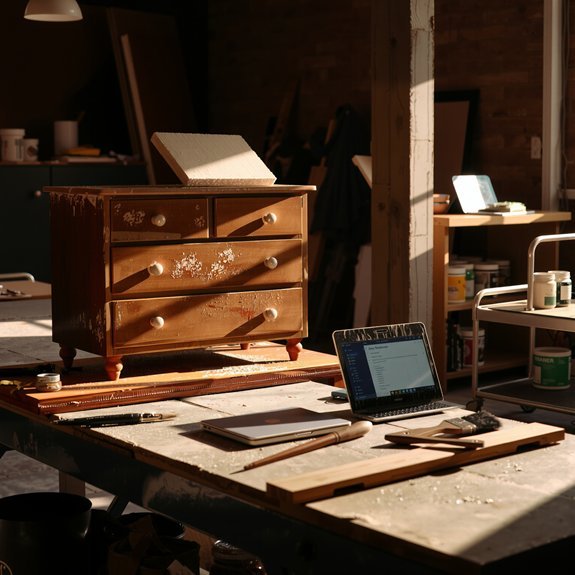
You probably don’t know that a $20 dresser can fetch $200 with three weekends, a sander, and a clever color—yes, really. I’ll walk you through where to buy the good stuff, what fixes actually add value, and how to style and photograph pieces so buyers drool, not haggle; you’ll learn which paints and hardware to splurge on, which repairs to skip, and how to price for profit—stick around and I’ll show you the shortcuts that actually work.
Sourcing Affordable and High-Potential Pieces
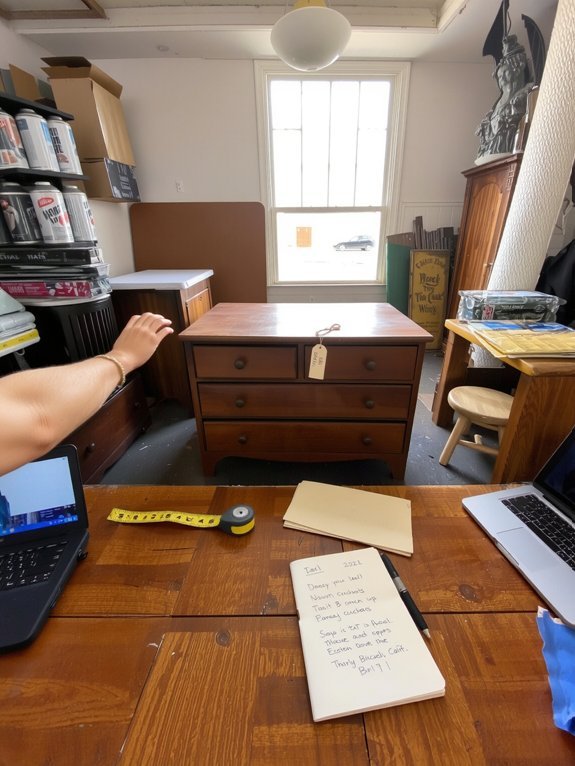
Even if you’re new to this, you’ll learn to spot a diamond in the rough—trust me, I’ve hauled home some true disasters that turned into showstoppers. You’ll hit thrift stores first, elbows in, sniffing old wood and dust, fingers on drawer slides, imagining paint instead of grime. Estate sales are treasure maps, listen for the slow-English accent of an heirloom table, then move fast. Garage sales teach you bargaining—say something funny, lower the price, walk away. Online marketplaces let you stalk photos, zoom into joinery, read “solid wood” like it’s a confession. I’ll tell you to trust your eyes, test wobble, smell for mildew, and carry a tape measure. You’ll learn to buy smart, not cheap.
Essential Tools and Workshop Setup
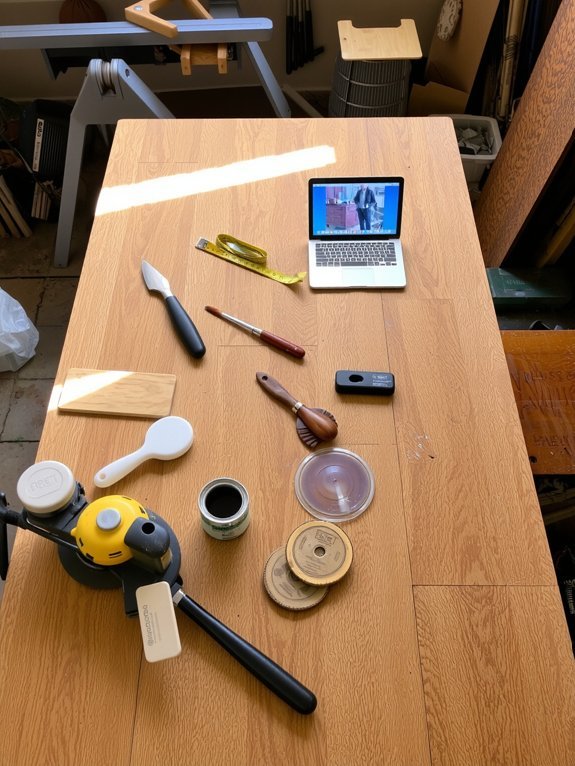
One good workshop starts with a handful of tools you actually use, not a garage full of shiny regrets. I tell you this while wiping sawdust from my nose, because you’ll want basics: a good circular saw, random-orbit sander, cordless drill, chisels, clamps, and a bench vise. Set up zones for cutting, sanding, finishing — workshop organization saves trips and tempers. Hang frequently used tools within arm’s reach, label drawers, and leave a clear workbench, because chaos kills momentum. I keep a simple parts drawer for screws and hinges, and a rag bucket for sticky glue disasters. Don’t forget tool maintenance: sharpen blades, oil moving parts, and charge batteries regularly. Clean, tuned tools speed jobs, and make flipping furniture actually fun.
Repair, Refinishing, and Styling Techniques That Add Value

Grab a rag and your favorite brush, because this is where the magic happens: repair, refinishing, and styling are the three musketeers that turn a tired dresser into something someone will actually fight over at a flea market. You’ll sand out scratches, glue loose joints, and hear that satisfying clunk when a drawer slides right. Try simple upcycling techniques, like swapping knobs, adding trim, or distressing edges for character. Choose finishes that show grain, or go bold with current color trends, mustard or muted teal, depending on your crowd. I’ll test stains by candlelight, because drama helps decisions. Stage with textiles, plants, one statement lamp, snap clean photos, and jot before-and-after notes. Small fixes, smart style, big resale smiles.
Pricing Strategies to Maximize Profit and Turnover

When you price a piece right, things happen fast: people walk in, they ooh, they haggle a little, and then they leave with a smile — and money in your pocket. You’ll do a quick cost analysis, tally parts, time, and paint, then add profit. Don’t be afraid to test competitive pricing, lower turnover for quick cash, or raise margin for standout pieces. Listen to the shop hum, watch shoppers’ faces, adjust like a pro.
| Strategy | Action |
|---|---|
| Cost analysis | Add materials + labor |
| Competitive pricing | Match local market |
| Quick turnover | Discount slightly |
| Premium margin | Highlight uniqueness |
| Hybrid | Auction-style pricing |
Be playful, firm, and honest — pricing’s a conversation, not a guess.
Marketing, Sales Channels, and Scaling Your Flipping Business

If you want people lining up at your booth and your inbox filling with “Is this still available?” messages, you’ve got to think beyond paint and screws — I’ll show you how to make the right crowd find your work. I post glossy, sunlit shots on social media, captions that sound human, and short videos of joints squeaking back to life. You list on online marketplaces, price to move, and watch interest spike. Talk to buyers like real people, hand over care tips, and wrap transactions snug as a blanket. When demand grows, rent a storage bay, hire help, and systemize photos and listings. Scale slowly, keep quality high, and enjoy that sweet, steady hum of cash and compliments.
Conclusion
You’ll get good at spotting diamonds in the rough, I promise—like the time I snagged a wobbly dresser for $20 and sold it for $240 after a new finish; flipping’s a treasure hunt with math. Use smart sourcing, clean repairs, and bold photos, price to move, then reinvest. You’ll learn fast, make mistakes, laugh, and sharpen your eye. Keep experimenting, keep hustling, and enjoy turning old junk into paychecks.