


You’ll warm a mic, you’ll sell a character, and you’ll learn to invoice without crying; I’ve done all three, and I’ll show you the shortcuts I wish I’d known. You’ll set up a quiet corner that smells faintly of coffee, practice vowels until they gleam, and cut a demo that actually gets listened to — then you’ll hustle clients with a friendly, not-slimy, pitch. Stick around — I’ve got the exact steps and the mistakes to dodge.
Getting Started: Your Voice and Goals

Even if your voice sounds ordinary when you chat with friends, it can still grab attention behind a mic — trust me, I was shocked the first time strangers thought my “radio voice” was intentional. You’ll start by listening, really listening, to your own tones, breaths, and pitch, and I’ll make you try silly exercises that loosen your jaw and warm your diaphragm. Learn basic voice techniques, record short reads, and play them back like a critic who secretly wants to hire you. Then set clear targets — auditions per week, demo pieces, income milestones — that’s goal setting with teeth. Expect awkward takes, celebrate tiny wins, and keep a notebook of lines that felt electric, you’ll need them.
Building a Budget Home Studio
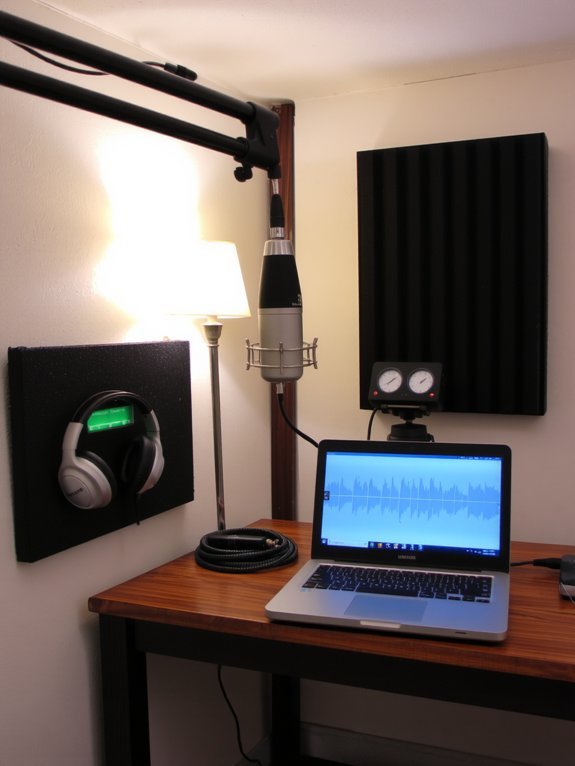
You’ll want a tight gear list — a good condenser mic, a quiet interface, headphones that don’t lie, and a stand that won’t collapse mid-read. Treat the room: foam or blankets on reflective spots, heavy curtains over windows, and a rug under your feet so recordings stop sounding like you’re in a tin can. I’ll walk you through what to buy first, what to DIY, and how to make a tiny space sound like a pro booth without selling a kidney.
Essential Equipment Checklist
Alright — let’s get your home studio off the couch and into something that actually sounds professional. I’ll walk you through gear that won’t bankrupt you, but will make clients nod and hire. Start with microphone types: dynamic mics for noisy rooms, condensers for warmth and detail — pick one you like, I won’t judge your vibe. Add an audio interface that matches your mic, gives clean preamps and low-latency monitoring. Get headphones that reveal every breath, a pop filter to stop plosives, mic stand, and XLR cable that won’t crackle at critical moments. Toss in a basic boom arm and a reflection shield if you can. Together, this kit makes you sound tidy, present, and paid.
Room Treatment Basics
So you’ve got the mic, the interface, the headphones — nice. Now you need a room that sounds good, not like a bathroom echo chamber or a closet full of ghosts. I tell you what to do: start with basic soundproofing techniques — seal gaps in doors and windows with weatherstripping, lay down a thick rug, and pile bookshelves against thin walls. Then add acoustic panels where reflections hit first: behind the mic, on the side walls, and opposite your voice. You can DIY panels with rockwool and fabric, they look pro, and they don’t cost an arm. Test by clapping, listen for flutter echoes, tweak placement. It’s cheap, deliberate, and it makes your demos actually sell.
Creating a Professional Demo Reel

You want people to hear the best you’ve got, so I’d pick three to five standout clips that grab attention in the first five seconds. Show off your vocal range—soft whisper, warm narration, bright commercial—and splice them so each switch feels like a little sonic surprise. Clean the audio until it gleams, trim the breaths, and package it tight, because if it doesn’t sound pro, nothing else will sell you.
Select Your Best Clips
Because your demo is the tiny stage where casting directors decide within seconds if you get a callback, pick clips that do more than show your voice — they show your range, taste, and professionalism. I’ll be blunt: less is more. Trim bloated takes, pick moments that pop, and sequence them like a mini-show. Use clip selection techniques: open with a hook, drop a surprising turn, end on a memorable line. You’re showcasing versatility, but don’t scatter like confetti; choose pieces that breathe, that texture the listener’s ear — warm close-mic, bright radio read, crisp commercial hit. Listen on earbuds, in a car, and on cheap laptop speakers. If a clip makes you wince, ditch it. Keep it tight, polished, and honest.
Showcase Vocal Range
Alright — you’ve picked the best little scenes, trimmed the fat, and sculpted a demo that doesn’t embarrass you in public. Now show what your voice can do. I tell clients to open with contrast: a warm, conversational read, then a sudden quirky character, then something deep and serious. Use short tags to signal switches, like “bright” or “gravelly,” so casting directors get it fast. Don’t forget vocal exercises before recording, I do five minutes of lip trills and sirens, feel the buzz, then plunge in. Plan for range expansion, pick pieces that stretch pitch, pace, and emotion. Keep edits tight, end on a memorable note, and smile into the mic — they can hear that.
Polish Audio Quality
If you want people to take your demo seriously, don’t let crunchy room tone or tinny EQ blow your first impression — treat your audio like a first date: clean, flattering, and a little irresistible. I’ll show you the steps. Record dry, close, and consistent, then sweep out hiss, bumps, and that weird fridge rumble. Do tight audio editing, trim breaths where they distract, keep character where it charms. Apply gentle EQ, subtle compression, tasteful de-essing. In sound mixing, balance levels, pan for space, add a whisper of warmth with a low-shelf, not plastered reverb. Listen on earbuds, studio cans, and a phone — they’ll all tell you different truths. Be ruthless about filler, then export clean stems and a polished reel that sells you.
Finding and Pitching to Clients
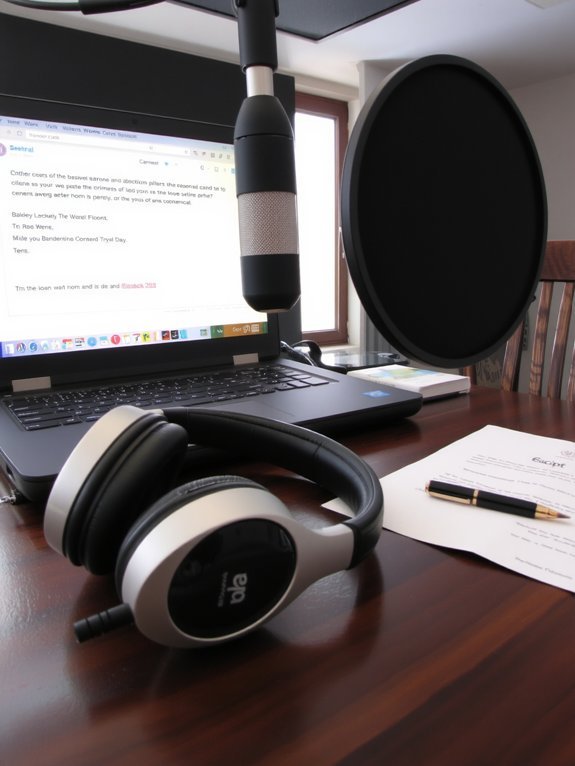
When you’re ready to stop auditioning into a void and actually land paid work, you’ve got to get out there and hunt—deliberately, like a coffee-fueled bloodhound with a demo reel. You’ll master client outreach, refine pitch techniques, and treat each message like a tiny audition. Be warm, specific, send links, and follow up without being needy. Picture quick scenes: you, typing a crisp email; them, clicking play.
| Situation | Action |
|---|---|
| Cold lead | Short intro, demo link |
| Referral | Mention referrer, gratitude |
| Agency | Tailored reel, specs |
| Repeat client | Quick check-in, new sample |
You’ll practice, tweak, and learn to read tone. It’s charming, direct, and surprisingly effective.
Pricing, Contracts, and Payment Practices
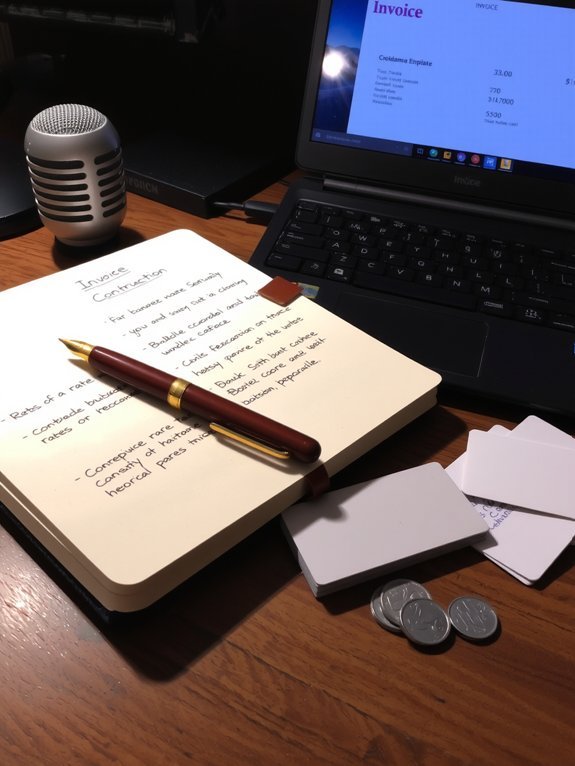
Because money is the part that actually keeps the lights on, you’ve got to treat pricing, contracts, and payments like a performance—rehearse, hit your mark, and never forget your mic’s on. I’ll walk you through pricing strategies that don’t make you sweat: hourly, per-project, buyouts, and usage fees, all tied to industry standards so you don’t undercut yourself. During contract negotiation, speak plainly, set deliverables, revisions, and deadlines, and insist on rights specifics—don’t trust vague promises. For payment methods, prefer invoices, bank transfers, and platforms with escrow, get deposits, and set net terms. Picture sending a crisp PDF, a polite follow-up ping, the cha-ching, and you, sipping celebratory coffee, relieved and smug.
Improving Skills and Expanding Into Niches
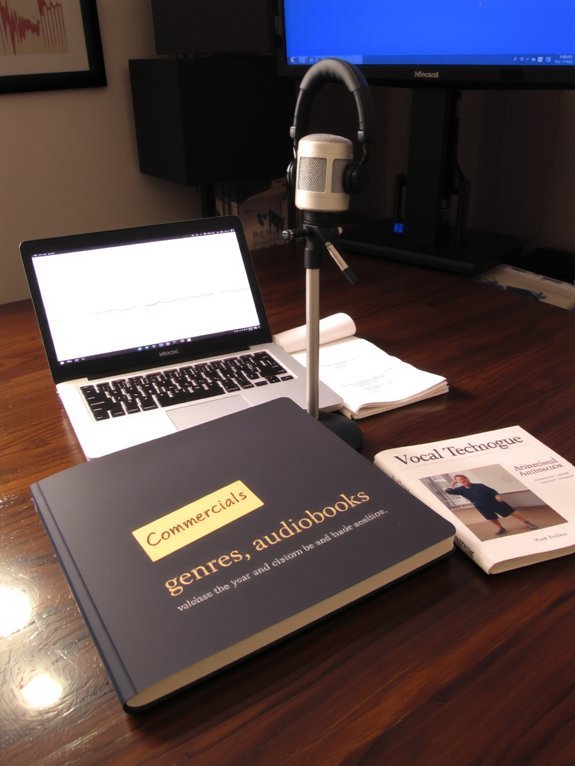
A good voiceover career smells like coffee, vinyl, and opportunity — and you’ve got to keep sharpening the tools that make those sounds sing. You practice breath control, tweak voice modulation techniques, and test accents in the shower like a mad scientist. You pick niches, you drill scripts, you listen back, you get honest.
| Skill drill | Target result | Time |
|---|---|---|
| Breath & support | Steadier lines | 15 min |
| Pitch range | Emotional color | 10 min |
| Diction drills | Clear copy | 10 min |
| Style reads | Demo clips | 30 min |
| Market study | Niche fit | 20 min |
Use niche specialization strategies, record tight demos, and keep playful curiosity. I promise, persistence and practice smell sweeter than prestige.
Marketing, Networking, and Building Repeat Business
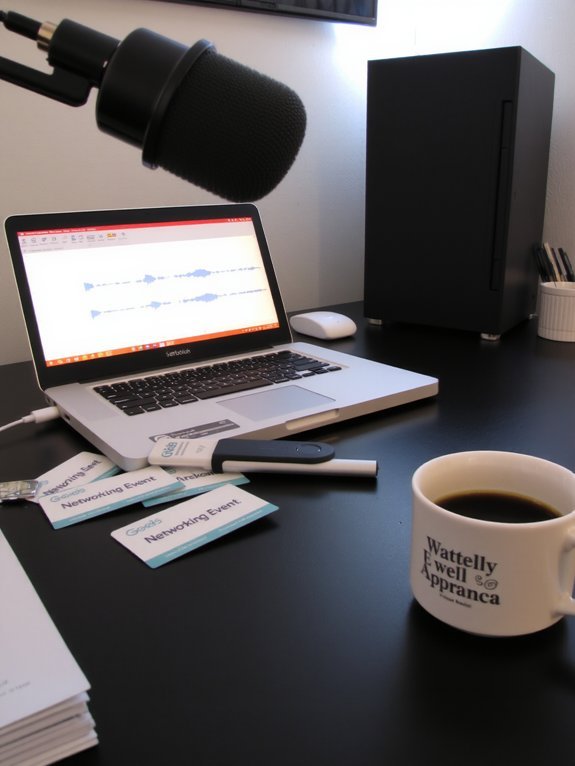
Three things will sell your voice: the sound, the swagger, and the people who hear you. I tell you this because marketing is part craft, part loudmouth. Use social media to post short clips, behind-the-scenes breaths, and goofy takes that make people smile. Go to industry events, shake hands, swap cards, and listen more than you brag. Seek collaboration opportunities, offer swap sessions, and show up on online platforms where clients lurk. Tighten your branding strategies—logo, tone, demo order—so your profile smells like professionalism. Push referral programs, ask happy clients to send friends, and reward them. Track client retention with simple notes, follow-up messages, and small surprises. Engage your audience, stay visible, and the repeat gigs follow.
Conclusion
You’ve got grit, guts, and a growing gift — go get it. I’ve watched you practice, mic in hand, feel the warm buzz of a budget booth, and taste triumphant coffee after a tight take. Keep polishing, pitch with personality, price with pride, and protect your pay. Build relationships, bank referrals, and branch into bold new niches. Consistent craft creates cash; steady hustle secures success. Say your line, sell your soul (not really), and shine.


