


You want to make steady money as a graphic designer, not chase every shiny brief that lands in your inbox. I’ll show you how to pick a niche that fits your style, build a portfolio that actually converts, and set prices that make you proud — all without pretending to be a big agency. Picture tight briefs, client calls where you stay calm, and passive income ticking over while you sleep — and then let’s get to the parts most people skip.
Define Your Niche and Ideal Client

If you try to be everything to everyone, you’ll end up being nobody’s first call — and honestly, that’s exhausting. I want you to pick a lane, feel the texture of it under your fingers, smell the paper or see the app glow, then commit. Figure out your target audience: who notices, who pays, who texts at midnight with “We need this yesterday.” Decide your design specialization — branding, packaging, UI — and say it out loud. Picture a client in a coffee shop, laptop open, nodding at your work. You won’t serve everyone, and that’s okay. Narrowing sharpens your voice, raises your rates, steadies your calendar. You’ll get fewer inquiries, but the right ones. Trust the sting of focus; it pays.
Build a Portfolio That Sells

Okay, you’ve picked a lane — good, now let’s build the showroom. You’ll curate six to ten pieces that scream your style, not a museum of everything you ever made. Photograph work on clean backgrounds, add close-ups so viewers can almost feel the paper, and write captions that tell the problem, your spark, and the result. Nail your portfolio presentation: fast-loading site, simple nav, and a hero case study that stops scrollers cold. Sprinkle short client testimonials under projects, real quotes that back your claims. I’ll nag you: update often, cut weak pieces, and show process sketches so clients see your brain. Be bold, be human, and make it impossible to scroll past without asking, “How much?”
Price Your Work Profitably

While you’re great at pretty pixels, pricing is where design meets cold, delicious reality — and you can’t let it be awkward. You want profit, not pity. First, pick pricing strategies that suit you: hourly, flat project, or value-based fees. I favor value-based, because it ties your price to client outcomes, not time spent tweaking kerning at 2 a.m. Do competitor analysis, peek at peers’ rates, and note what’s included, then outshine them with clarity. List deliverables, revisions, deadlines, and payment terms, say it loud, put it in a clean PDF. Trust your gut, test rates on small projects, adjust like seasoning. Say no to lowball offers, celebrate a booked calendar, and keep margins healthy.
Find and Win Freelance Clients

Because hunting clients is less about stalking job boards and more like hosting a small, irresistible party, I roll up my sleeves, brew strong coffee, and get strategic: I polish a tight portfolio that shows outcomes not just pretty thumbnails, I draft three clear pitch templates (friendly, curious, and bold), and I spend an hour a day where my clients actually hang out — LinkedIn threads, niche Slack communities, and DM-friendly Instagram posts — so I can start real conversations, not cold-shoulder emails. You’ll want a signature outreach routine: quick client outreach messages, follow-up beats, and a landing page that smells like competence. When they bite, send crisp proposal writing with scope, timelines, and a fail-safe revision clause. Close with confidence, celebrate, then rinse and repeat.
Create and Sell Templates and Design Assets

You’ve been out there wooing clients, and now it’s time to make design work that earns while you sleep — yes, really. You create a set of polished templates, pack them with smart template customization options, and watch them travel the web. I’ll show you how to build files that feel tactile — layered PSDs, clean Figma frames, crisp SVGs — so buyers can tweak type, color, and layout without crying.
List assets on design asset marketplaces, describe use cases, add preview mockups that pop, and price tiers for hobbyists to agencies. Promote via micro-demos, GIFs, quick videos, and a newsletter. You’ll get passive revenue, craft control, and bragging rights. It’s tidy, repeatable, and kind of addictive — in a good way.
Offer Retainers and Recurring Services

If you want steady income that doesn’t make you chase invoices like a caffeinated detective, start offering retainers and recurring services — I mean real monthly work that keeps you sane and solvent. I’ll tell you how I do it: package predictable tasks — social posts, brand tweaks, quick ads — set clear retainer agreements, and watch chaos shrink. You meet, you scope, you set a rhythm. Recurring clients love the calm, you love the calendar that fills itself. Be specific: hours, deliverables, turnarounds. Add a tiny buffer for surprises, call it “emergency espresso time.” Send monthly summaries that smell like professionalism, not panic. Renew, adjust rates gradually, celebrate the small wins, and enjoy design without the invoice sprint.
Leverage Passive Income Streams

You can start making money while you sleep by selling digital design products like templates, fonts, and mockups — I promise, it’s less magical and more spreadsheet. I’ll show you how to set up a tidy shop, list files that actually sell, and sprinkle in licensing so clients can pay you for reuse without bothering you every time. Think of it as planting a garden of pixels: water it once, harvest often, and laugh at your past self who thought passive meant doing nothing.
Sell Digital Design Products
One smart move: start selling digital design products and let little files do the heavy lifting while you sleep. You’ll package templates, icons, mockups, fonts, or social kits, then list them on design marketplaces, and watch steady sales trickle in. I’ve seen clients wake up to notifications, coffee in hand, grinning like a kid who found pocket change. Make clean previews, write crisp descriptions, add useful instructions, and bundle variations so people feel spoiled for choice. Price smart, update often, and collect feedback like treasure. Promotion’s simple: share processes on socials, drop freebies to build an email list, and cross-post to niche sites. It’s low drama income, creative freedom, and proof that small files can change your day.
License Creative Assets
Think of licensing as planting seed packets that pay rent while you sleep; I’ve got a patch of work that keeps sprouting sales. You scan your portfolio, pick the juiciest icons, patterns, photos, then tidy files, tag them, and upload. I’ll haggle smartly over licensing agreements, you’ll learn to limit uses, keep creative rights where they matter, and charge more for exclusivity. Picture email pings at 2 AM, a sale chime, coffee cooling, and a tiny thrill. You’ll draft clear terms, add watermarks for previews, then watch steady drip income. It’s low-glam, high-satisfy, like milking a very well-behaved cow. You’ll collect royalties, adjust prices, and keep planting—no tractors required.
Market Yourself and Grow Your Brand

You need a signature style that people spot in a crowded feed, so I’ll help you pick colors, shapes, and a quirky tilt that become unmistakably yours. Post that work everywhere—Instagram, Behance, Dribbble—talk to followers like real humans, and don’t be shy about showing sketches, mistakes, and the coffee-stained process behind the polished pieces. Trust me, when your voice and visuals sync, clients start finding you, not the other way around.
Build a Signature Style
If you want people to remember your work, you’ve got to give them something unmistakable to remember—color, line, attitude, a little visual wink that screams “that’s mine.” I’m not talking about slapping a logo on everything or copying a trendy Instagram filter; I mean carving out a repeatable look and voice that shows up whether you’re laying out a poster, designing a website, or pitching a brand. Start by listing your signature techniques, the tiny moves you do without thinking. Pick 3-5 design elements that recur — a palette, a stroke, a typo habit — and lean on them. Practice, refine, then use those cues everywhere. Clients will spot you in a crowd; you’ll sleep better, I promise.
Leverage Social Platforms
Your signature style is your secret handshake; now you need a stage to show it off. I tell you, start with platforms where your work breathes—Instagram, Behance, TikTok—post loud, post often. Use social media marketing like a spotlight, not a megaphone: curate a feed, schedule consistent posts, test captions. Tell quick stories, stitch behind-the-scenes clips, whisper process shots, shout finished pieces. Visual storytelling is your currency; make thumbnails pop, color palettes sing, textures almost touch. Engage: reply fast, DM politely, swap shoutouts. Track simple metrics, ditch what’s dead, double down on what clicks. Don’t fear reels or briefs, I fumble too—learn, iterate, repeat—build an audience that buys, hires, and tells their friends.
Scale Your Design Business
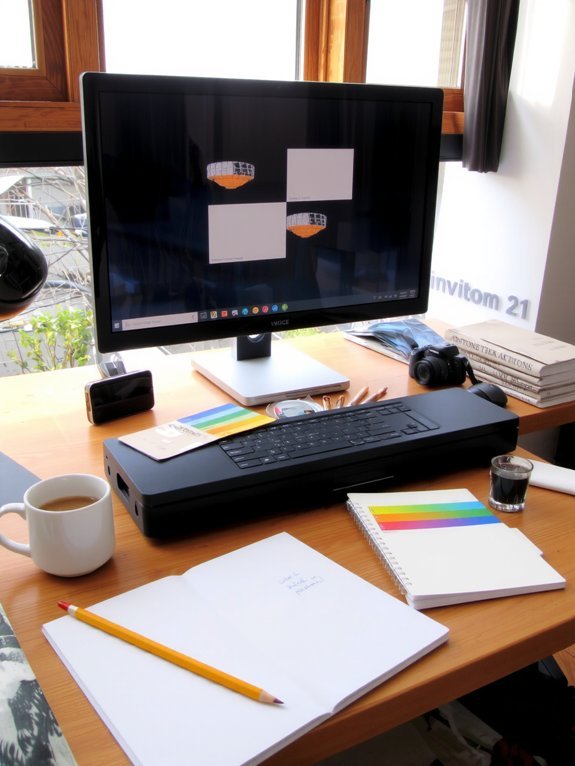
Scaling your design business means shifting from solo hustle to a smoother machine, and yes, it’s scary and thrilling all at once. You’ll map processes, document steps, and stop reinventing the wheel for every logo — sweet relief. I tell you this because business growth isn’t magic, it’s math plus people. Hire a reliable junior, outsource boring tasks, and set clear briefs. Start templates, batch work, automate invoices, watch your evenings return. Design scalability comes from systems that hum, not chaos that dazzles. Picture a tidy dashboard, invoices pinging, clients cheering — you sip coffee, not stress. Expect hiccups, train mistakes out, celebrate small wins loudly. Scale smart, keep craft close, and laugh when your calendar finally obeys you.
Conclusion
You’ve got the tools, the taste, and the guts to make design pay — now act. Pick a niche, craft a portfolio that smells like your best work, price like you mean it, and hustle where clients live; then build templates, lock in retainers, and let passive income hum while you sleep. It’ll be messy, satisfying, and worth it, like learning to cook in a storm, but I promise, once you find your rhythm, you’ll actually enjoy the chaos.


