


Your career’s a Swiss Army knife—sharp, a little surprising, and handy in weird situations—and you’re the one who turns a messy shoot into something that sings. I’ll walk you through picking a niche, honing a signature cut, building a portfolio that actually gets calls, and pricing so you don’t undercharge yourself, with practical steps, honest templates, and a few jokes because freelancing can be bleak; stick around and I’ll show you how to make steady money without selling your soul.
Defining Your Niche and Signature Style

Niche, meet style — you’re about to fall in love with both. I’ll say it straight: niche identification saves you from being everyone’s cheap editor, it points clients right to your door. Picture the hum of your laptop, the scent of coffee, you testing cuts for a wedding teaser or a tech explainer, and you choosing one. Then style development kicks in; you decide on pacing, color vibes, and that little jump cut trick you can’t stop using. You’ll experiment, keep what makes people gasp, ditch what feels generic. I’ll tease you when you copy trends, but I’ll cheer when you carve something original. Pick a lane, own the look, and watch clients prefer you.
Building a Portfolio That Sells

You’ll want a portfolio that hits a range of project types—short ads, social reels, interviews, and event cuts—so a client can smell the vibe and picture their own brand in your work. I’ll tell you to label each piece with the results, like “30% more clicks” or “dropped watch time to 1:12 but boosted conversions,” because numbers make your edits feel like paychecks, not pretty videos. Think of it like a tasting menu: small bites that show range, with a clear note of what each course did for the diner.
Showcase Diverse Project Types
If you want clients to believe you can handle anything, don’t show them ten variations of the same talking-head edit—mix it up. I’ll tell you straight: feature corporate projects, throw in slick social media cuts, then surprise them with a short documentary or a music video. Show different pacing, color grades, and sound design — a bright, punchy ad, a moody interview, a rapid-cut TikTok. Drop a before-and-after clip, let viewers hear the foley snap, see the grade shift from flat to cinematic. Caption samples, platform-specific aspect ratios, and storyboard thumbnails help. I tease myself about being a jack-of-all-trades, but that’s the point: variety proves skill. Keep it tight, labeled, and easy to scan — clients will thank you.
Highlight Tangible Results
Because numbers beat cute captions every time, I start with results — not just pretty frames. You want clients, right? Then show them tangible outcomes. I tell stories with before-and-after metrics: watch time doubled, click-through up 30%, ad conversion cut through the noise. Say exact numbers, and say what you did — tightened pacing, swapped hooks, color-graded for mood. Use screenshots of analytics, timestamps, short clips that prove measurable success. Speak like a human, not a robot: “This cut boosted views.” Add a quick client quote, a screenshot of an email, a one-line case study. Be honest, include failures briefly, show fixes. That mix of proof and personality sells better than any glossy demo reel ever will.
Choosing the Right Tools and Workflow
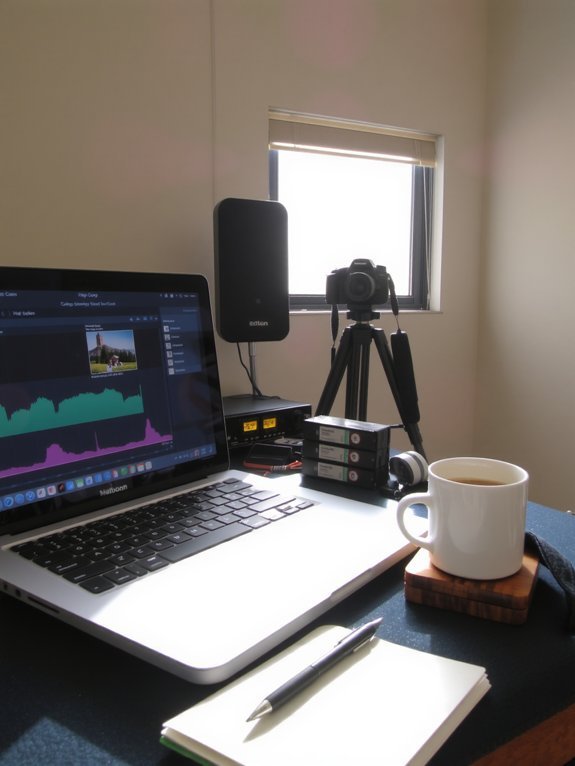
You’ll want to pick editing software that feels like an extension of your brain — I swear by tools that launch fast, scrub smoothly, and don’t give me panic attacks at 2 a.m. Set up a tidy project workflow too: consistent folders, named clips, and auto-backups so you’re not hunting for files or apologizing to clients. Stick with a lean toolkit and a repeatable process, and you’ll work faster, sound smarter, and sleep better (mostly).
Essential Editing Software
One thing I learned fast was that your software shapes your day more than your camera ever will — it’s the workshop where you’ll sweat, swear, and sometimes sigh with relief. You’ll want fast, stable video editing tools, and honest software comparisons before you commit. Pick one main NLE, one audio tool, one color app. Try demos. Test export times, keyboard comfort, plugin ecosystems, and how your coffee shakes the desk when you rage-quit.
| Task | Recommended | Why |
|---|---|---|
| Primary editing | Premiere Pro / Resolve | Versatile, lots of tutorials |
| Audio cleanup | Audition / RX | Quick fixes, clean sound |
| Color grading | DaVinci Resolve | Filmic looks, node control |
Stick with what fits your hands, and the clients will notice.
Organized Project Workflow
If you want your edits to stop feeling like a scavenger hunt through someone else’s hard drive, start by choosing tools and a workflow that actually make sense — fast drives, a reliable NLE, and a folder structure that won’t make you cry at 2 a.m. I tell clients to treat project management like a toolbox: pick one app, name files predictably, and save versions religiously. You’ll thank me when deadlines loom. Do task prioritization every morning, list three must-dos, then dive. For workflow optimization, automate imports, proxies, and render presets — let the boring parts run while you’re creative. Use collaboration tools for notes, timestamps, and quick client feedback so changes aren’t guesswork. You’ll be faster, calmer, and paid more.
Setting Rates and Packaging Services

Let’s start with three simple truths: clients want clarity, editors want pay, and chaos makes everyone miserable — especially at 2 a.m. when a revision drops in your inbox like a surprise thunderclap. I tell you to do a competitive analysis first, sniff the market, note rates, packages, and weird add-ons others charge for. Then decide your value proposition, what you do better, faster, or prettier. Price by project for predictable scope, hourly for messy jobs, and bundles for repeat work. Offer tiers: basic, pro, and VIP with clear deliverables, turnaround times, and revision counts. Show examples, set limits, and automate contracts. Be bold, price honestly, and remember: lowballing mostly just buys you stress, not respect.
Finding and Pitching to Clients
Hunting for clients feels like dating with a purpose — awkward messages, hopeful matches, and the occasional ghosting — but you can make it less sweaty and more strategic. I tell you straight: show up polished, with a hook, portfolio clips that smell like fresh coffee and late-night grind. Do targeted client outreach, DMing creatives, emailing marketing leads, and commenting where decision-makers hang out. Match your voice to theirs, cite measurable wins, and cut to what you’ll deliver. Use tight proposal strategies: a one-page pitch, sample edit, and a 48-hour follow-up. Practice a quick pitch aloud, and role-play objections, so you’re calm, clever, and human. Keep notes, celebrate small yeses, and learn from every polite no.
Contracts, Deposits, and Payment Terms

You’ve done the awkward DMs, perfected your 30-second elevator pitch, and landed that first enthusiastic yes — now don’t blow it by being vague about money. In contract negotiations, be blunt: state scope, deadlines, and limits. I like simple deposit structures, usually 30% upfront, 40% mid, 30% on delivery — saves headaches, and my coffee budget.
| Item | Typical Term |
|---|---|
| Deposit | 30% upfront |
| Midpoint | 40% |
| Final | 30% |
| Late fee | 5% weekly |
Set clear payment schedules, name preferred methods, and spell late fees. Tight invoicing practices matter: send itemized invoices, follow-up within three days, and keep a polite, firm tone. Contracts protect you, and clients respect clarity.
Managing Revisions and Client Communication
When revisions start rolling in—because they will—treat them like parts of a dance, not a demolition derby: I lead with clear steps, you follow, and we both try not to step on toes. You set client expectations up front, I set revision limits, and we sketch project timelines that actually breathe. Listen—really listen—effective listening means you hear tone, not just words. Use communication tools that save time: comments, timestamps, short videos, and a calm emoji when appropriate. Keep proactive updates coming, a quick “here’s where we’re at” keeps panic away. Stay in a professional demeanor, even when feedback feels weird. Be clear, ask one small question, make the change, then send it back like you nailed it.
Scaling: Outsourcing, Retainers, and Passive Income

Alright — you’ve handled the back-and-forth tango of revisions, now let’s talk about multiplying your hours without cloning your brain. You start by mapping tasks you hate, then hand them off using smart outsourcing strategies, like vetted assistants for logging, motion-graphics specialists, or colorists you trust. Set clear briefs, file-naming rules, and quick review clips, so feedback snaps back fast. Offer retainer agreements, predictable monthly blocks that smooth cash flow, reduce churn, and let you breathe. Build passive income streams — LUT packs, template bundles, or mini-courses — that sell while you sleep, with clean delivery and good screenshots. I say it bluntly: scale with systems, not ego. Do that, and your calendar fills without burning you out.
Marketing Yourself and Building Long-Term Relationships

One clear rule I follow: people hire people, not portfolios. I tell you this while stirring my coffee, smiling like I know a secret. You’ll use networking strategies that aren’t awkward handshakes, but real conversations — meetups, DM follow-ups, and quick video intros that smell like effort, not desperation. You’ll practice relationship building by remembering birthdays, sending rough-cut surprises, and asking, “How can I make your life easier?” Keep a rolodex — digital, thankfully — with notes that smell faintly of success. Say thoughtful no’s, do timely yeses, and be the editor who shows up before the caffeine kicks in. Make clients laugh, solve problems, and keep them coming back. Trust me, repeat business tastes better than one-off glory.
Conclusion
You’ll start small, edit late, drink cold coffee, and somehow land a brand you love on the same week your cat walks across the keyboard — coincidence, right? Keep your niche tight, your edits cleaner, and your pitches human. I’ll tell you what works, you’ll try it, we’ll celebrate when the first retainer hits. Stay curious, charge what you’re worth, and don’t be afraid to say no. Do the work, enjoy the weird.


