



You want to turn your bilingual brain and love of neat timing into cash, and I’ll show you how without the fluff; imagine clicking play, hearing a line, typing a crisp subtitle, nudging its timing by a frame, and watching it land—satisfying, right? You’ll learn which skills clients actually pay for, where to find steady gigs, how to price like a pro, and how to avoid burnout when deadlines smell like espresso and panic—stick around, I’ve got the shortcuts.
What Subtitlers Actually Do and Why Demand Is Growing
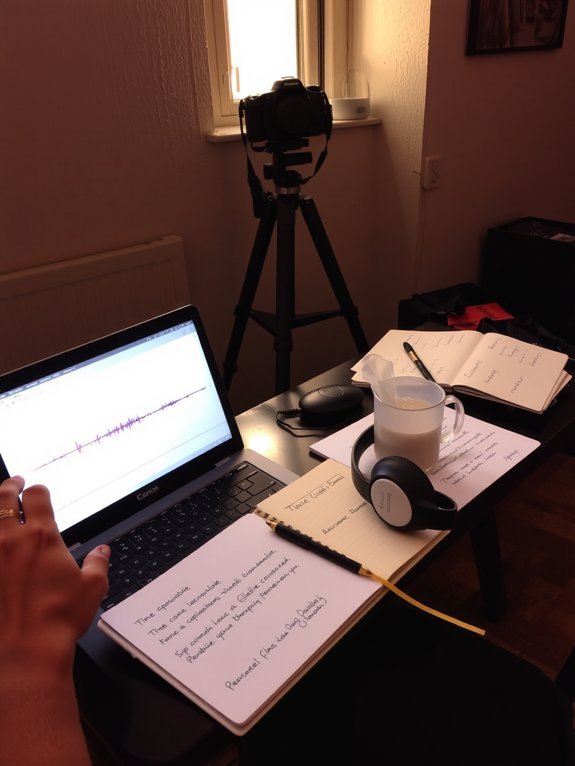
If you’ve ever watched a foreign film with the sound up and the words on the bottom, you’ve met my kind of work—I’m a subtitler, and I turn spoken scenes into crisp, timed text that doesn’t trip the viewer up. You read along, you feel the rhythm, you hardly notice me. You’ll sync speech to frame, trim lines to fit sight, and choose words that carry tone, not just meaning. Demand’s rising, you see it in subtitling trends, more shows, films, user videos, platforms craving clarity. Market growth means steady gigs, bursts of rush work, and room to specialize. You’ll juggle languages, timing, and tiny edits, like a sound editor with a scalpel, and you’ll love the puzzle.
Essential Skills Every Freelance Subtitler Needs
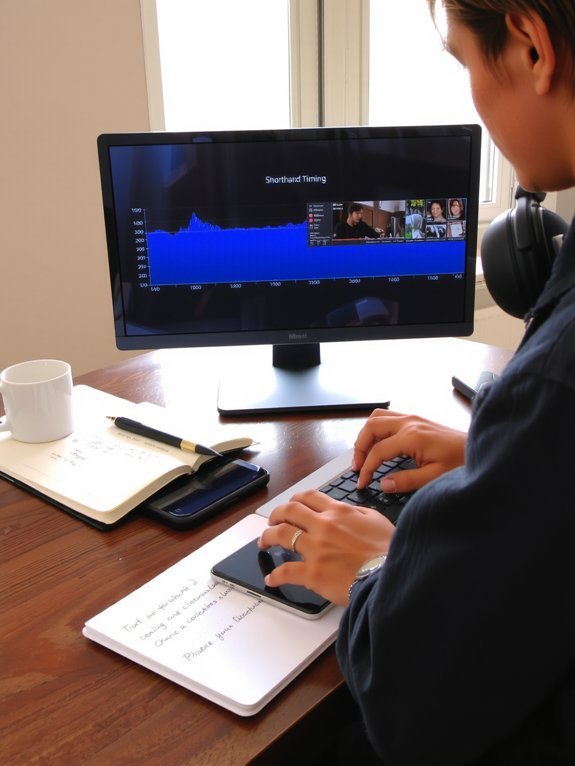
Because you’ll be the invisible hero in someone’s living room, you’ve got to be sharp in more ways than one — and I’m not just talking fast typing. You need language proficiency, cultural awareness, and research abilities to catch slang, jokes, and context. You’ll fidget with timestamps, so technical skills and attention detail save your reputation. Deadlines loom, so time management is non-negotiable. I’m blunt, because sloppy subtitles are loud.
| Skill | Why it matters |
|---|---|
| Language proficiency | Keeps meaning intact, sounds natural |
| Cultural awareness | Avoids tone-deaf translations |
| Technical skills | Syncs audio to screen, clean file exports |
| Time management | Delivers reliably, earns repeat clients |
Practice, test, fix, and laugh at your mistakes — then fix them again.
Types of Subtitling Work and Where to Find It
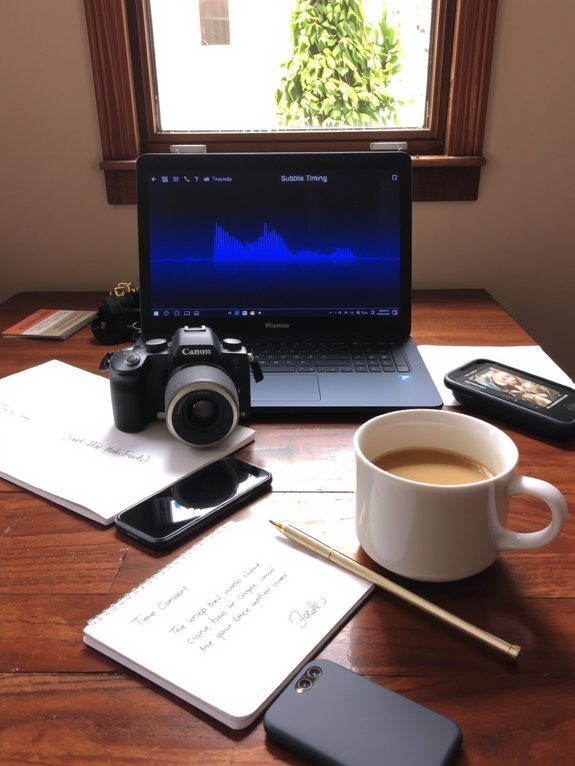
You’ve built the toolbox — now let’s point it at work that actually pays. You scan subtitling platforms, click demo reels, feel the thud of opportunity. Start with streaming shows and indie films, then hop to corporate training videos and podcasts that need captions. Join freelance networks, send crisp pitches, and stalk job boards like a charming hawk. Explore niche markets — gaming, medical, legal — where specialized language pays more and clients breathe easier. Match video genres to your ear: comedy needs timing, documentary wants nuance, action demands speed. I’ll admit, I dove into a cooking channel once, burned my fingers, learned delicious timing. Keep clips tidy, profiles sharp, and conversations human — people hire people, not résumés.
How to Set Your Rates and Estimate Project Time
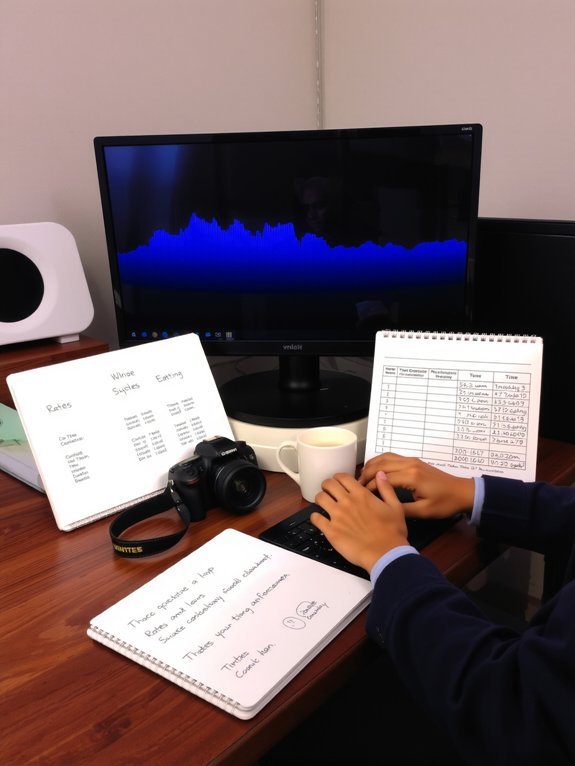
Let’s talk money — and no, I won’t sugarcoat it into a motivational Instagram quote. You start by timing sample videos, the hum of headphones, the click of your keyboard, jotting minutes per finished minute. Use that data for project estimation, add buffer for playback quirks and client rewrites. Pick a pricing model — per-minute, per-hour, or per-project — and be ready to justify it. Practice rate negotiation like a one-liner, calm and firm: “My rate is X because Y.” Listen, don’t beg. Offer tiers: basic captions, timed subtitles, rush fee. Track actual vs. estimated time, refine your math, and keep a rate sheet ready to paste into messages. Confidence saves you time, and money.
Building a Portfolio That Wins Clients

Rates set, invoices sent, confidence intact — now you need proof. You’ll build a portfolio showcase that sings. I tell clients straight, “Look, here’s my work,” and you should too: clips with clear before/after captions, timestamps, and crisp subtitles I’d be proud to eat for breakfast. Show variety — interviews, lectures, fast dialogue — so prospects smell versatility. Sprinkle client testimonials like confetti, short quotes that name results: faster turnarounds, spotless captions, fewer rewrites. Include a brief case study or two, screenshots, and a downloadable sample file, so they can hear and see your craft. Keep navigation simple, the design clean, and your personality front-and-center; charm beats jargon every time.
Tools and Software That Speed Up Your Workflow
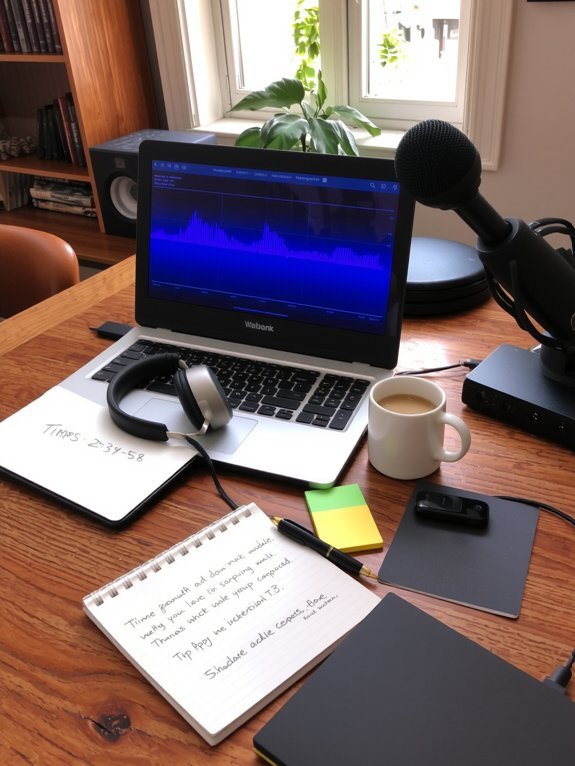
A handful of smart tools will turn you from a frantic caption jockey into a calm, coffee-sipping subtitling machine, and I’ll show you which ones actually save time (not just look fancy). I’ve tried clunky apps that made me cry, so I’ll cut to the chase: pick subtitle editing software with robust captioning features, like waveform scrubbing and batch export. Use transcription tools that speed typing and catch accents, but always proof. Embrace workflow optimization: templates, hotkeys, and consistent file formats, they’re tiny miracles. My software recommendations include cloud-friendly editors that integrate with video platforms and link to project management boards, so you track deadlines without sticky notes. Do this, and your days get quieter, your inbox happier.
Best Practices for Accurate Timing and Readability
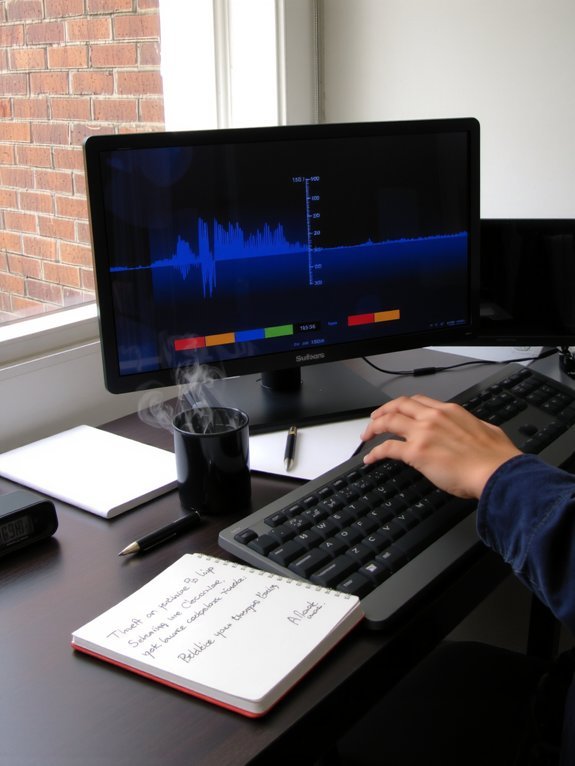
Now that your toolbelt’s stocked and your workflow is humming, we get to the part people notice most: timing and readability — the stuff that makes viewers say “I didn’t even know I was reading.” I’ll be blunt: good subtitles don’t just match words to screen, they ride the rhythm of speech, breathe when speakers breathe, and sit on screen long enough to be read without stealing attention; you’ll learn to slice sentences so they land like quick stage directions, and to nudge in or out the timestamps so a laugh or a gasp isn’t cut off mid-air. Use timing techniques like chunking lines to natural breaths, matching pauses, and keeping line length steady. Follow readability standards: two lines max, six to nine words per line, readable font size, contrast, and sync. Train your ears, trust the frame, test with sound off, and tweak until it feels invisible.
Handling Client Communication and Revisions

You’ll want to spell out how many free revisions you’ll do, and what costs extra, so nobody’s surprised when the file comes back with a thousand tiny asks. Tell clients how fast you’ll turn edits around, give a clear window like “24–48 hours,” and stick to it so your calendar doesn’t become a landmine. If they ask to change scope—more lines, extra languages, new formatting—call it out, price it, and suggest a fast, polite script I use: “Happy to do that, here’s the cost and ETA,” and watch chaos turn into cash.
Set Clear Revision Terms
If clients toss vague feedback like confetti, you’ll end up hunting for meaning in a glitter storm — so I set clear revision terms up front and save both of us the headache. I lay out revision guidelines in the contract, plain and punchy: how many rounds, what counts as a revision, and when a tweak becomes a new job. Tell clients what you need — time-stamped notes, screenshots, or a single annotated file — and watch confusion evaporate like steam off hot tea. I state client expectations about scope, fees for extra rounds, and turnaround for replies. When they nod, we both breathe easier. Say it with a smile, sign it, and keep the edits tidy, quick, and professionally painless.
Communicate Turnaround Expectations
A good turnaround promise is like a kitchen timer: loud enough to stop the chaos, polite enough not to start a kitchen fight. I tell you, set clear turnaround times up front, so you don’t wake to angry pings. Say when you’ll draft, when you’ll deliver, and when revisions land. Use calendar dates, not vague “soon.” Explain how rush fees work, calmly, like offering espresso to a tired editor. Check in with short updates, send a time-stamped file, and ask if the pace matches client expectations. If delays hit, apologize fast, propose a new slot, and show the progress — a screenshot, a short clip, anything tactile. That little transparency keeps trust, and yes, it keeps your sleep.
Manage Scope Change Requests
When clients toss you a new line, or suddenly want the whole script flipped, don’t freak — handle it like a sous-chef who’s been handed a smoking skillet: steady hands, clear words, and a small, polite interruption. I tell them I’ll pause, read the order, then confirm scope management steps — what’s changing, why, and the deadline. Say it out loud, don’t hint. Offer options: quick tweak for a fee, or full rewrite with adjusted ETA. Hear their tone, picture the room, tap keys like a metronome. Set revised client expectations in writing, include cost, timeline, and one free round if you’re feeling generous. Be firm, friendly, quick. You keep the heat down, and they get dinner on time.
Scaling Up: From Side Hustle to Full-Time Income
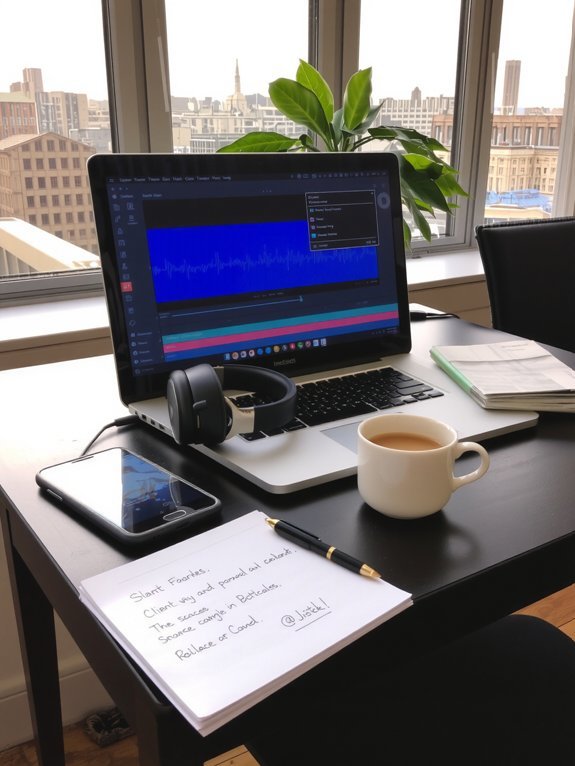
Since you’re ready to stop juggling gigs like hot potatoes, let’s talk about turning that steady trickle of subtitles into a real paycheck you can set your watch by — I’ll walk you through it like a sarcastic tour guide, coffee in hand. You’ll map freelance growth: niche down, raise rates, automate repeats, and chase better clients, not more frantic deadlines. I’ll show you income strategies: packages, retainer deals, and licensing old captions for passive cash. Picture email templates clicking send, a neat spreadsheet humming, invoices landing like soft applause. Say one confident no, win two premium yeses. I’ll nag you to invest in training, tools, and branding—small smells of success, like fresh printer ink—so your side hustle becomes your livelihood.
Avoiding Burnout and Managing Your Schedule

You’re not a 24/7 caption machine, so set clear work hours and tell clients when you’re actually available — I promise they’ll survive. Batch similar tasks, like all timing or all edits, to keep your brain from ping-ponging, and picture the satisfying click of completed files stacking up. Take regular breaks, stretch, sip something that isn’t battery acid coffee, and come back sharper, because steady beats frantic every time.
Set Clear Work Hours
If I don’t set hard start-and-stop times, my laptop becomes a needy pet that expects snacks at 2 a.m., and honestly, I’m not into that level of commitment. You’ll thank yourself when you lock in hours, the benefits of consistency hit you like morning coffee, and your brain learns cue and calm. Decide when you’re “on,” announce it to clients, close the tab when you’re off. Structure your day around focused blocks, short breaks that smell like fresh tea, and a solid end-of-day ritual — shut the laptop, stretch, make a silly victory sound. Boundaries keep your creativity sharp, deadlines reliable, and life less frantic. Be strict, be kind to yourself, and watch the work fit the life.
Batch Similar Tasks
You set your work hours, shut the laptop like a ritual, now let’s get smarter about what you actually do during them. I tell you, task batching is your secret weapon. Group similar jobs — transcribing, timing, quality checks — pile them like stacked plates, and knock them down in one go. Your brain hates context switching; you’ll feel the relief, like unclenching a jaw. Use simple templates, a dedicated playback speed, and one comfy chair. Efficiency strategies mean fewer decisions, less friction, more steady cash. Say aloud, “Three videos, one pass,” and mean it. You’ll smell coffee, hear the click of keys, watch progress bars shrink. It’s tidy, focused, and oddly satisfying — like clearing a cluttered desktop, but for your day.
Schedule Regular Breaks
How long do you think you can stare at the waveform before your brain files a formal complaint? You need breaks, plain and simple. I tell you this because the importance of breaks isn’t optional — it’s survival. Stand up, stretch, make coffee, look out the window, let sounds other than dialogue hit your ears. Ten minutes every hour gives you a productivity boost, sharpens your ear, and stops subtitles from turning into mush. I’ve ruined my own commas by ignoring that rule; lesson learned. Schedule alarms, block focus slots, then pocket short, real pauses. When you return, you’ll hear phrases you missed, spot timing slips, and feel less like a zombie transcribing ghosts. Treat breaks like tiny edits for your brain.
Conclusion
You’ve got this—like a backstage pass tucked in your pocket, ready for action. I’ve walked you through skills, rates, timing, and client tango, and now it’s on you to practice, pitch, and polish. Start small, say yes to weird gigs, learn fast, charge fairly, protect your time, and keep a tidy portfolio that sings. Celebrate tiny wins, rest when needed, and turn steady hustle into steady income — one perfect subtitle at a time.


