
Remember when Joe’s tiny true-crime show jumped from 200 to 5,000 downloads after you cleaned the audio and added that weird, tense sting? You’ll learn to spot the exact edits that make listeners sit up, and you’ll package that skill so hosts actually pay for it. I’ll show you how to build fast workflows, price smarter, and turn one-off gigs into steady retainers — but first, we need to pick the niche that stops the scroll.
Define Your Niche and Signature Services

If you want to stand out, you’ve got to get picky—trust me, being “podcast producer” is too vague, like saying you’re “good with tools” when you only own a screwdriver. I tell you straight: start with niche identification. Pick a beat—true crime, wellness, tech interviews—something you can smell, touch, and hear in your head. Then craft signature services that scream value. Maybe you do lightning-fast editing, or cinematic sound design, or interview coaching that makes guests relax and confess gold. Service differentiation is your megaphone; name it, price it, and show what it fixes. Say it aloud: “I make nervous hosts sound like pros.” That little brag, backed by specifics, sells better than vague humility every time.
Build a Portfolio That Shows Results
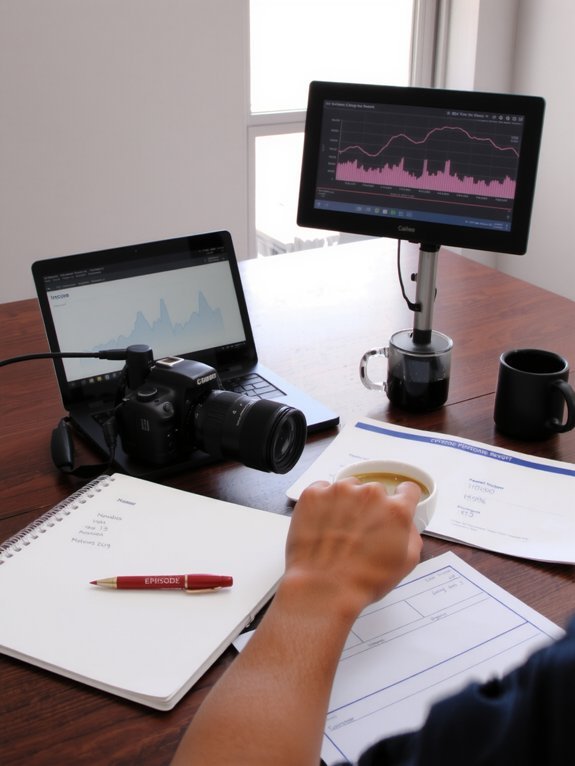
You need a portfolio that actually proves you get results, not just a pretty RSS feed — I’ll show you case studies with clear metrics, bite-sized samples from different shows, and slick before-and-after edits that make your work pop. Imagine a client hearing the original, rough cut, then your version, and feeling their coffee go cold because they’re staring at their phone, baffled and delighted; that’s the scene we’ll create. I’ll teach you how to present those wins, line up numbers that matter, and package audio clips so prospects can’t help but call.
Case Studies With Metrics
When I say “case study,” don’t picture a dusty PDF nobody reads; picture a neon-lit audio clip, a before-and-after downloads chart, and a client who can’t stop texting you gifs. I tell you this because case studies sell. You’ll show concrete success metrics — downloads, retention spikes, ad RPMs, conversion lifts — and pair each number with sound bites, timestamps, and a quick note: what you did, why it worked. Record a 30-second clip that highlights the edit, drop a mini chart, add the client quote, and watch prospects nod. Be specific, be bold, don’t sugarcoat flukes. You want stories that smell like real work: late-night edits, caffeine, and the exact tweak that doubled a show’s audience.
Diverse Show Samples
Portfolio muscle matters. You’ll show clients you’re not a one-trick pony by stacking diverse show samples: interviews, narrative mini-series, roundtable chats, even experimental pieces with sound design. I’ll admit, I once faked a crowd noise—don’t judge—so I know how texture sells. Include creative formats that prove you can pivot tone and pacing, and pick clips that highlight audience engagement moments: laugh breaks, applause swells, mic drops. Tell a tiny scene before each sample, say what you did, and what shifted—downloads, listener notes, sponsor interest. Keep files short, juicy, and labeled. Send a simple playlist link, a teaser, and a line that makes them want to press play. Quality over quantity, always.
Before-And-After Edits
You’ll win more work showing not just finished shiny episodes, but the messy before-and-after that proves your edits changed the story. Show clips, timestamps, and a short before after analysis note—let people hear the problem, then the fix. I cut room tone, tighten pacing, add audio enhancements, and sometimes rescue dramatic beats with silence. That’s the good stuff clients hire for.
| Clip | Problem | Fix |
|---|---|---|
| Interview A | Muffled, long pauses | EQ, de-noise, trim breaths |
| Panel B | Overtalk, chaotic | Leveling, rearrange takes |
| Narrative C | Flat, lifeless | Compression, fx, fade |
You narrate each example, give clear results, and let the data sell you. Simple, honest, confident.
Price Your Services for Profitability and Growth
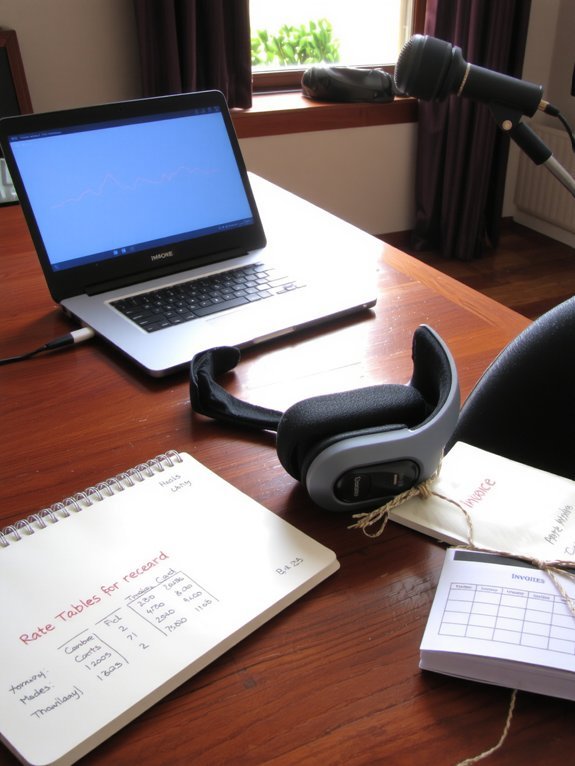
You need to know what your time actually costs — not just your mic and software, but taxes, health insurance, admin hours, and those coffee-fueled editing marathons — because guessing shortchanges you. I’ll show you how to build tiered packages that make clients pick a clear winner, while we size up value-based pricing so you can charge for impact, not just minutes. Stick with me, we’ll do the math, mock up simple packages, and laugh at the clients who try to lowball us.
Calculate True Hourly Cost
Let’s stop pretending freelance rates are a mystery wrapped in confusion and call the cost by its name: your true hourly rate. You’ll sit with receipts, bank feeds, and a stubborn mug of coffee, and do a ruthless cost analysis. List freelance expenses — software, gear, health insurance, taxes, studio time, and the hours you spend chasing invoices. Add desired profit and vacation days, divide into realistic billable hours. I’ll bet you undercount interruptions, emails, and admin, so pad the number, don’t be cute. Say the final figure aloud, it should sting a little. That sting means it’s honest. Now you’ve got a number you can use, not guesswork, and you’ll charge with confidence, not apology.
Tiered Package Offerings
Now that you’ve named your true hourly sting, it’s time to stop selling time and start selling certainty. You set clear tiers: Starter, Growth, and Pro. Picture a shiny chart, neat boxes, each with deliverables that smell like confidence — episode edits, show notes, basic mix. You speak, I nod, we agree. Package customization sits on the menu, add-ons like promo clips or expedited turnaround, priced cleanly. Use simple pricing strategies: anchor with Pro, tempt with Growth, offer Starter as doorway. Say what’s included, what isn’t, and what extra will cost, loud and proud. Clients breathe easier, you get predictable income, and your calendar stops eating your soul — win, win, caffeinated high-five.
Value-Based Pricing Models
Envision this: pricing as a power move, not a math quiz. You lean across a cluttered mic-filled desk, you say, “Tell me the result you want,” and you listen. Value-based pricing ties your fee to outcomes, not hours. You shape packages around impact, boost value perception by naming benefits — audience growth, sponsor readiness, time saved — and you charge accordingly. You’ll need client education, clear case studies, and a simple calculator that shows ROI in green. Be frank about risks, celebrate wins with soundbites, and keep a playful line — “I can’t brew your listeners, but I can roast better audio.” It feels bold, but it works: clients pay for transformation, and you get paid like it.
Create Packages and Retainers for Recurring Revenue
If you want steady income, stop trading every hour for cash and start selling a predictable outcome instead — packages and retainers do exactly that. You’ll draft clear retainer agreements, outline deliverables, set weekly touchpoints, and smell the coffee of regular billing. Offer tiered package pricing: basic edit, full post, or launch support, each with set hours and add-on rates. Sell outcomes, not minutes — “four episodes a month” sounds better than “X hours.” Include rollover limits, response time guarantees, and a simple cancellation clause, so both sides sleep. Price to cover your overhead, give a tiny discount for commitment, and celebrate the calm when invoices land like clockwork. You’ll work less frantically, and sound smugly reliable.
Market Yourself to Hosts and Networks
When I tell you to stop whispering about your services and start shouting where podcasters actually listen, I mean it — you’ve got to be visible, memorable, and annoyingly helpful. I want you to picture a crowded virtual lobby, LinkedIn posts pinging like chimes, and you, handing out sharp, useful sound bites. Know your target audience — indie hosts, networks, or branded shows — and speak their language, not yours. Use networking strategies that work: join niche groups, show up to live events, DM with a specific idea, not a vague pitch. Send short demos, not essays. Offer a tiny free audit, a cheeky one-liner in the subject, and follow up like you mean business. Be persistent, not annoying.
Streamline Your Production Workflow and Tools
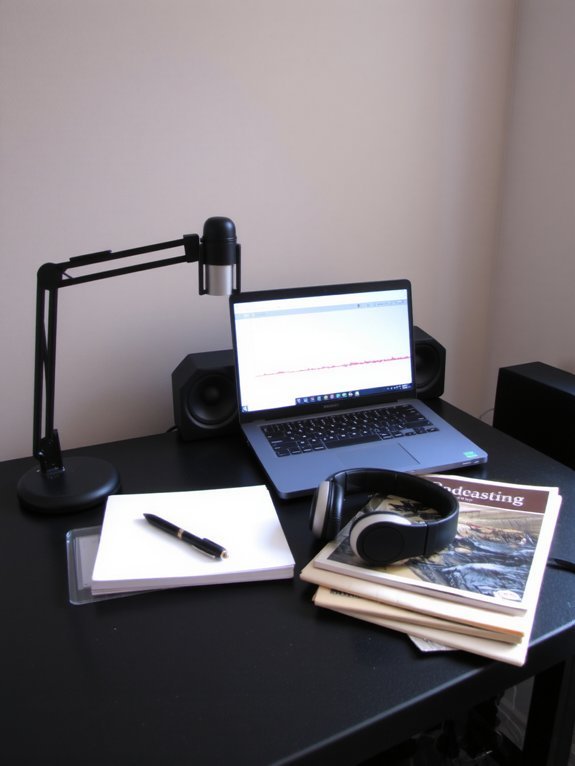
Because chaos sounds horrible on a $3 mic, you need a workflow that hums like a well-oiled laptop fan — tight, predictable, and annoyingly reliable. I’ll show you how to lock it down. Use workflow automation tools to trigger tasks, link your audio editing software to project management software, and stop repeating the same boring clicks. Set production scheduling techniques that respect sleep, build buffer days, and watch deadlines stop sounding like threats. Adopt client communication platforms for clear briefs, pair them with file organization methods so assets don’t vanish into the void, and lean on collaboration tools integration to co-edit without PMT. Master task delegation strategies, label everything, and enjoy work that feels like a tidy, caffeinated symphony.
Offer Add‑On Services to Increase Average Client Value
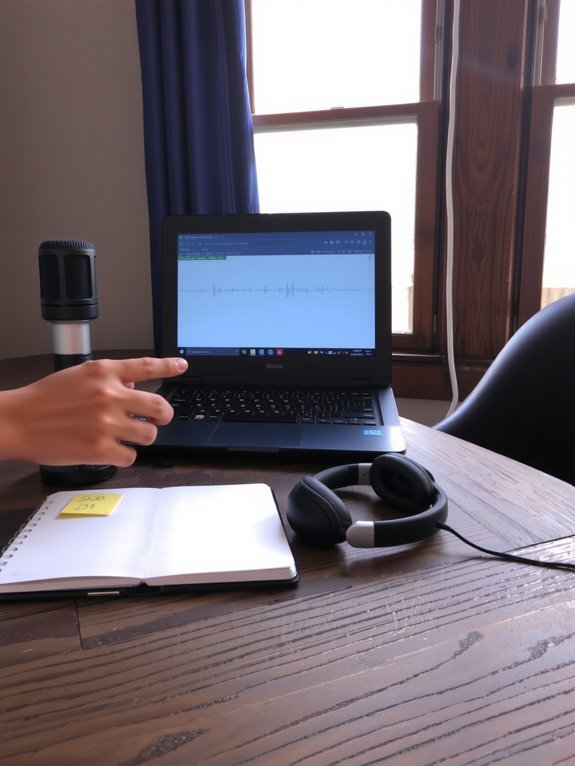
Even though your core service—cleaning audio, tightening edits, and making hosts sound like confident radio gods—pays the bills, the real money lives in the little extras you can tack on without breaking a sweat. You can offer chapter markers, show notes, social clips, and quick transcripts, each sold as tidy add-ons. Use clear upsell strategies, tiered pricing, and friendly nudges during delivery, and you’ll boost client retention.
| Add-On | Time | Price |
|---|---|---|
| Chapter markers | 15 min | $15 |
| Social clips | 45 min | $50 |
| Transcripts | 20 min | $25 |
| Show notes | 30 min | $35 |
Pitch casually, demonstrate value, and follow up fast. Clients love convenience, you pocket more, everyone wins — like free coffee but with cash.
Close Deals and Write Clear Contracts

One smart contract and a short, confident pitch will save you weeks of headaches and maybe a small existential crisis. I tell clients what I’ll do, when I’ll deliver, and what happens if someone ghosts me — clear, not scary. You’ll use negotiation tactics that feel fair, not like a poker bluff; ask about budgets, scope, turnarounds, then offer one tidy compromise. Contract essentials go beyond price: revisions, ownership, cancellation, and payment milestones. I like short clauses, bullet lists you can skim, and a signature that snaps shut the deal. Say the fee, set the dates, ask for a deposit, then follow up with a cheerful reminder. Close fast, protect your time, and keep your sanity.
Scale Your Business With Systems and Partnerships
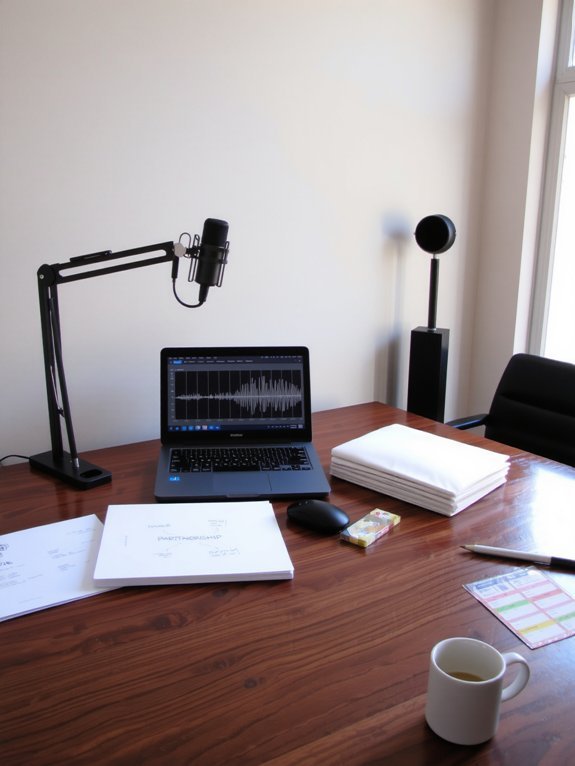
If you want to stop wearing every hat and actually sleep, you’ll need systems that hum and partners who pull their weight — not drama, not excuses, just clean workflows and people who show up. I’ve learned this the hard way, bleary-eyed at 2 a.m., clutching a cold coffee like a life raft. Build simple templates, automate uploads, tag files, set reminders — small system efficiencies save huge time. Hunt partnership opportunities: sound editors, transcribers, marketers who trade steady work for fair split. Tell people what you’ll do, and what you won’t. Test a workflow, tweak it, then replicate. Hand off clear tasks, document everything, and keep a pulse on quality. You’ll sleep, I promise — maybe even dream of invoices.
Conclusion
You’ve got the niche, the packages, the tools, and the hustle — now what? You keep showing up, edit like a pro, deliver warm mixes that smell like coffee and confidence, and charge what you’re worth. I’ll cheer you on, and nudge you when you underprice a genius episode. Want recurring revenue that actually pays rent? Do the work, systemize it, then let your processes and partnerships bring the cash while you make the next great show.