


You want to make money as a freelance data analyst, and you’re tired of vague advice—good, me too; let’s cut to it. Picture your laptop humming, dashboards lighting up, a client on Zoom nodding while you point out the exact metric that saves them months of wasted ad spend; that’s the work you’ll sell. I’ll show you how to pick a niche, build a portfolio that actually converts, price like a pro, and land clients without desperation—stay with me.
Define Your Services and Niche

If you want to get paid—and not just for cleaning messy spreadsheets—start by naming exactly what you do and who needs it; otherwise you’re a buffet nobody’s hungry for. You’ll begin with niche identification, zeroing in on industries or problems you actually enjoy, maybe retail churn or SaaS onboarding, smell the data, roll up your sleeves. I’ll tell you, clients want clarity, not mysteries. Spell out service differentiation: dashboards, cohort analysis, automated reports, or modeling with fast turnaround. Say what’s included, what’s not, and how you hand over results—CSV, slides, or a live walkthrough. Practice a one-line pitch, test it on a friend, tweak until it pops. Be specific, visual, and a little charming — you’re selling certainty.
Build a Portfolio That Sells

You’ll want a portfolio that feels like a highlight reel, not a dry resume — show real projects with screenshots, short write-ups, and the actual data visuals people remember. Spell out the measurable impact, like “cut client churn 15%” or “saved 40 hours a month,” so buyers see the dollar signs and nod. I’ll show you how to arrange those wins so they read fast, look sharp, and practically sell themselves.
Showcase Real Projects
Because people don’t hire nebulous skills — they hire results they can touch, see, and brag about — build a portfolio that actually looks like work you did, not a résumé fluff piece. Show clear project examples, include client testimonials, and frame each piece like a mini-story: the messy data, the coffee-fueled late night, the aha moment. You want visitors to feel the scrape of raw CSVs and the relief when charts sing.
| Before | After |
|---|---|
| Raw logs, chaos | Clean dashboard, calm |
| Confusing table | Story-driven viz |
| Silent numbers | Actionable insight |
| Frustrated client | Smiling stakeholder |
Keep captions short, add screenshots, link repos, and narrate your role honestly — they’ll hire the human, not the hero story.
Highlight Measurable Impact
Numbers sell. You should lead with hard wins, not vague bragging; I tell clients to stare at impact metrics like a hawk, then shout the best ones. Show before-and-after numbers, revenue lifts, time saved, error drops — give context, units, and a comfy narrative so the reader tastes the change. Build tight case studies: one-line problem, crisp method, bold result, and a mini visual or chart that snaps. Say “cut churn 18%,” don’t say “improved retention.” Sprinkle a quick client quote, a screenshot, maybe a CSV preview. Be specific, be human, and don’t fear small wins — they add up. You’ll win projects when you prove real, measurable impact.
Set Rates and Create Packages

A few clear packages will save you headaches and late-night billing debates, so let’s get them on paper—fast. I want you to start with a short competitive analysis, glance at peers, note sweet spots, then lock a pricing strategy that fits your skill and market. Picture three tins on a shelf: Basic, Pro, and Deep-Dive. Label them with deliverables, turnarounds, and a fixed price, so clients can smell certainty, not chaos.
Be concrete: 10 charts, one deck, two revisions. Say hourly add-ons, set limits, mention rush fees, and imagine the relief when invoices match expectations. Toss in a trial mini-project, watch trust build, then scale packages as you get bolder.
Find Clients and Generate Leads

Where do good clients hide, you ask? I poke around industry meetups, LinkedIn threads, and niche forums, sniffing out problems that need your brain. Use networking strategies that feel human: start conversations, share a quick insight, offer a tiny free audit — people remember helpful weirdos. Scan online platforms too, not just big freelancing sites, but product communities and Slack groups where teams gripe about messy data. I cold-message with a one-line value prop, then follow up like a polite bloodhound. I post case snippets, charts that pop, and short videos showing my process, so prospects see you move. Treat lead gen like gardening: plant seeds, water conversations, prune dead leads, harvest steady clients.
Run Effective Client Meetings and Proposals

You found the client, you’ve watered the lead, now don’t blow it in the meeting — that’s where deals get made or ghosted. Walk in (or dial in) knowing their pain, bring a crisp agenda, and set time limits; nobody loves rambling. Use client communication like a tool: confirm goals, repeat back their words, and pause for reactions. Offer clear proposal strategies: scope, milestones, price, and quick wins, all on one page. Slide in a simple visual, point at it, say “here’s the change,” and watch eyes light up. Close with next steps, deadlines, and a soft deadline to sign. Be human, be precise, crack one self-mocking joke, and leave them wanting that spreadsheet magic.
Deliver Work Efficiently and Maintain Quality
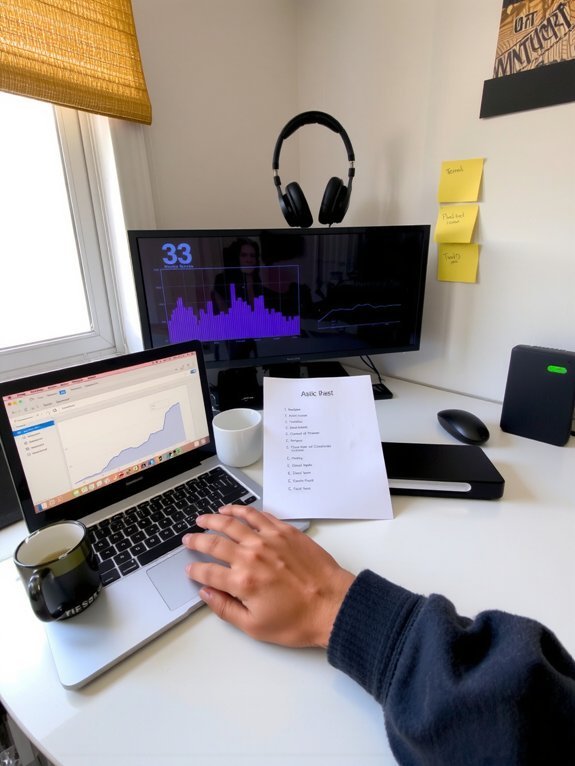
Once you’ve nailed the kickoff and sealed the deal, don’t let sloppy work undo all that charm — I’m talking tidy, timely, testable deliveries that make clients clap, not cringe. You’ll plan sprints, set milestones, and use simple time management tricks—Pomodoro, buffers, calendar blocks—so deadlines stop looking like threats. I’ll say it straight: automate where you can, document what you do, and run lightweight quality assurance checks before you push anything. Send clear previews, ask for quick feedback, and stash versioned files with readable names—your future self will thank you. When bugs pop, own them fast, fix visibly, and summarize fixes in plain language. Deliver work that smells like care, not chaos, and clients will come back smiling.
Handle Contracts, Invoicing, and Taxes

You’ll want contracts that say who does what, when, and what happens if things go sideways — no vague handshakes, just crisp lines you can point to. I’ll show you how to write invoices that look professional, include tax details, and zap late payments fast, so your cash flow smells like fresh coffee. Keep records tidy, run simple tax calculations, and don’t be afraid to ask an accountant one smart question — it’ll save you headaches later.
Clear Contract Terms
If you skip crystal-clear contract terms, expect awkward texts at 2 a.m. and clients who think “scope” is a suggestion. I tell you this from hard-earned blunders, coffee breath and all. Nail contract clarity up front: define deliverables, timelines, revisions, ownership, and payment triggers in plain language, no lawyer-speak. Say what you will do, and what you won’t. Set mutual expectations by listing milestones, acceptance criteria, and response windows, then get a signature. Use bullet points, call out fees for extra work, and state cancellation terms. Print it, send it, or sign digitally, then breathe. You’ll avoid midnight drama, keep cash flowing, and sleep like someone who’s done their homework.
Tax-Ready Invoicing
Nice contracts are your mattress; tax-ready invoices are the pillow you wake up with. I tell you this because nothing ruins a morning like a missing line item, or the cold dread of late tax compliance. You’ll set up invoicing software, pick a template that breathes, and add clear dates, VAT or sales tax fields, and payment terms that don’t apologize. I like alt text that smells like coffee and a subject line that snaps awake. Send invoices promptly, chase gently, record every receipt, and reconcile monthly—simple rituals that feel boring, but save your skin. When audits whisper, you’ll smile, hand over tidy PDFs, and watch the panic evaporate. Trust me, this is comfort you can bill for.
Scale Your Practice and Increase Revenue

When you’re ready to stop trading hours for dollars, start thinking like a small business owner instead of a lone spreadsheet wrangler; I’ll show you how to scale without turning your life into a Slack notification. You’ll pick practical scaling strategies, automate boring tasks, and build repeatable offers that feel like magic to clients. Raise prices, package services, hire a contractor, or create a template library you sell while you sleep. Picture a tidy dashboard, sales pinging, coffee warm, inbox calm. Tackle one lever at a time, measure lift, double down on what moves revenue growth. I’ll nag you gently: document processes, delegate the busywork, and invest small profits back into tools that buy you time and sanity.
Conclusion
You’ve got the tools, the chops, and a plan that actually pays, so go build dashboards that sing and insights that sting (in a good way). I’ll be honest: it’s messy at first — invoices, cold emails, late-night wrangling of messy data — but you’ll taste victory in a clean CSV and a smiling client. Keep sharpening, package smart, automate the grunt work, and watch your freelance practice bloom like caffeine-fueled code.


