



You’ll make more money doing taxes on a porch than in a fluorescent office — if you know how to sell what you do. I’ll walk you through picking a niche, packaging services, pricing like a pro, and using tools that actually save time, not create busywork; picture crisp spreadsheets, quick client calls, and coffee that’s still hot. Stick around — the trick isn’t harder work, it’s smarter choices.
Why Choose Freelance Accounting as a Career

If you want freedom and control over your work life, freelance accounting delivers—no cubicle coffee and passive-aggressive thermostat wars. You get freedom flexibility that actually means something: pick clients, pick hours, pick the chair that doesn’t squeak. I’ll tell you straight, the pay can surprise you, and the work sharpens your brain like lemon on a cutting board. You handle books, advise on cash flow, and sometimes become the calm voice in a stormy tax season, you know the kind. There are diverse opportunities across industries, remote gigs, short projects, long-term retainers. You’ll meet entrepreneurs, artists, and slightly panicked CEOs. It’s messy, rewarding, and yours to shape—if you’re ready to grab the reins.
Identifying Your Niche and Ideal Clients

Because you can’t be everything to everyone, you owe it to your sanity (and your bank account) to pick a lane—fast. I want you to start with niche identification, smell the market, and jot three industries you actually enjoy—restaurants, tech startups, or solo creatives. Walk into a cafe, listen, and notice who fumbles with receipts. That’s your target audience. Ask specific questions, offer a mini audit, and watch eyes light up. Say “I help X with Y,” plain and proud. Test messaging on LinkedIn, tweak based on replies, and keep a simple case study ready, with numbers and a quote. Niche narrows your work, sharpens your pitch, and makes clients come to you, relieved and ready to pay.
Setting Rates and Packaging Your Services

You’ve picked your lane, you’ve watched who fumbles with receipts, and now it’s time to put a price on that expertise — not like a shy whisper, but like you mean it. I want you to smell coffee, tap your calculator, and list what clients actually need: monthly bookkeeping, quarterly reviews, tax-ready cleanup. That’s service packaging — tidy bundles that sell. Set a clear hourly floor, then build flat-fee packages for predictability, toss in a premium for rush work, and name your rates confidently. Practice rate negotiation with a friend, role-play the tough ask, and keep a non-negotiable minimum. Offer add-ons, show a comparison chart, and let clients pick the comfort level. You’re selling peace of mind, sell it like a pro.
Legal, Tax, and Compliance Essentials for Solo Accountants

Okay, let’s get practical: you’ll pick a business structure—sole proprietor, LLC, or something fancier—so you know who’s on the hook when things get real. Then you’ll register, grab any required licenses, and tack your papers to the wall like a trophy (or at least a reminder). Finally, you’ll keep tight tabs on tax filings and deadlines, because nothing kills sleep like a surprise audit, and I’m not signing up for that drama either.
Business Structure Choice
When I set up shop as a lone-wolf accountant, I thought a notebook, a laptop, and coffee would do the trick — until the tax forms showed up like uninvited relatives. You need to pick a business entity that fits your workflow, invoicing rhythm, and risk tolerance. Go sole proprietor for simplicity, if you like freedom and low fuss, but don’t expect liability protection. Form an LLC to shield personal assets, it feels like a soft armor, paperwork included. Consider S-corp tax perks when profit climbs, chat with a CPA, or pretend you know it all and then call one. Keep records tidy, separate bank accounts, and document decisions. These choices shape taxes, risk, and how you sleep at night.
Registration and Licenses
You picked an LLC and breathed like you’d just escaped paperwork purgatory, but don’t put the kettle on yet — there’s still the legal paperwork maze waiting at your door. I’ll walk you through registration requirements, the forms, and the little fees that feel personal. First, register your business name, get your state ID, file articles, and keep copies that smell like fresh ink — oddly satisfying. Then check the licensing process for your state: some states want a CPA license to call yourself one, others need a business license or professional permit. Apply online, mail anything that needs an actual stamp, track confirmations, and stash certificates in a safe, obvious folder. You’ll feel bureaucratically victorious soon, promise.
Tax Obligations Management
A few things about tax obligations will keep you from sleeping like a happy accountant, so let’s deal with them now — coffee in hand, laptop warmed, receipts in a neat little pile that still smell like last week’s pizza. You’ll set a routine: quarterly estimates, neat ledgers, and a tax planning checklist that feels almost zen. I’ll show you compliance strategies that stop surprise audits, and yes, you’ll breathe easier. Keep clean records, tag expenses with sticky notes, scan receipts the minute you dread them, and schedule reminders like an overprotective friend. File on time, pay what’s due, don’t guess. Use simple software, call a pro when needed, and laugh at your own spreadsheet jokes.
Tools and Systems to Streamline Your Workflow

Once you’ve ditched the shoebox of receipts and the spreadsheet that screams “midnight panic,” we’ll build a lean, bazooka-grade toolkit that actually makes accounting less soul-sucking. You’ll pick a cloud accounting app for crisp ledgers and instant bank feeds, smell the clean click of reconciliation, and breathe. Add workflow automation to zap repeating tasks, email reminders, and invoice chasing — it’s like hiring a tiny obedient robot. Pair that with project management software to track deadlines, client notes, and who’s doing what, so nothing hides in a PM-only Bermuda Triangle. I recommend templates, keyboard shortcuts, and a reliable backup routine. Test integrations, prune tools that duplicate work, and celebrate when a month takes half the time — you deserve the tiny victory dance.
Finding Clients: Platforms, Networking, and Referrals
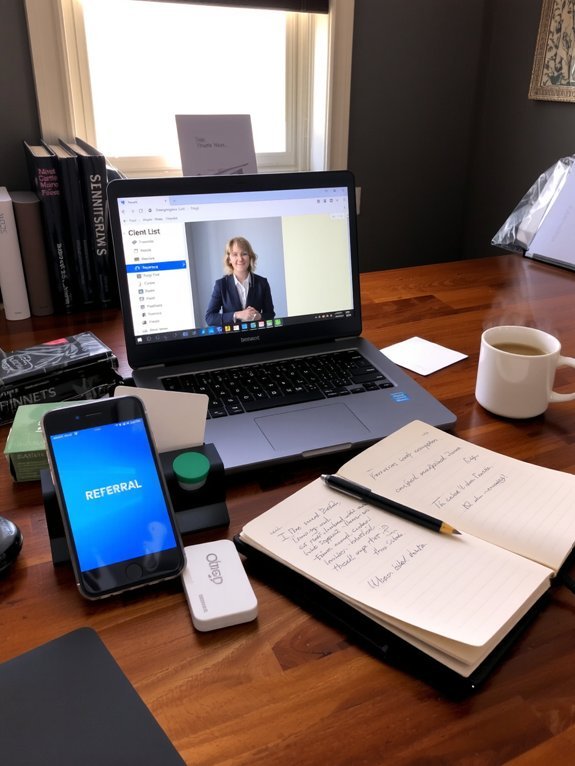
Where do you find the people who’ll actually pay for your brain and spreadsheets? Start on freelance platforms, your digital farmers’ market. Create a crisp profile, upload samples, and bid like you mean it. Then, leave the screen and work the room. I’ll nudge you: networking strategies matter more than business cards. Go to meetups, ask a question, trade a laugh, follow up with a quick, helpful email. Ask clients for referrals, gently, like you’re asking for the secret family recipe. Offer one free consult, a tangible taste of value. Track leads in a simple spreadsheet, call people by name, show real numbers. Be human, be useful, and be persistent — clients arrive where effort and charm intersect.
Scaling Your Practice Without Sacrificing Quality

If you want to grow without turning your business into a spreadsheet-shaped circus, you’ve got to pick what to keep and what to hand off — fast. I’ll tell you straight: start with repeatable tasks, document steps, and train a junior or VA. Use simple scaling strategies, automation, and templates, so you don’t drown in data entry. I coach quality assurance into every handoff — checklists, spot audits, and a warm, honest review before delivery. Say no to clients who want custom chaos at volume. Schedule weekly rhythm calls, batch similar work, and monitor KPIs with a clean dashboard, not a guilt trip. You’ll scale revenue, keep sleep, and still enjoy the smell of fresh coffee.
Conclusion
You can do this. I’ve seen solo accountants double income in under two years—Freelancers make up 36% of the global workforce now—so the market’s hungry. Pick a niche, price boldly, automate the boring stuff, and say yes to better clients, not more busywork. Picture your calendar uncluttered, coffee warm, invoices paid on time. You’ll stumble, laugh, learn, then scale—holding quality like a crown, while you run the show.


