Think of podcast editing as tasteful surgery — less gore, more miraculous recovery — and you’re the steady hand people hire when their audio needs to stop sounding like a garage band. You’ll learn tools, clean noise, sculpt voices, and turn messy Zoom chaos into something cinematic, then charge per episode, hourly, or on retainer; I’ll show you where to start, what to price, how to get clients, and how to scale without burning out, so stick around — you’re about to get useful.
Why Podcast Editing Is a Marketable Skill

If you’ve ever messed with audio and felt that little tingle when a messy conversation suddenly snaps into crisp, listenable gold, you’re sitting on a marketable skill. You know the tiny victories: removing breaths, leveling voices, smoothing rough edits until the episode breathes easy. That polish boosts audio quality, keeps listeners glued, and yes, drives podcast growth — not magic, just craft. You’ll learn to spot jumpy pacing, fix noisy rooms, and make tone match like a good mixtape. Say the right things to clients, show before-and-afters, charge fairly, repeat. I’ll be honest, it’s less glamorous than fame, more satisfying than scrolling socials. You get to save shows from chaos, and people will pay for that calm.
Essential Skills and Software Every Editor Needs

You’ve seen how a rough conversation can become radio-ready with a few smart cuts and some EQ magic, and now we’re about to get practical: what you actually need in your brain and on your hard drive to do that work well. You’ll want sharp ears, timing instincts, patience for tiny clicks, and an opinionated sense of balance — bass that warms, highs that sparkle, voices that sit right. Learn noise reduction, compression, EQ moves, and how to sculpt silences so pacing breathes. Get comfortable with audio editing, multitrack mixing, and loudness standards. Invest in decent monitors, headphones, and backup drives. Pick reliable software tools — DAWs, plugins, and clean templates. Practice daily, mess up often, then fix it and laugh.
Typical Services Editors Offer and What to Charge

Usually, I start by listing the services podcasters actually want, because people hire you to solve problems, not to dazzle them with knobs. You’ll offer noise reduction, level balancing, trim edits, and EQ that makes voices feel warm and near, plus chapter markers, simple show notes, and loudness matching. Use clear editing techniques, so edits sound invisible, and offer add-ons like remote interview cleanup or music beds for punch. Say what you charge, confidently, with flexible pricing strategies that reflect skill, rush fees, and revisions—don’t be apologetic. Give examples: a clean edit, two revisions, delivered in 72 hours. Be specific, set boundaries, and keep a friendly tone. Clients want calm, fast, reliable work; give them that, and repeat business follows.
Pricing Models: Per Episode, Hourly, and Retainers

Alright — you’ve told clients what you’ll fix, now let’s talk about how you actually get paid. You can charge per episode, hourly, or ask for a retainer. Per episode is tidy, predictable, great if they publish regularly, and you like clear deliverables. Hourly suits edits that morph, or messy files; you’ll track minutes, like a caffeinated watchmaker. Retainers feel fancy — steady income, priority access, and fewer billing headaches, though you must promise capacity. Mix these pricing strategies to match client preferences, don’t be married to one model. I recommend clear scopes, examples, and a trial run. Say it out loud, negotiate, then lock it down. You’ll sleep better, client calls will be calmer, and billing won’t be a horror movie.
Building a Portfolio and Demonstrating Your Results

If you want clients to believe you can turn raw chaos into a listenable show, show them proof — not promises. I’ll walk you through what matters. Pick three strong episodes, trim them into clean clips, label each with the problem you solved — noise, pacing, or ad timing — and call those your portfolio highlights. Add timestamps, before-and-after audio snippets, and a short blurb that says, plainly, what you did. Ask former hosts for client testimonials, short and specific, that mention downloads, listener feedback, or saved editing hours. Put everything on a simple page, play button big, contact button obvious. Be proud, be honest, and let your work do the talking — you edited it, you earned it.
Finding Clients: Platforms, Networking, and Cold Outreach

When you’re ready to stop waiting for clients to fall into your inbox, you start hunting — and the hunt looks different depending on the terrain: platforms, parties, or plain old cold emails. You’ll use client acquisition tactics on job boards, freelance sites, and niche podcast forums, then pivot to networking strategies at meetups, virtual panels, and DM threads. You show up, listen, offer fixes—small wins you can shout about.
| Platform hunt | Party hunt |
|---|---|
| Job boards, samples, proposals | Events, business cards, follow-ups |
| Cold emails, tailored pitches | Social proof, conversations, referrals |
You sound human, helpful, a little cheeky, and persistent. Cold outreach works if it’s short, specific, and useful.
Delivering a Smooth Client Experience and Workflow
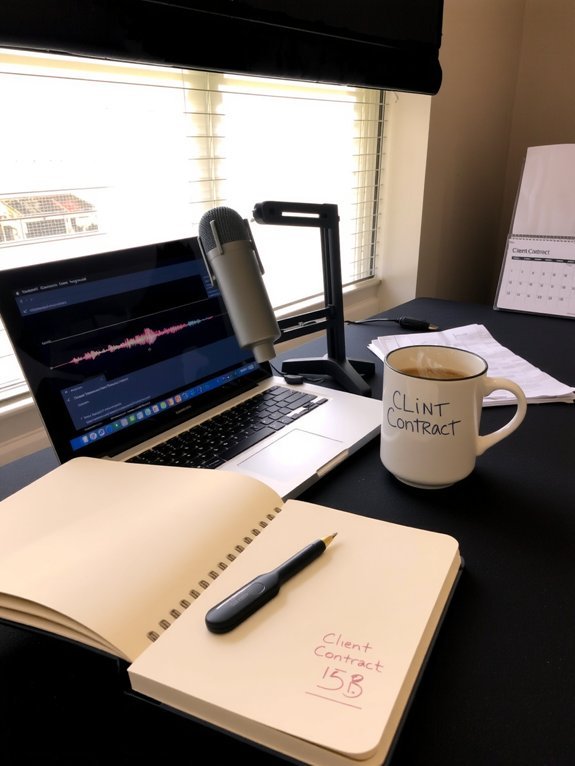
Because your client’s episode shouldn’t feel like a scavenger hunt, I set up a workflow that hums: clear intake form, upload link, rough cut deadline, final delivery, and a tiny celebration GIF when it’s done. You’ll get predictable milestones, and I’ll nag gently, like a helpful oven timer. Use simple client communication—short emails, timestamped notes, and a two-minute voice memo when words fail. I run tight project management in a shared board, so you watch progress move like dominoes. I label files with dates and versions, add a color tag for “needs host approval,” and send a friendly reminder that sounds human, not robotic. You relax, I edit, we high-five via GIF. It’s tidy, fast, and oddly satisfying.
Upsells, Packages, and Scaling to a Small Studio

You’ll boost your income faster if you offer clear upsell tiers, like basic editing, show notes, and a VIP mix with jingles and chapter markers, so clients can pick what fits their budget and appetite. Toss in bundled packages—monthly, season-long, or launch bundles—with crisp pricing that smells as good as fresh coffee, and watch buyers trade hesitation for a cart click. When demand spikes, I’ll walk you through hiring an assistant, tightening a repeatable workflow, and turning your solo hustle into a cozy little studio without losing your sanity or your sense of humor.
Upsell Service Tiers
If you want to stop trading hours for dollars, think of service tiers like a menu at a very honest diner — clear, tempting, and impossible to ignore. You’ll name tiers so clients instantly know value, stack premium features like faster turnaround, chapter markers, and voice tuning, and dangle smart service incentives such as monthly discounts or priority slots. I’ll tell you, it feels good to upsell without being slimy; you’re offering choices, not guilt. Show audible before-and-afters, price each add-on plainly, and use visuals — a quick table, a color badge — so eyes land where you want them. Start simple, test responses, then scale: hire an assistant, buy a mic, take a studio room.
Bundled Package Options
Alright, you’ve shown them the menu — now bundle the whole damn meal. You’re offering edits, show notes, promo clips; don’t let clients pick à la carte forever. I throw together a tidy trio: basic edits, episode + clip, and a polished monthly studio package that smells like professional growth. With package customization, you let them swap clips for transcripts, add rush turns, or tack on social cuts, and it feels bespoke, not awkwardly upsold. I price by value, not minutes, so my pricing strategies highlight outcomes: downloads, time saved, louder voices. Sell tiers, offer a trial, and watch one-off buyers convert to retainer fans. Be bold, be clear, and charge for your edge — people pay for less hassle.
Hiring and Workflow Scaling
When the client calendar fills and your laptop starts to smell like burnt coffee and glory, it’s time to stop doing everything yourself and build a tiny army. You’ll hire slow, train fast, and use clear hiring strategies so you don’t recruit drama, only talent. I tell new hires what success looks like, set tiny tests, and pay for speed. Then we wire the studio with workflow automation — templates, hot folders, and canned notes — so edits flow like a good playlist. Upsells become packages: edit+mix, ad insert, show notes, priority rush. You’ll hand off templates, watch quality climb, and finally answer emails from a comfy chair, not a caffeine-fogged cave. It’s business, not chaos.
Protecting Your Business: Contracts, Licensing, and Taxes

Because you’re not just mixing audio—you’re building a tiny empire that deserves protection, let me spell out the boring-but-brilliant stuff: contracts, licenses, and taxes. You’ll nail contract essentials up front—scope, revisions, deadlines, ownership—so clients can’t ghost you or claim raw files as theirs. Know tax implications, set aside percentages, and track expenses like a hawk; your ledger should smell faintly of coffee and victory. Register rights, license music properly, get written releases for guests, and don’t skimp on specialists. When something goes sideways, you’ll thank yourself.
| Item | Action | Why it matters |
|---|---|---|
| Contract | Scope & ownership | Prevents disputes |
| Licensing | Music & clips | Avoids takedowns |
| Taxes | Track & set aside | Keeps you solvent |
| Releases | Guest sign-offs | Legal protection |
| Insurance | E&O policy | Extra safety net |
Conclusion
You’ve got the chops, the ears, and a stack of edits waiting to be sold — now go make money. Start small, y’know, strip out the background hum, polish dialogue, charge what you’re worth, and keep the coffee coming; Rome wasn’t built in a day. Build a portfolio that sounds like a promise, ask for referrals, automate the annoying bits, and treat clients like collaborators. Hustle smart, protect your biz, and enjoy turning chaos into clarity.