You’re about to turn glue-sticky fingers and late-night sketches into something people actually buy, and I’ll help you skip the rookie mistakes. Start with who’ll love your work, shoot clean photos that pop, and write listings that sell without sounding like a robot; pack orders like a tiny, delightful gift and answer messages fast. It’s a mix of craft, hustle, and a tiny bit of theater—stick with me and I’ll show you the quick wins that actually move stock.
Why Choose Etsy for Handmade Crafts
If you’re anything like me, you want your handmade stuff to find people who’ll actually swoon over it — not just admire it in a dusty corner of a craft fair. You pick Etsy because it’s where buyers come smelling for charm, and you get tangible Etsy advantages: built-in traffic, easy listings, payment processing that doesn’t make you cry. You’ll join a lively handmade community, swap tips, and get honest feedback that actually helps. You photograph your work, write a quirky description, hit publish, and watch views creep up. It’s not magic, it’s platform power plus elbow grease. You’ll learn pricing, tweak tags, celebrate small wins, and sell to people who appreciate the texture, smell, and story behind each piece.
Researching Your Niche and Target Customers
You’ll start by sniffing out niche trends — watch colors, textures, and seasonal buzz on Etsy and Instagram, then take notes like a nosy detective. Next, picture your ideal buyer: age, style, price tolerance, and what makes them click “add to cart,” and don’t be shy about asking real people what they want. Finally, scan competitors’ listings, grab good ideas, avoid copying, and tweak your products until they sing louder than the rest.
Identify Niche Trends
Where do trends hide when you’re not looking—underneath Etsy’s homepage, in late-night Pinterest scrolls, or tucked into a dusty corner of Instagram reels? I’ll show you how to spy them. Track craft trends by saving screenshots, pinning inspo boards, and checking shop best-sellers weekly, then taste-test ideas with quick mockups. Listen to comments, watch what buyers screenshot, smell the glue and see which colors repeat. Note seasonal demand—holidays, wedding season, back-to-school—then map when searches spike. Use Etsy’s search bar, Google Trends, and hashtag dives to confirm patterns. Don’t chase every shiny thing, pick two micro-trends, prototype fast, photograph well, and tweak based on real clicks. You’ll learn faster by doing, trust me.
Define Target Audience
Three things: who they are, what they want, and where they hang out online — get those three right and half your marketing writes itself. I tell you this like a friend nudging you at a craft fair. Start by sketching target demographics: age, income, location, lifestyle. Listen to customer preferences, not your inner perfectionist. Ask simple questions, run quick polls, scroll comments, smell the vibe of their feeds. Picture a buyer, name them, imagine their morning coffee, the colors they like, the words they use. Then pick platforms they frequent, craft your photos and descriptions to match, and speak in that voice. It’s methodical, kind of fun, and yes, oddly addictive — in a good way.
Analyze Competitor Offerings
Okay, now let’s play detective. You’ll peek into rival shops, click listings, and sniff out trends like a nosy neighbor with good taste. Do a competitive analysis: note prices, materials, photos, copy, and shipping—touch everything, mentally. Compare your pieces side-by-side, jot strengths and gaps. Hear me: product differentiation isn’t optional, it’s your secret sauce. Maybe your dye pattern pops, maybe your packaging smells like cedar, maybe your story makes buyers cry (in a good way). Map who’s selling to whom, copy snippets, and screenshot layouts. Then tweak: raise quality, lower clutter, or shout your weirdness louder. Test changes, track clicks, rinse, repeat. You’ll learn fast, adapt faster, and sell smarter.
Setting Up Your Etsy Account and Shop Basics

You’re about to name your shop, so pick something catchy that smells like your brand — short, memorable, and easy to spell when someone tells a friend at a coffee shop. I’ll walk you through setting clear shop policies next — shipping, returns, and processing times, so you don’t get surprised by late-night messages. Think of this as your storefront handshake: friendly, firm, and impossible to misread.
Choosing a Shop Name
How do you want people to feel when they first see your shop—cozy, curious, or convinced they’ve stumbled into a tiny treasure chest? You’ll choose a name that sings, one that shows creative naming chops and hints at memorable branding. Say it aloud, taste the consonants, imagine a tiny tag swinging from a package. Keep it short, spellable, and unique. Avoid numbers unless they mean something. Check domain and Etsy availability. Ask friends for brutal honesty. If it makes you smile, it’ll likely charm buyers.
| Tip | Action |
|---|---|
| Length | Aim 2–3 words |
| Spelling | Simple, phonetic |
| Tone | Match your crafts |
| Uniqueness | Search Etsy & web |
| Future-proof | Think brand growth |
Shop Policies Setup
Once your name’s nailed and your banner looks like it belongs in a boutique, it’s time to hammer out shop policies — yes, the boring-but-crucial fine print that keeps customers calm and you sane. I’ll walk you through clear returns, shipping timelines, payment options, and custom-order limits. Say exactly when you ship, how you handle damage, and whether refunds are possible. Be blunt about processing times — customers love certainty, and you’ll sleep better. Add a short, friendly customer service line: how to contact you, expected reply time, and refunds or exchanges steps. Finally, document policy enforcement: what happens if rules aren’t followed, and how you’ll resolve disputes. Print it clean, pin it prominent, and move on to making stuff.
Creating Strong Product Listings That Convert

Because good photos and sharper words sell more than a wink and hope, I’m going to show you how to build listings that actually convert—no smoke, a little glitter. You’ll write product descriptions that smell of usefulness, not sales-speak; start with the benefit, follow with materials, then a tiny story about how someone uses it. Use keyword optimization like a map, place primary phrases in title, tags, and first sentence, but don’t stuff—readers, not robots, buy. Break specs into bullets, give dimensions, care instructions, and a quick “why this matters” line. Price confidently, mention turnaround times, and add a clear call-to-action: “Add to cart,” “Gift this,” simple, crisp, persuasive.
Photography Tips for Showcasing Handmade Items
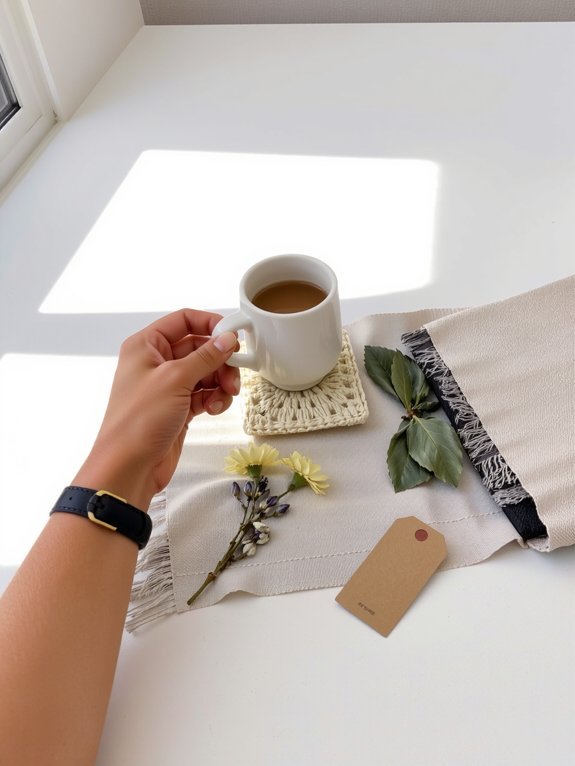
When I say “photos sell,” I mean it—your pictures do the heavy lifting while you sip coffee and pretend to be mysterious. I want you to shoot like you mean it. Use natural light, learn simple lighting techniques, bounce light with a white card, and avoid harsh shadows that make colors lie. Try three background options: clean white for listings, textured wood for warmth, and a styled scene for story. Shoot close-ups, capture texture, let fingers hold the piece for scale, and tweak angles until the sparkle sings. Edit gently, don’t overcook colors, and export sharp files. Tell a visual story, be human in the frame, and remember: good photos turn browsers into buyers, even when you’re still pretending to be enigmatic.
Pricing Your Crafts Profitably and Competitively
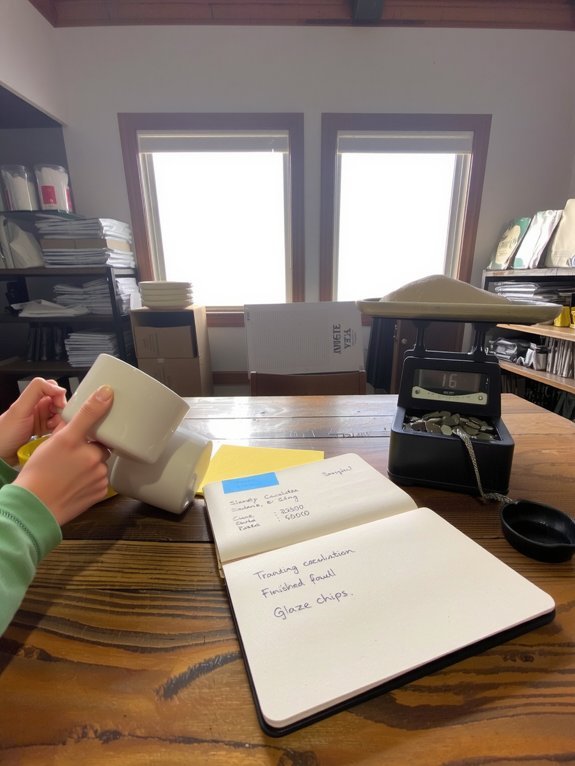
If you want to stop guessing and start charging like you deserve, you’ve got to treat pricing like a recipe—measure every ingredient. I ask you to list materials, time, fees, shipping, then do a strict cost analysis, like weighing sugar on a spoon. Smell the glue, feel the fabric, count minutes. Next, peek at competitor pricing—don’t copy, learn the market’s rhythm. Price for profit, not ego; add a tidy margin, include taxes, round smartly. Test a few listings, watch what sells, tweak. Say aloud, “Is this fair?” If not, adjust. Keep notes, set minimums, and protect your time. You’ll sleep better knowing your work earned real value, and so will your customers.
Writing Effective Shop Policies and About Pages

You’ll want crystal-clear shipping and processing notes so buyers know when their glittery packages will land on the porch, and you’ll save headaches by saying exactly how long each step takes. Spell out returns and exchanges in plain terms—what’s accepted, by when, and how to start the process—so nobody ends up holding a sad, unreturnable sweater. Then tell your brand story, what you care about, and why your pieces smell like lemon oil and slow afternoons—people buy feelings, not just pretty things.
Shipping and Processing
1 simple truth: clear shipping and processing policies stop half your customer questions before they start, and the other half before they become angry emails. You’ll thank me later. Spell out processing time in days, include photos of your packing, and describe shipping options—standard, expedited, international—with prices that don’t surprise. Say whether you’ll combine orders, how you insure fragile items, and how you handle holiday rushes; show the texture of your bubble wrap, the smell of kraft paper, the tiny ritual of taping a tag. Promise tracking shipments, and tell buyers when to expect that tracking number. Write like you’re talking to a friend: brisk, honest, a little playful. Clear, concrete policies cut confusion, save time, and keep glowing reviews coming.
Returns and Exchanges
When a buyer wants to return something, you’ve got to sound calm, helpful, and a little human—because no one wants a robotic lecture about policy while they’re already annoyed. I tell you straight: clear return policies stop drama before it starts, and they make you look trustworthy, not cold. Say what you accept, the time window, condition requirements, and who pays shipping, use bullets so eyes don’t glaze over. Describe the exchange process like you’re guiding a friend—pack it snug, include order number, ship to X, expect confirmation in two days. Add a friendly line: “I’ll fix it.” Show a photo example, mention refunds timeline, and invite questions. You’re polite, decisive, and slightly witty—people buy from humans, not robots.
Brand Story and Values
Although you might think shop policies are boring, I promise they’re your secret handshake—clear, honest, and a little charming—so folks know what to expect before they even click “add to cart.” I write mine like I’m talking over a counter: warm lighting, the scent of wood polish, a cup of tea cooling beside my keyboard, and I say things straight—what I make, why I make it, how it’s made, and the values that keep me from cutting corners. You’ll use brand authenticity and storytelling techniques to turn rules into rapport. Be human, be brief, answer likely questions, and show the care behind each stitch.
| Policy | Why it matters | Tone |
|---|---|---|
| Shipping | Predictability | Reassuring |
| Returns | Trust | Fair |
| Materials | Transparency | Proud |
Managing Inventory, Materials, and Production
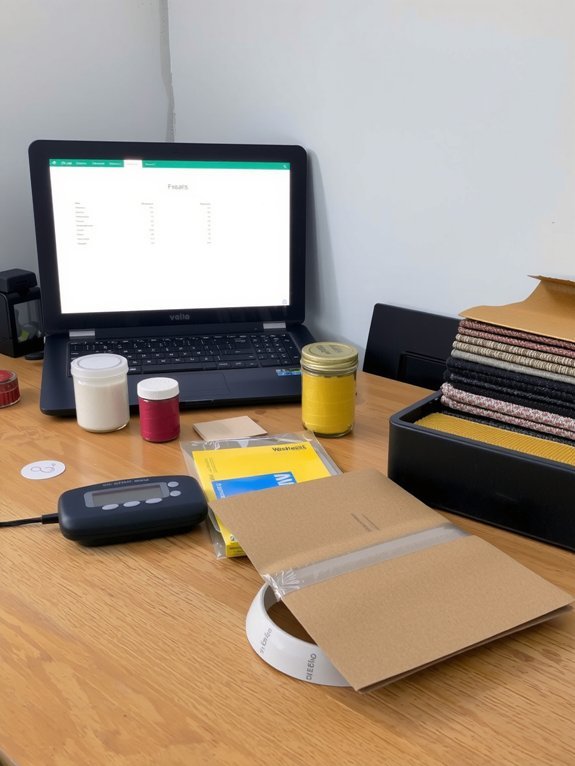
If you want to keep your shop from turning into a craft-haven apocalypse, you’ve got to get ruthless about inventory, materials, and production — and yes, I mean ruthless in a friendly, slightly obsessive way. I track stock like a detective, inventory tracking sheet open, fingers stained with glue, counting finished pieces and raw bits. You’ll plan production days, batch similar tasks, and treat your workspace like a short, efficient factory, not a Pinterest dream. For materials, I scout local wholesalers, online deals, and swap with other makers — material sourcing is part treasure hunt, part negotiation. Set reorder points, label bins, and schedule buffer time. You’ll avoid frantic midnight scrambles, and actually sleep sometimes.
Shipping, Packaging, and Handling Orders
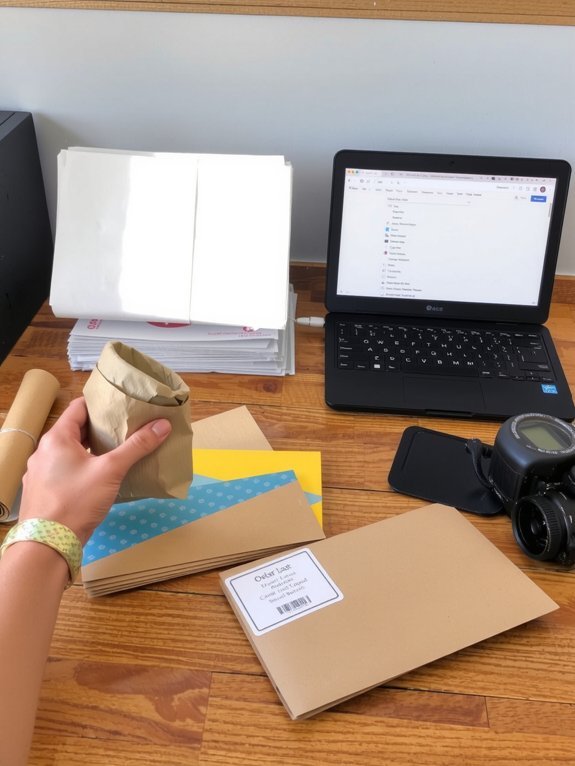
Because your cute little creations only turn into paid bills when they actually leave your hands, you’ve got to treat shipping like a tiny, well-oiled ritual — not a panic-fueled sprint. You’ll pick shipping methods that fit size, weight, and speed, compare rates, print clear labels, and whisper apologies to fragile mugs as you wrap them. Packaging options matter: eco tissue, bubble, branded tape — all tactile, all part of the unboxing show.
| Item | Packaging options | Shipping methods |
|---|---|---|
| Small jewelry | Padded envelope, tissue | First Class, Tracked |
| Ceramic mug | Bubble wrap, box | Priority, Insured |
| Textile | Compostable bag | Flat Rate, Economy |
Handle orders promptly, communicate delays, and add a handwritten thank-you.
Marketing Your Etsy Shop and Growing Sales
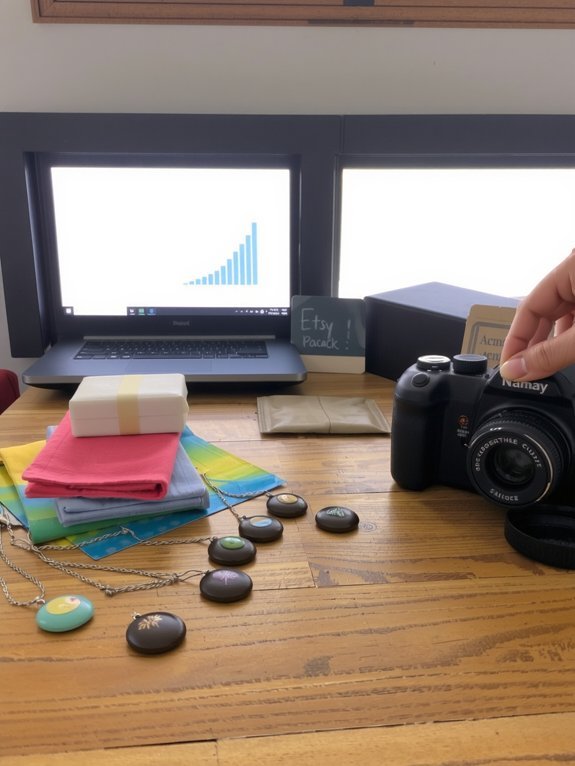
When I say “marketing,” don’t picture a neon billboard — think of it as cozy small-talk that gets strangers to notice your work, stick around, and eventually open their wallets; you’ll learn to charm people the same way you’d chat over coffee, with clear photos, a shouty title, and a story that smells like cinnamon and honesty. I tell you, start with killer photos, natural light, textured backgrounds, and a hero shot that makes someone breathe in. Use social media like a friendly neighbor: post process clips, quick reels, and behind-the-scenes banter. Collect emails with a tiny discount, then send warm email marketing that feels like a note from an old friend. Track clicks, tweak listings, rinse, repeat — sell more.
Conclusion
You’re ready. I’ll bet the very spoon you stir coffee with has inspired a design that could sell—how convenient. Set up the shop, take crisp photos, write a story that smells like cinnamon and honest glue, and ship with care. You’ll fumble, learn, laugh, and adjust prices at midnight. I’ll cheer, you’ll earn, and someday a stranger will clap at your handiwork—coincidence or fate, you made it happen.