Most developers don’t realize that clients pay more for outcomes than hours, so you can charge what your work’s worth instead of racing the clock; I’ll show you how to package those outcomes, win steady gigs, and avoid feast-or-famine months. Picture a tidy home desk, a hot mug, and one clear offer clients can’t ignore — we’ll build that. Stick around if you want predictable cash and fewer panicked late nights.
Choosing the Right Remote Path: Freelance, Full-Time, or Product-Based Work
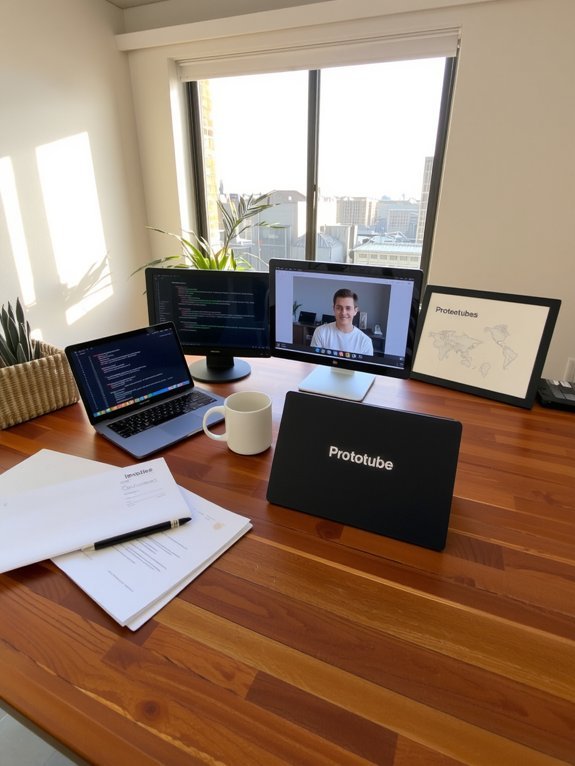
If you’re deciding how to work from home, I’ll say this up front: there’s no single “right” path, only the one that fits your life right now — and maybe your weird snack schedule. You’ll choose freelance platforms when you want variety, quick wins, and the thrill of bidding, tasting coffee while onboarding a new client at noon. Go corporate remote if you crave steady pay, meetings that blur into background noise, and benefits you can actually explain to your cat. Product-based work means nights of obsession, sticky notes, and the sweet payoff of users who actually love what you built. I’ll be blunt: try a combo, feel the textures, and pick what calms your brain most.
Building a Marketable Skillset and Portfolio

You need a tight set of core technical skills—HTML, CSS, JavaScript, a backend or framework—so you can actually build things people want, not just read about them. Start stacking real-world projects on your portfolio, small at first—mock stores, API mashups, a messy but honest client site—and let the code and screenshots tell the story. I’ll nudge you to polish a personal brand presence too: a clear bio, lively project writeups, and a simple site that smells like you, not a template.
Core Technical Skills
Since you’re aiming to get paid to build things people actually want, start by learning the core technical skills that make clients nod and open their wallets — HTML, CSS, JavaScript, version control, and one solid backend or framework you actually enjoy. I’ll be blunt: master the basics, then layer in front end frameworks and back end technologies so you can move fast and smell the coffee of real work. Practice until your CSS layouts don’t cry, until your JS feels like a reliable friend, and git becomes second nature. Read docs, break stuff, fix it, deploy it. Keep tools sharp, automate boring tasks, and pick libraries that match your temperament. Clients pay for confidence, predictability, and clean code that just works.
Real-World Projects
When you stop treating tutorials like a buffet and start building things people actually use, your resume stops whispering and starts shouting. You’ll pick an itch in the neighborhood — a café’s clunky ordering page, a local tutor’s booking mess — and build real world applications that solve it. You code, test, break things, fix them, and feel the tiny electric thrill when it works. Take screenshots, record short walks-throughs, write one-line problem statements. Those become project showcases, neat and clickable, that say you ship. Clients smell confidence, not theory. Show metrics — load times, conversion bumps, fewer support emails — and a clean repo. Do this enough, and your portfolio becomes your best salesperson, louder than any résumé.
Personal Brand Presence
Even if you don’t like the sound of “personal brand,” think of it as a storefront window you get to arrange—I’ve learned to treat mine like a tiny museum where every piece earns its place. You’ll shape your personal branding by curating projects, photos, and voice, so your online presence smells like fresh coffee and looks like craft. Show code snippets, case studies, short video tours. Say what you fixed, how you felt, what users said. Be human, be useful, be a little weird.
| Item | Action | Result |
|---|---|---|
| Project | Demo + writeup | Cred |
| Blog | Weekly post | SEO |
| Social | Micro-updates | Reach |
| Portfolio | Clean UI | Clients |
Pricing Strategies and Creating Reliable Revenue Streams

You’re not competing on hours alone, so I’ll show you how value-based pricing lets you charge for results, not busywork, and why that feels like swapping coffee for caviar. Set up recurring revenue — maintenance plans, subscriptions, or retainer gigs — and you’ll hear your bank account breathe easier every month; I’ll tell you how to package those so clients can’t say no. Then we’ll talk diversification, because relying on one client is like standing on a wobbly stool, and I’d rather you build a small, sturdy table instead.
Value-Based Pricing
If you want to stop trading hours for dollars, value-based pricing is the fast lane — and yes, it’s less terrifying than it sounds. You price for outcomes, not minutes, so you sell confidence, not a timesheet. Start by mapping client goals, watch their eyes light up when you translate metrics into money — that’s value perception in action. Don’t hide behind jargon, educate the client, show before-and-after scenarios, and let them taste the upside. I’ll admit, it’s awkward at first; you’ll stumble through proposals, then nail one and feel smug. Use clear deliverables, risk-sharing options, and tidy guarantees. If you want better pay and less drama, this method forces you to think bigger, and charge like it.
Recurring Revenue Models
Value-based pricing got you thinking bigger, so let’s lock that bigger thinking into monthly cash that shows up like clockwork. You’ll package work into subscription services, membership platforms, maintenance contracts, and software licensing — predictable, steady, less chasing clients. Sell online courses, digital products, or consulting services as add-ons, and sprinkle affiliate marketing links where they fit, like little tip jars. You’ll smell coffee, open your dashboard, and see recurring payments — music. Build tiers, clearly state deliverables, automate billing, and handle churn with quick, friendly outreach. Below’s a simple plan matrix to map offers, price anchors, audience, and delivery rhythm.
| Offer | Price Anchor | Delivery |
|---|---|---|
| Basic | $29/mo | |
| Pro | $99/mo | Weekly calls |
| Course | $199 | Self-paced |
| License | $49/mo | Updates |
Diversify Income Streams
Because steady income is worth more than a one-hit wonder, I want you to think like a diner cook juggling five pans at once — calm, efficient, and ready to plate something new every minute. You’ll mix subscription services with one-off sales, stir in online courses, and toss digital products onto the counter. Add consulting services for high-ticket orders, sprinkle affiliate marketing for passive sizzle, and open membership sites for regular patrons. Keep content creation loud and visible, teach via coding bootcamps clips, then sell deeper courses. You’ll price items to match effort, test small, watch cash flow like steam rising, adjust flavors fast. I’ll nudge you to automate receipts, refine offers, and savor steady tips, not chase rare big wins.
Finding High-Quality Clients and Job Opportunities

Where do the good clients hide, and how do you get them to notice you without sounding like a desperate freelancer at a networking event? You use smart networking strategies, show up on niche online platforms, and stop shouting into the void. Send crisp case studies, not epic origin stories. Cold email like a surgeon: brief, specific, with a clear next step. Trade generic bids for tailored proposals that smell like you actually read their site. Join one focused community, lurk, help, then ask — people remember helpful faces. Meet clients where they live: product Slack channels, industry Twitter threads, and referral circles. Be visible, not annoying. Smile in your copy, be useful in your actions, and let great clients slide into your calendar.
Tools, Workflows, and Home Office Setup for Productivity
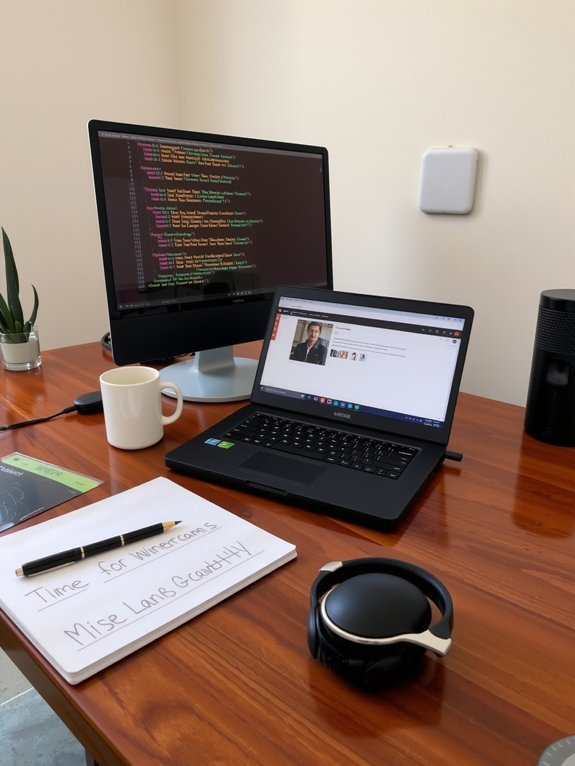
Nice clients are great, but they don’t pay the rent by themselves — your tools and routine do. I set up productivity tools that sing together: code editor, task board, and a timer that nags me kindly. I automate boring bits with workflow automation, so builds, tests, and deploys happen while I make coffee. My desk smells like citrus cleaner, my chair fits my spine, and home office ergonomics keep my neck from staging a mutiny. I block distractions, batch tasks, and honor time management like it’s a loyal dog. You’ll feel the difference when context switches drop, and focus stretches longer. Be picky about gear, ruthless about habits, and playful about failures — they teach faster than tutorials.
Managing Projects, Contracts, and Client Communication
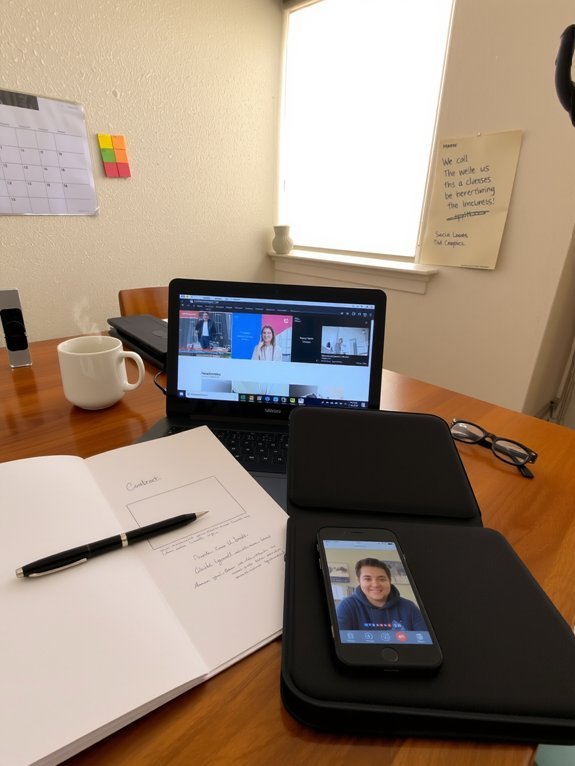
If you want steady income, you’ve got to treat projects like little businesses, not hopeful hobbies — I learned that the hard way, when an excited client ghosted me two weeks before launch and my rent reminder dinged like a tiny sad bell. You set clear project timelines, you write tight contracts, you ask for deposits, and you breathe. I sketch scope on a napkin, then turn it into bullet-point deliverables, deadlines, and payment milestones. I call clients, say, “Quick check,” I log client feedback, I reply within hours, not days. Use simple change-request forms, use versioned files, record calls. Be human, but firm. If things go sideways, refer to the contract, suggest fixes, invoice anyway, and keep loving the work.
Scaling Up: Hiring, Productization, and Passive Income Strategies

When you’re ready to stop trading hours for dollars, you’ve got to think like a tiny boss — I did, at my kitchen table, wobbling a coffee cup while filming my first screencast with a cracked webcam and a lot of optimism. You’ll hire slowly, test skills with tiny tasks, and trade ego for clear docs, so handoffs don’t feel like trust falls. Then you’ll lean into product development: strip repeat work into templates, sell a theme, or build a tool that nags clients less than you do. That’s where scaling strategies meet passive income — automated sales, subscriptions, and evergreen courses. You’ll wake to sales alerts, sip cold coffee, and feel that smug, caffeinated glow. It’s doable, imperfect, and yours.
Conclusion
I’ve seen a solo dev turn $200 into $2,000 in three months by shipping one tidy plugin — like planting a basil seed on a sunny windowsill and suddenly having pesto for weeks. You can do that too. Pick a path, build useful work, price for outcomes, and make reliable routines. Keep one foot in steady income, the other in experimentation, and remember: small, consistent actions beat flashy, anxious leaps every time.