You might think chat jobs are low-pay busywork, but you can actually build steady income and real skills from them. I’ll walk you through where to find legit gigs, what tools and tone win customers, and how to boost your rate without burning out, all while you sit in your favorite chair with a mug getting cold — so stick around if you want clear steps and a few shortcut tricks that actually work.
What Remote Customer Chat Jobs Involve

When you sit down at your laptop—coffee steaming, headphones snug—you’re stepping into a world where words are your tools and speed is your friend. You’ll handle chat job responsibilities like greeting customers, diagnosing issues, and closing tickets, all while juggling typing speed and empathy. I talk to real people, read tone through text, and choose words that calm or energize. You’ll use customer interaction techniques: scripted saves, quick clarifying questions, and the occasional GIF to humanize the exchange. You’ll switch tabs, paste links, and troubleshoot with a smile you can’t see, which is weird but effective. It’s fast, focused, sometimes funny, and oddly satisfying when a frustrated user leaves relieved — small victory, big paycheck.
Where to Find Legitimate Chat Support Openings

You’ll want to start where the work actually lives: job boards and marketplaces, where listings scroll by like a crowded feed, and you can filter for remote chat gigs in seconds. I also poke around company career pages, because sometimes the best roles never leave the company site, they just sit there like hidden snacks. Stick to those two spots, check listings regularly, and trust me—your next steady chat shift is probably one click away.
Job Boards and Marketplaces
I keep a mental map of job sites like a barista remembers coffee beans — each one smells a little different and tells a different story. You’ll scan job platforms like Indeed or FlexJobs, inhaling listings, noticing tone, spotting chat-specific tags. Try marketplaces too — Upwork, Fiverr, and niche boards where freelance opportunities bubble up fast, like espresso shots. Read descriptions, taste-test pay rates, and save ones that smell right. Message quickly, tailor a crisp pitch, attach a chat transcript sample, and move on if ghosted. Watch ratings, client reviews, and scam red flags — vague pay, pressure to pay, or no contract. Keep a shortlist, calendar interviews, and celebrate small wins with a tiny, triumphant sip.
Company Career Pages
Start with the big names first — they like neat applications and clear pay, so they’re often the safest bets. I poke around career pages like a detective, scanning job titles, filtering “remote” and “chat” until listings pop. You’ll see company benefits upfront sometimes, perks like health, PTO, or tuition help—read them, imagine your life with those mornings off. The application process is usually button-simple: resume upload, short answers, maybe a timed chat sample. Don’t ghost the form; tailor that first line, be human, not a robot. I copy one witty sentence into each cover note, it works. Bookmark pages, set alerts, stalk their LinkedIn, and apply fast—good roles vanish like free coffee.
Skills and Tools You Need to Succeed

You’ll need sharp communication and fast typing, since you’ll be juggling multiple chats while keeping tone friendly and clear. Learn the product and company policies like they’re the script to a play you don’t want to forget, and practice until answers come out smooth and confident. Get fluent with support tools — ticketing, live-chat dashboards, canned responses — because fumbling the tech will make you look like you’ve got two left hands.
Communication and Typing Speed
When your keyboard clicks feel like percussion in a quiet room, you know typing speed matters — and not just for bragging rights on your resume. You’ll need to master effective communication, so customers feel heard even through text. Keep sentences short, friendly, and clear; mirror tone, drop jargon, and sprinkle empathy like seasoning. Boost typing efficiency with drills, posture tweaks, and a mental script for common issues, so responses fly without sounding robotic. I confess, I once typed an apology to a coffee machine, so practice humility. Read messages aloud, pause before hitting send, and use canned replies wisely, not lazily. Your fingers set the pace, your words build trust — type like you mean it, and listen like you care.
Product and Policy Knowledge
Knowledge is your backstage pass — learn the product and policies like you know the set list by heart. You’ll touch features, smell the metaphorical backstage spray, and talk customers through fixes with calm confidence. Product familiarity lets you sketch solutions fast, remember quirks, and drop helpful examples that make sense. Policy comprehension keeps you honest, saves you from awkward reversals, and helps you say “here’s what I can do” without sweating. I’ll walk you through common scenarios, cue the right line, and toss in a cheeky aside when a rule feels absurd. Practice FAQs out loud, make quick-reference notes you actually use, and repeat troubleshooting steps until they hum. Do that, and chats feel smooth, smart, and strangely satisfying.
Support Software Proficiency
You’ve learned the product and the rules, and now it’s time to get comfortable with the tech that makes remote support sing. I’ll say it plain: mastering support software advantages puts you ahead. You’ll click tickets, tag chats, and glance at dashboards, feeling the hum of efficiency like a tiny race car under your fingertips. Learn a solid customer relationship management system, practice canned responses until they sound human, and run mock chats with a friend. Switch windows fast, use keyboard shortcuts, and breathe when the queue spikes. I joke, I mess up shortcuts too, but steady hands win. These tools track history, speed replies, and let you build rapport — tangible wins that turn time into money.
Setting Up a Professional Home Chat Workspace

Light buzz of the router, the soft click of keys—this is your stage now, and you want it to look like you mean business. You’ll nail workspace essentials: tidy desk, clear background, good lighting, and an ergonomic setup that spares your neck and patience. Keep water nearby, headphones ready, and a sticky note for stubborn FAQs.
| Item | Purpose |
|---|---|
| Chair | Support, less back drama |
| Lighting | Clear face on video |
| Headset | Crisp audio, no echo |
You arrange things like a pro, sighing happily at the tidy cables. You test mic levels, adjust screen height, and practice a warm greeting. It feels doable, even fun. You’re ready to chat, help, and look like you’ve got it together—because you do.
Increasing Your Earnings and Getting Promotions

If you want raises and promotions, you’ve got to treat your chat shifts like auditions that happen every day, not once a year. I watch my tone, I polish replies, I log wins. Be visible: volunteer for tough tickets, lead training, ask for feedback after big saves. Track metrics, screenshots, and kudos — compile them into a tidy brag sheet for salary negotiation. Practice a short pitch: “Here’s impact, here’s growth, here’s my ask.” Seek roles with performance incentives, aim for upsells or bonus-eligible shifts. Don’t wait for an annual review, nudge your manager regularly, and show numbers, not feelings. Celebrate small promotions, learn fast, keep chat transcripts that prove you’re worth more, seriously.
Balancing Chat Work With Other Commitments
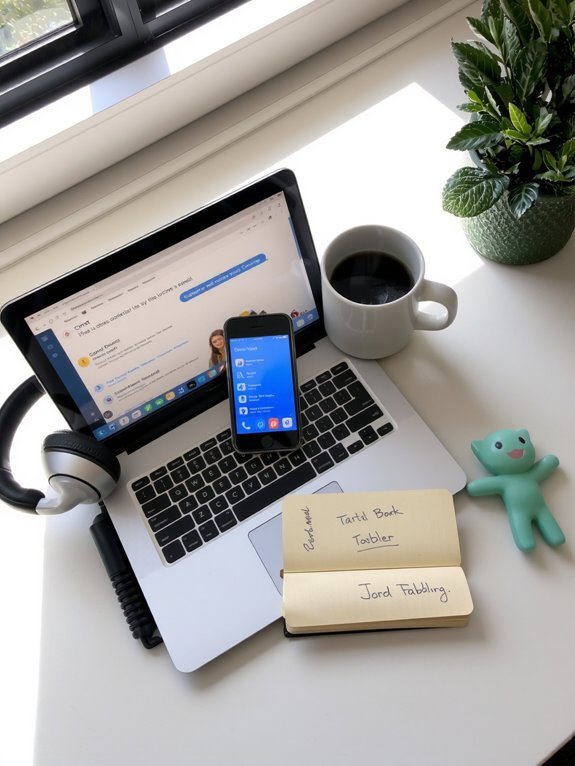
Great—you’ve been lobbying for raises and stacking proof, now you’ve got to make that steady paycheck sit next to real life: family dinners, side hustles, sleep. You’ll learn to slice your day like a chef, set clear boundaries, and say no without guilt. I tell you to block focus hours, mute notifications, brew a strong coffee, and stand when you start fading. Track chat peaks, then bend your schedule around them. Use time management tools, timers, and a visible calendar, so partners and roommates know the deal. Rotate tasks, take microbreaks, log wins. Workload balancing isn’t sexy, but it saves relationships and sanity. You’ll fumble, laugh, adjust, and eventually hit a rhythm that feels human.
Conclusion
You can do this — I’ve watched people turn chats into steady pay, and yes, the theory that friendly typing beats fancy degrees is true. Picture your quiet desk, the soft click of keys, a mug that never judges, and you solving problems while the world scrolls. Keep your tone warm, track metrics, volunteer for hard shifts, and watch raises arrive. It’s practical, a little brave, and honestly, kind of fun.