


You’re already wired for this: you spot commas like freckles and spot awkward sentences like gum on a shoe, so you can turn that knack into steady cash between classes. I’ll show you which docs pay best, how to pick rates, and where to snag clients without spamming your group chat — plus tools that make edits fly. Stick with me and you’ll be proofreading smarter, not harder, but first — let’s fix your pitch.
Why Proofreading Is a Great Side Hustle for Students

Imagine this: your dorm lamp hums, coffee cools, and a classmate slides a panic-texted essay across your screen — you smile, you flex your red pen, and you make cash. You pick apart commas, tighten sentences, and hear the satisfying click of clarity. It fits around your classes, a flexible schedule that lets you work between labs and late-night study marathons. You’re earning tuition-help money, inching toward real financial independence, and feeling quietly proud. Every job sharpens you, it’s pure skill enhancement with real results. You meet other writers, editors, even professors, and that’s where networking opportunities pop up, like unexpected coffee dates. It’s low-cost, high-return, and oddly addictive — in the best way.
Essential Skills Every Student Proofreader Needs

Because you’ll be nitpicking everything from commas to comma splices, you need a few core tricks up your sleeve before you start charging cash for red ink. You’ll train your attention to detail, scanning lines like a hawk for missing words, awkward phrasing, and tense slips. You’ll practice strong grammar, not just know rules, but feel them in your gut when sentences wobble. You’ll learn to read aloud, hear clunky rhythms, and mark beats with a pencil. You’ll manage time, set tidy schedules, and avoid last-minute panic that makes your coffee taste like regret. You’ll communicate kindly, give notes that students actually use, and laugh at your own typos — because perfection’s a myth, deadlines aren’t.
Types of Documents You Can Proofread

You’ve honed your eagle eyes and learned to shepherd commas like tiny, needy pets, so now let’s look at what you can actually proofread for pay. You’ll tidy academic papers, scout thesis submissions, and polish research proposals until they sing. You’ll clear up essays drafts, whip personal statements into shape, and make resumes cover letters crisp, punchy, impossible to ignore. You’ll edit business documents, smooth grant applications, and skim online content for typos and tone. You’ll even caress creative writing—dialogue, scenes, that awkward metaphor—until it reads like velvet. Picture red pen in hand, coffee steam in your face, fingers tapping away. Say yes to variety, say yes to steady work, and watch your proofreading gigs stack up, like neat, satisfying files.
How to Set Your Proofreading Rates

You’re going to set rates that actually cover your costs, so grab a notepad, list your expenses, and don’t pretend your time is free. I’ll show you how to compare what other proofreaders charge, so you’re competitive but not undercutting yourself. Then we’ll look at pricing per word or per page, with quick rules of thumb you can use on the spot.
Know Your Costs
Bills, coffee cups, and that weirdly persistent stack of invoices — they all want a say in how you price your proofreading. You do a quick cost analysis, scribbling numbers on a napkin, tasting burnt coffee, and wince at monthly rent. I watch you, nudging you: track time, track subscriptions, track that fancy grammar checker. Expense tracking isn’t glamorous, but it tells you your floor price. Add a buffer for taxes, sick days, and the occasional celebratory pizza. Know how many pages you can proofread per hour without zombifying yourself. Set rates that cover costs, pay you fairly, and still attract students. Be honest, be real, and don’t undersell the craft you sharpened one red pen at a time.
Compare Competitor Rates
Okay, now that you know what it costs to keep the lights on and the coffee hot, let’s look outside your kitchen-office window and see what everyone else is charging. You pull up listings, skim student forums, and jot prices on a sticky note — market analysis, done like a nosy neighbor. Do a quick competitor evaluation: spot lowballers, steady pros, and legit agencies. Smell the pages, click profiles, compare services offered, turnaround, and samples. Note patterns, not panic. Then decide: match a niche, undercut slightly, or out-value with faster edits and friendlier notes. Say it out loud, test the pitch on a classmate, tweak. You’ll set rates that feel fair, confident, and true to your skill.
Price per Word/Page
Three simple numbers usually decide whether a client hires you: words, pages, and time — and you get to assign values to all three. You’ll pick a price-per-word or per-page, based on word count, turnaround urgency, and how picky the student is. I like simple pricing strategies: a base per-word rate for clean drafts, a higher per-page fee for formatting nightmares, and rush multipliers when they panic at midnight. Count words, peek at citations, sniff for weird spacing, then quote. Say the rate, firm but friendly. Offer a sample edit, show value, then lock the rate. You’ll win repeat clients when your pricing feels fair, predictable, and slightly charming — like you, but with a calculator.
Tools and Resources to Speed Up Your Workflow
You’ll want a smart grammar checker at your side, the kind that flags quick fixes so you can zip through commas and stubborn typo gremlins. I keep a trusty style guide and a pile of reference books within arm’s reach, like an old friend and a stern librarian, so I can confirm a tricky hyphen or citation rule in seconds. Trust me, pairing fast software with solid references makes your workflow feel less like slogging through mud, and more like hitting a well-oiled sprint.
Grammar-Checking Software
If I had a dollar for every stray comma I’ve rescued at 2 a.m., I’d buy a nicer mug—so trust me when I say grammar-checking software is your unsung sidekick. You’ll run a doc through a tool, watch red underlines bloom like confetti, and feel that tiny thrill of grammar accuracy. Use suggestions, accept obvious fixes, but don’t worship the blinking cursor. Software limitations pop up—context, tone, jargon—so you keep the human filter, the gut sense that knows when to override. Toggle settings, scan line by line, read aloud so words hit your ears, not just your eyes. Clients love faster turnarounds. You get speed, fewer headaches, and yes, a fresher mug.
Reference and Style Guides
Grammar checkers catch commas, but they don’t carry the rulebook—so you’ll want a stack of reference and style guides within arm’s reach, like a trusty toolkit cluttering your desk. I flip through APA format for social sciences, then glance at MLA guidelines for lit papers, fingers ink-smudged, coffee steam warming the page. You’ll learn quick lookups, citation rules for every odd source, and when Chicago style demands a tweak no software spots. I coach students, point to examples, and laugh at my past citation blunders. Keep pocket cheat-sheets, bookmarked pages, and a highlighted index. When a client panics, you’ll calm them by saying, “I’ve got the rulebook.” That confidence sells your time, and speeds your work.
Creating a Simple Proofreading Process

Once I had a messy stack of manuscripts and a brain that felt like scrambled toast, I built a simple proofreading routine that actually worked—fast, calm, and merciless to typos. I’ll walk you through it like I’d steer a scared rookie: breathe, skim for structure, fix big logic, then hunt punctuation. Use a proofreading checklist, and set clear client communication rules—deadlines, file types, and feedback loops. I read aloud, slow, fingers on keyboard, coffee cooling. I mark consistent errors, save templates, and ask a single focused question before I send edits. Below is a tiny workflow table you can steal and adapt.
| Step | Action | Time |
|---|---|---|
| 1 | Skim | 5–10m |
| 2 | Big fixes | 15–30m |
| 3 | Line edit | 20–40m |
| 4 | Read aloud | 10m |
| 5 | Final check | 5m |
Where to Find Proofreading Jobs Online and On Campus
You’ll find gigs everywhere if you know where to look: freelance marketplaces like Upwork and Fiverr let you scope jobs fast, set your rates, and chat with clients without leaving your chair. On campus, peek at bulletin boards and student groups—post a bright, snappy flyer and you’ll get emails from panicked students by Tuesday; I once fixed a thesis while pretending to be calm. Don’t forget academic social platforms, where faculty and grad students trade work like hot snacks, so jump in, introduce yourself, and offer a quick sample edit to seal the deal.
Freelance Marketplaces
If you want steady work without camping out in a café all day, start with the big freelance marketplaces—places like Upwork, Fiverr, and Freelancer—because they’re where clients and proofreaders actually meet, negotiate, and (hopefully) pay on time. I’ll say it plain: these freelance platforms are noisy, but they hum with opportunity. You set up a sharp profile, upload samples that smell like confidence, and bid on gigs. Test pricing strategies, don’t plaster one price everywhere; try per word, per page, or flat rates. Reply fast, craft a one-line hook, and ask clarifying questions—clients love that. Soon you’ll have recurring students, steady chats, and the odd late-night rush that makes proofreading feel oddly heroic.
Campus Bulletin Boards
Remember those cork bulletin boards by the student center coffee machine? You still pass them, scanning flyers between campus events and club posters, and you can turn that stroll into cash. I tape a neat, eye-catching card offering proofreading for essays, resumes, posters—short, bold, with contact info and rates. Touch the paper, smell the ink, watch students point and snap a photo. Talk to student organizations when they hang flyers, offer a group discount, joke about saving them from typo shame. Post on the board, refresh it weekly, and leave business cards at info desks. You’ll snag walk-up gigs, referrals, and occasional steady clients. It’s low-tech, tactile, and surprisingly effective if you actually show up.
Academic Social Platforms
Bulletin boards are great, but there’s a whole other world humming online where students actually hang out — academic social platforms. You’ll find gigs in academic networking hubs, lively student communities, and class groups. Jump in, introduce yourself, post clear offers, and pin sample edits that sparkle.
| Platform | What to do |
|---|---|
| ResearchGate | Offer thesis polishing |
| Discord Study Servers | Drop proofreading slots |
| LinkedIn Student Groups | Share endorsements |
| Facebook Class Pages | Post quick rates |
You’ll DM professors, message TAs, and slide into study-chat with confidence. Be helpful, friendly, and specific; show before-and-after snippets, price per page, and turnaround. It’s low-cost hustle, high-return, and yes, you’ll learn too — mostly humility, occasionally glory.
Building a Portfolio and Getting Client Testimonials
A few solid samples will open more doors than a dozen vague promises, so let’s make yours impossible to ignore. You’ll pick sharp portfolio examples, three to five pieces that show range — essays, lab reports, citations fixed — and you’ll present them clean, with before-and-after snippets that snap. I’ll tell you what to include, you’ll do the edits, we’ll high-five later.
Next, set up a testimonial collection routine: ask right after a job, offer a quick template, and make leaving feedback absurdly easy. Use photos, tiny quotes, and star ratings on your page, they sell trust fast. Be human, admit limits, show wins, and watch steady clients start knocking.
Time Management Tips for Balancing Proofreading and Study
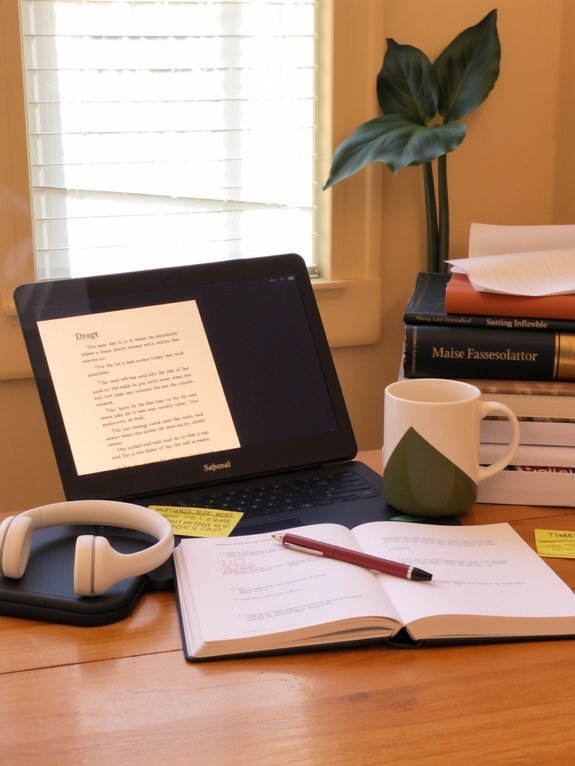
Nice portfolio, glowing testimonials — now let’s talk about keeping all that cash flow from eating your study schedule. You’ll use time blocking, ruthless priority setting, and tiny rituals. I set a 60‑minute proofreading block, then a 50‑minute study sprint, coffee clinking, phone face down. Switch scenes, focus sharp. Say no to scope creep. Batch small jobs, schedule reviews after lectures, breathe.
| Task | Slot |
|---|---|
| Proofreading block | 60 min |
| Study sprint | 50 min |
| Quick edits | 20 min |
| Buffer / rest | 15 min |
Track real time, log interruptions like receipts, tweak blocks weekly. Keep client windows fixed, protect exam weeks, reward yourself with a walk. You’ll earn, and still pass.
Scaling Up: From Side Gig to Small Proofreading Business
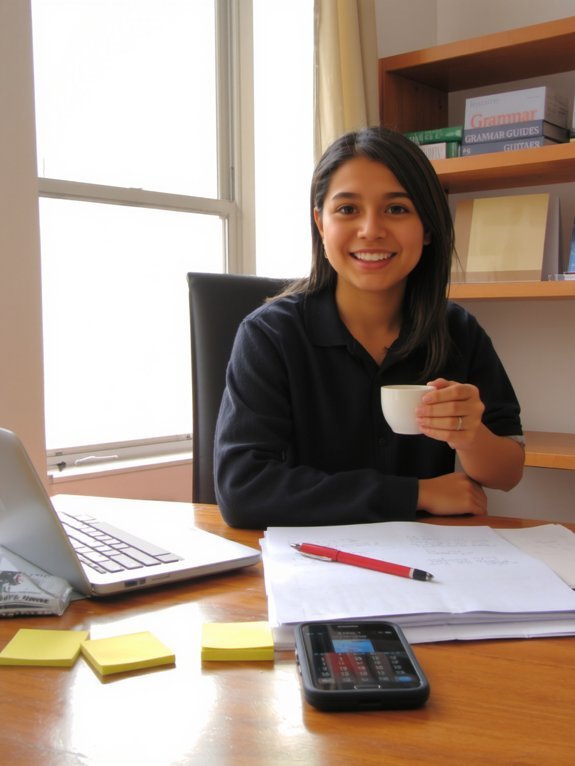
Several smart moves will take you from late-night side edits to running a tidy little proofreading business that actually pays the bills. You polish your business branding — logo, tidy website, a voice that sounds like you — and suddenly people trust you. You set clear packages, hourly or per-page, so quoting feels like breathing. You automate invoices, use a calendar that rings, and send friendly reminders that get clients to show up. You ask for feedback, give a tiny free tweak, and watch client retention climb; repeat clients are golden. You hire a part-timer when work piles up, teach them your style, and breathe. It’s messy at first, laughable later, profitable soon.
Conclusion
You’ve got the chops, so grab a laptop, a hot drink, and a stack of drafts, and start proofreading—now. I’ll hold you to deadlines, cheer your wins, and laugh when you miss a comma; you’ll fix it fast. Think small gigs first, build a tidy portfolio, collect honest testimonials, then raise your rates like a pro. Treat each edit like polishing a gem—sharp, steady, and oddly satisfying—and watch your side hustle shine.


